


Introduction to the IEU CEPA
The global trade landscape is continuously evolving, and for European importers, the Indonesia-European Union Comprehensive Economic Partnership Agreement (IEU CEPA) represents a monumental shift in bilateral trade dynamics. This ambitious trade agreement aims to facilitate a seamless exchange of goods, services, and investments between the European Union (EU) and Indonesia. By dismantling trade barriers and significantly reducing or eliminating tariffs, the IEU CEPA creates unprecedented opportunities for businesses on both sides. In this comprehensive guide, we will explore the nuances of the IEU CEPA tariff rates, how European importers can navigate this new landscape, and the strategic advantages it offers.
The Strategic Importance of Bilateral Trade with Indonesia
Indonesia is Southeast Asia’s largest economy and boasts a wealth of natural resources, a rapidly growing manufacturing sector, and a dynamic workforce. For the European Union, enhancing economic ties with Indonesia is a strategic imperative. Historically, European importers have faced various tariff and non-tariff barriers when sourcing goods from the archipelago. The IEU CEPA addresses these challenges by creating a predictable, transparent, and legally binding framework that lowers the cost of doing business.
By substantially cutting import duties, the agreement enables European businesses to source high-quality Indonesian products at more competitive prices. This cost-efficiency is particularly critical in today’s inflationary environment, where optimizing supply chains can make a substantial difference in profit margins.
Understanding IEU CEPA Tariff Reductions and Eliminations
At the core of the IEU CEPA is the progressive reduction and elimination of customs duties on a vast majority of tariff lines. While some tariffs are eliminated immediately upon the agreement’s entry into force, others are phased out over transitional periods to allow sensitive industries time to adjust. European importers must closely examine the specific tariff reduction schedules for their respective product categories.
Key Sectors Benefiting from Tariff Cuts
Several sectors stand to gain immensely from the revised tariff structures. These include:
- Agricultural and Food Products: Indonesia is a major exporter of palm oil, coffee, cocoa, and spices. Lower tariffs make these essential commodities more accessible to European food and beverage manufacturers.
- Textiles and Footwear: The elimination of tariffs on Indonesian garments and footwear allows European retailers to diversify their sourcing away from traditional hubs and improve supply chain resilience.
- Industrial and Chemical Goods: Raw materials and intermediate goods utilized in European manufacturing processes will see significant duty reductions, lowering overall production costs.
- Alternative Energy and Fuel Products: Commodities like biomass and sustainable fuels are becoming increasingly important. For instance, European businesses sourcing sustainable heating solutions should review A Complete Guide to Shisha Charcoal Briquettes Wholesale in Indonesia to understand how tariff structures affect the importation of these high-demand products.
Navigating Rules of Origin and HS Codes
To benefit from the preferential tariff rates established by the IEU CEPA, imported goods must meet stringent “Rules of Origin” criteria. These rules ensure that only products genuinely originating from Indonesia or the EU enjoy the agreement’s benefits, preventing third-party nations from circumventing tariffs.
Accurate classification of goods using Harmonized System (HS) codes is the first step in determining applicable tariffs. Misclassification can lead to delayed shipments, penalties, and the forfeiture of preferential rates. European importers are advised to consult the Comprehensive Guide to Indonesia Customs Tariffs and HS Codes to master the classification process and ensure full compliance with the new trade protocols.
Strategic Sourcing: Capitalizing on the Indonesian Market
With tariffs significantly reduced, European importers can adopt more aggressive and diversified sourcing strategies. Indonesia’s diverse agricultural and manufacturing base provides a reliable alternative to other Asian markets. Bulk purchasing becomes much more viable when duty overheads are slashed.
Sourcing Agricultural and Horticultural Products
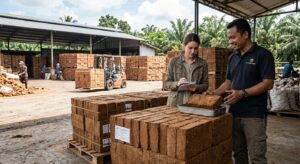
Beyond traditional commodities, Indonesia is a premier supplier of horticultural products. For example, the booming gardening and agriculture sectors in Europe heavily rely on sustainable growing mediums. Importers looking to capitalize on this can read A Complete Guide to Bulk Buying Coco Peat Blocks from Indonesia. Understanding the IEU CEPA tariff rates on such specific agricultural by-products allows European distributors to forecast costs accurately and optimize their procurement budgets.
Finding the Right Export Partners
The success of importing under the IEU CEPA framework relies heavily on establishing robust relationships with local suppliers who understand the documentation required for preferential treatment, such as EUR.1 movement certificates or origin declarations. Leveraging platforms and directories to find trusted export partners is crucial for ensuring product quality and administrative compliance.
Sample Tariff Reduction Trajectory Under IEU CEPA
To illustrate how tariff phase-outs generally work under comprehensive agreements, below is a hypothetical table demonstrating the trajectory for various product categories. Note: Actual rates depend on the finalized legal texts and specific HS codes.
| Product Category | Pre-CEPA Tariff Rate | Year 1 (Entry into Force) | Year 3 | Year 5 (Target Rate) |
|---|---|---|---|---|
| Textiles & Apparel | 12% | 8% | 4% | 0% |
| Footwear | 10% | 6% | 3% | 0% |
| Processed Cocoa/Coffee | 8% | 4% | 0% | 0% |
| Industrial Machinery Parts | 5% | 0% | 0% | 0% |
| Horticultural By-products | 4% | 0% | 0% | 0% |
This table highlights the importance of strategic planning. Importers of industrial machinery parts or horticultural goods may see immediate benefits, whereas those dealing in textiles will need to plan their pricing strategies around a phased reduction.
Compliance and Documentation Requirements
Benefiting from the IEU CEPA is not automatic. European importers must ensure meticulous record-keeping and compliance. The cornerstone of this compliance is proof of origin. Importers must obtain valid origin declarations from Indonesian exporters. The agreement also emphasizes the mutual recognition of standards, meaning that Indonesian products will increasingly align with EU health, safety, and environmental regulations. This alignment reduces the non-tariff barriers that historically complicated the importation of food and consumer goods.
Conclusion
The IEU CEPA represents a transformative milestone for European importers. By drastically reducing tariff barriers and streamlining customs procedures, the agreement opens the door to a more resilient, cost-effective, and diversified supply chain. Whether you are importing textiles, industrial components, or specialized agricultural goods, understanding the nuances of the tariff schedules, mastering HS classifications, and partnering with reliable Indonesian suppliers are the keys to unlocking the full potential of this economic partnership. As the global trade environment continues to face uncertainties, leveraging the predictable framework of the IEU CEPA will provide European businesses with a distinct competitive advantage.
Frequently Asked Questions (FAQ)
What is the primary benefit of the IEU CEPA for European importers?
The primary benefit is the substantial reduction or complete elimination of import tariffs on a wide range of goods originating from Indonesia. This lowers procurement costs, increases profit margins, and makes Indonesian products highly competitive in the European market.
How do I know if my specific product qualifies for reduced tariffs?
You must first determine the correct HS code for your product and check it against the IEU CEPA tariff reduction schedules. Additionally, the product must satisfy the agreement’s Rules of Origin to ensure it genuinely originates from Indonesia.
Do tariffs disappear immediately once the agreement enters into force?
Not always. While many tariffs, particularly on raw materials and non-sensitive industrial goods, may be eliminated on day one, tariffs on sensitive product categories like certain textiles or agricultural goods are phased out gradually over a transitional period of several years.
What documentation is required to claim preferential tariff rates?
Importers typically need a valid proof of origin, which can be a formal certificate of origin issued by Indonesian authorities or an origin declaration provided by an approved Indonesian exporter, alongside standard commercial invoices and customs declarations.