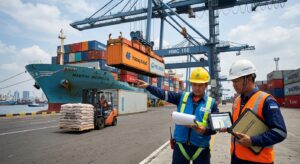



Expanding your business across the Atlantic offers exciting growth potential for American companies. Navigating the complex landscape of international trade requires a clear strategy to ensure your goods reach their destination without unnecessary delays.
Understanding the specific rules governing cross-border commerce is the first step toward success. By mastering these requirements, you can effectively streamline your entry into this massive market.
Preparation is key when dealing with global logistics. Our guide provides a comprehensive overview to help you manage documentation and compliance with confidence. Following these best practices will help you mitigate risks and optimize your supply chain operations for long-term profitability.
Key Takeaways
- Identify the essential documentation needed for smooth customs clearance.
- Learn how to classify your products correctly to avoid overpayment.
- Discover strategies to minimize potential supply chain disruptions.
- Understand the importance of compliance for maintaining market access.
- Gain insights into managing costs associated with international shipping.
- Leverage expert tips to simplify your expansion into foreign territories.
Understanding the Framework of Import Tariff Regulations in European Union
A single, unified approach defines the import tariff regulations in European Union member states. When your goods arrive at any port within the bloc, they are subject to the same rules regardless of the specific country of entry. This structure creates a predictable environment for American exporters who want to reach a broad market.
The Role of the European Commission in Trade Policy
The European Union trade policy is managed centrally by the European Commission. This body acts as the primary authority for all member nations, ensuring that trade rules remain consistent across the continent. By centralizing these powers, the Commission negotiates trade agreements and sets the standards that govern how products enter the market.
Because the Commission handles these policies, you do not need to navigate separate trade agreements for each individual country. This streamlined approach allows businesses to focus on a single set of requirements. It is a major advantage for companies looking to scale their operations efficiently.
Distinguishing Between Customs Duties and Import Taxes
It is vital to understand the difference between customs duties and internal taxes. Customs duties are specific charges levied on goods as they cross the border into the EU. These are determined by the classification of your product and its origin.
In contrast, import taxes, such as Value Added Tax (VAT), apply to the consumption of goods within the market. While customs duties are paid at the point of entry, internal taxes often follow the product as it moves through the supply chain. Mastering these distinctions is essential for maintaining a compliant and cost-effective trade strategy.
Navigating the TARIC Database for Accurate Classification
If you are shipping goods from the United States to Europe, the TARIC database is your most valuable asset. This official online portal serves as the primary repository for all EU import tariffs and trade measures. By using this tool, you can identify specific license requirements and duty rates before your cargo ever leaves the warehouse.
How to Use the Integrated Tariff of the European Union
The Integrated Tariff of the European Union, or TARIC, is designed to provide transparency for international traders. It allows you to search for products by code or description to find the exact regulatory requirements for your shipment. Mastering this interface is a critical step in ensuring your goods clear customs without unexpected hurdles.
When you access the database, you will find detailed information regarding:
- Specific duty rates applicable to your product category.
- Necessary import licenses or certificates for entry.
- Potential trade defense measures, such as anti-dumping duties.
- Preferential tariff treatments based on country of origin.
The Importance of Harmonized System Codes for US Exporters
Accurate product classification is the foundation of a smooth customs experience for any American business. The Harmonized System (HS) code acts as a universal language for international trade, allowing customs authorities to identify exactly what is inside your shipment. Using the correct code ensures that the right EU import tariffs are applied, preventing costly overpayments or legal penalties.
US exporters should treat HS code classification with the highest level of care. A simple error in your documentation can lead to significant delays at the border or even the seizure of goods. By proactively verifying your codes through the TARIC system, you protect your supply chain and maintain strong compliance standards with European authorities.
Determining the Customs Value of Your Goods
Accurate valuation of your goods is essential for calculating the correct import duties EU authorities require. When you ship products from the United States to the European Union, the customs value serves as the foundation for your tax assessment. Getting this number right helps you avoid overpayment and prevents potential audits that could stall your supply chain.
Methods for Calculating Transaction Value
The primary method for determining value is the transaction value. This is defined as the price actually paid or payable for the goods when sold for export to the EU. It represents the actual invoice price you agreed upon with your supplier.
To use this method, the sale must be transparent and free of restrictions. If the price is influenced by a relationship between the buyer and seller, you may need to prove that the value reflects a standard market price. Maintaining clear, itemized invoices is the best way to support your declaration when facing EU import tariffs.
Adjustments and Additions to the Declared Value
Sometimes, the invoice price does not include every cost associated with getting your goods to the border. You must add specific expenses to the transaction value to reach the final customs value. Failing to include these costs can lead to penalties or delays during the clearance process.
Consider these common elements that often require adjustments to your declared value:
- International freight and shipping costs incurred until the goods reach the EU entry point.
- Insurance premiums paid to cover the goods during transit.
- Royalties and license fees that you must pay as a condition of the sale.
- Commissions and brokerage fees, excluding buying commissions.
- Materials or tools provided by the buyer to the seller at no cost to assist in production.
By carefully accounting for these additions, you ensure full compliance with international trade standards. Proper documentation of these costs simplifies the assessment of import duties EU officials will apply to your shipment. Always keep your records organized to streamline your future logistics operations.
Rules of Origin and Preferential Trade Agreements
Establishing the economic nationality of your goods is essential for compliance and cost-efficiency in the European market. By identifying where your products were manufactured, you can determine the correct tariff treatment and potentially lower your overall expenses.
Understanding Non-Preferential vs. Preferential Origin
Non-preferential origin is used to determine the country of origin for trade policy measures, such as anti-dumping duties or import quotas. It does not provide any tariff benefits but is a mandatory requirement for all goods entering the European Union.
In contrast, preferential origin allows your goods to qualify for reduced or zero tariff rates under specific EU trade agreements. To claim these benefits, you must prove that your product meets the specific “rules of origin” defined in the relevant agreement.
“Compliance with origin rules is not just a legal necessity; it is a strategic tool for businesses looking to remain competitive in global markets.”
The following table highlights the key differences between these two classifications to help you manage your documentation effectively:
| Feature | Non-Preferential | Preferential |
|---|---|---|
| Primary Purpose | Statistics and Trade Policy | Tariff Reduction |
| Tariff Impact | Standard MFN Rates | Reduced or Zero Rates |
| Documentation | Certificate of Origin | Proof of Origin/Origin Declaration |
Leveraging EU-US Trade Relations and Agreements
American businesses can often find opportunities to reduce costs by carefully reviewing existing EU trade agreements. While there is no comprehensive free trade agreement between the US and the EU, specific sectors benefit from mutual recognition and sectoral arrangements.
You should verify if your goods qualify for preferential treatment by analyzing the manufacturing processes involved. If your product undergoes substantial transformation within the United States, it may be eligible for favorable treatment under specific conditions.
Always maintain accurate records to support your claims during customs audits. Leveraging these EU trade agreements effectively requires a proactive approach to documentation and a deep understanding of your supply chain’s geographic footprint.
The Role of VAT and Excise Duties in EU Imports
When your products cross the border into the European Union, they become subject to specific tax regulations that impact your bottom line. While many exporters focus primarily on import duties EU, it is equally important to account for internal taxes that apply to goods entering the market. Understanding these obligations is a vital step for any American exporter looking to maintain healthy profit margins.

How Import VAT Differs from Domestic Sales Tax
Import Value Added Tax (VAT) is applied to goods entering the EU at the same rate as the domestic sales tax in the destination Member State. Unlike a standard sales tax collected at the point of retail, this tax is levied at the moment of customs clearance. This ensures that imported goods are treated equally to those produced within the EU.
For many VAT-registered businesses, this tax is often reclaimable. By working with a local tax representative or using specific customs procedures, you can often recover these costs. Proper documentation is the key to ensuring your business remains compliant while optimizing cash flow.
“Taxation is the price we pay for a civilized society, but in international trade, it is also a cost that must be managed with precision to ensure long-term growth.”
Identifying Goods Subject to Excise Duties
Beyond standard import taxes EU, certain categories of products face additional levies known as excise duties. These are indirect taxes on the sale or use of specific goods, often designed to discourage consumption or cover social costs. You must identify if your products fall into these categories early in your planning phase.
Common goods subject to these additional duties include:
- Mineral oils and fuels
- Alcoholic beverages and spirits
- Tobacco products
If you are shipping these items, you should prepare for a more complex clearance process. Accurate financial planning is essential here, as these duties can significantly increase the total landed cost of your shipment. Always verify the specific excise requirements for the destination country to avoid unexpected financial hurdles.
Customs Procedures and Documentation Requirements
Mastering the documentation process is the most effective way to ensure your cargo clears European borders without unnecessary delays. Navigating the administrative landscape of EU customs regulations requires a high level of precision and foresight. By organizing your paperwork well in advance, you protect your business from the frustration of goods being held in temporary storage.
The Single Administrative Document Explained
The Single Administrative Document, commonly known as the SAD, serves as the primary declaration form for all imports entering the European Union. This standardized document is used across every Member State to ensure consistency in how trade data is collected and processed. It acts as the universal language between your business and European border authorities.
When you complete the SAD, you provide essential details regarding the nature, value, and origin of your goods. Because this form is mandatory for most import procedures, accuracy is vital to avoid penalties. Following the guidelines of EU customs regulations helps you fill out these fields correctly the first time.
Essential Paperwork for US-to-EU Shipments
Beyond the SAD, US exporters must compile a comprehensive set of documents to satisfy local requirements. Having these files ready before your shipment departs can significantly streamline the clearance process. Below is a summary of the core documents you should prepare for every international transaction.
| Document Name | Primary Purpose | Key Information Required |
|---|---|---|
| Commercial Invoice | Proof of sale | Value, currency, and buyer details |
| Packing List | Inventory verification | Weight, dimensions, and package count |
| Bill of Lading | Contract of carriage | Carrier details and shipping route |
| Certificate of Origin | Trade compliance | Country of manufacture |
Maintaining a digital archive of these documents is a best practice for any company dealing with EU customs regulations. If an audit occurs, having organized records will save your team valuable time and resources. Always verify that the information on your invoice matches the data declared on your SAD to ensure total consistency.
Managing Customs Declarations and Authorized Economic Operators
Becoming an Authorized Economic Operator (AEO) can change the way your business interacts with European borders. By mastering the nuances of EU customs regulations, American companies can significantly reduce the time and costs associated with international shipping. Efficient management of these declarations is not just a legal requirement; it is a strategic move for any growing business.
Benefits of AEO Status for Frequent Importers
The AEO certification acts as a seal of approval from customs authorities, signaling that your business is a reliable partner in the international supply chain. When you achieve this status, you gain access to several operational advantages that help keep your goods moving smoothly.
Frequent importers often find that the following perks provide a major competitive edge:
- Priority treatment during physical and document-based controls.
- Reduced frequency of physical inspections at the border.
- Prior notification if your shipment is selected for a check.
- Easier access to other simplified customs procedures.
Streamlining Clearance Through Simplified Procedures
Beyond AEO status, companies can leverage simplified procedures to handle high volumes of imports with greater ease. These tools allow businesses to clear goods through automated systems, which minimizes the need for repetitive paperwork and manual intervention.
By integrating these digital workflows, you can transform your customs operations from a logistical bottleneck into a streamlined advantage. This approach ensures that your supply chain remains resilient, even when dealing with the complex requirements of EU customs regulations. Investing time in these processes today will save your team significant effort and resources in the long run.
Handling Anti-Dumping and Countervailing Duties
Beyond standard tariffs, your goods might face additional charges designed to ensure fair competition within the European market. While many businesses focus on general EU trade agreements, these specific protective measures can significantly alter your total landed costs if you are not prepared.
Identifying Trade Defense Instruments
The European Union utilizes specific tools to protect its domestic industries from unfairly priced imports. These are known as trade defense instruments, and they act as a safeguard against market distortion.
- Anti-dumping duties: These are applied when products are sold in the EU at prices lower than their normal value in the country of origin.
- Countervailing duties: These measures offset the impact of unfair subsidies provided by foreign governments to their exporters.
- Safeguard measures: These are temporary actions taken when a sudden surge in imports threatens to cause serious injury to domestic producers.
Impact of Protective Measures on US Exports
For American exporters, the sudden application of these duties can create unexpected financial liabilities. It is essential to verify if your specific product category is currently subject to any active investigations or existing measures.
You should regularly monitor the official journals and databases provided by the European Commission. Even if your goods are currently exempt, the landscape of EU trade agreements and protective policies can shift rapidly based on global market conditions.
To maintain a viable pricing strategy, consider these proactive steps:
- Review the latest notices regarding trade defense investigations for your specific Harmonized System codes.
- Consult with a customs broker to understand how these duties might apply to your specific supply chain.
- Factor potential duty increases into your long-term financial planning to avoid margin erosion.
Staying informed is your best defense against these complex regulations. By keeping a close watch on EU trade agreements and related protective policies, you can ensure your business remains competitive and compliant in the European market.
Common Compliance Pitfalls for American Businesses
Many American businesses find that even minor oversights in their shipping processes can lead to significant financial penalties. Maintaining a high level of awareness regarding European Union customs rules is essential for any company looking to expand its reach into foreign markets. By staying proactive, you can effectively shield your operations from the risks associated with international trade.
Avoiding Misclassification Penalties
Misclassification of goods remains a leading cause of customs penalties for exporters. When products are assigned the wrong code, it often results in incorrect duty payments, which can trigger costly audits by national authorities. It is vital to verify your product codes against the official database to ensure total accuracy.
If you are concerned about the shifting landscape of trade, you should review the threat of EU counter-tariffs to better understand how to protect your supply chain. Proper classification not only prevents fines but also ensures that your import taxes EU obligations are calculated correctly from the start.
Managing Documentation Errors and Audits
Incomplete or inaccurate documentation is another frequent hurdle that can stall your shipments at the border. Even a small typo on a commercial invoice can lead to significant delays and unwanted scrutiny from customs officials. Implementing robust internal controls is the best way to catch these errors before your goods leave the warehouse.
Regular internal audits help your team identify gaps in your compliance strategy. By keeping your records organized and transparent, you minimize the likelihood of facing complex investigations regarding your European Union customs rules adherence. Ultimately, maintaining high standards of documentation is a smart investment in the long-term stability of your business.
Utilizing Digital Tools for Customs Compliance
Modern businesses can now leverage sophisticated software to master European Union customs rules with ease. In today’s fast-paced trade environment, relying on manual processes often leads to costly delays and errors. By adopting digital solutions, you can ensure your operations remain efficient and compliant at every stage of the supply chain.
Automated Systems for Customs Data
One of the most effective ways to manage your shipments is through dedicated platforms like My Trade Assistant. This tool provides comprehensive information on tariff rates, specific rules of origin, and mandatory import requirements for various product categories. Automated systems allow you to input your product data and receive instant feedback on the regulatory landscape.
These platforms act as a digital bridge between your business and complex trade requirements. By centralizing your data, you reduce the risk of misclassification and ensure that your documentation aligns with current standards. This proactive approach helps you maintain a seamless flow of goods across borders.
Resources for Real-Time Tariff Updates
Staying informed about shifting European Union customs rules is vital for maintaining a competitive edge. Regulatory updates can happen quickly, and missing a change might impact your bottom line significantly. Utilizing online resources that offer real-time alerts ensures that you are always aware of new trade defense instruments or duty adjustments.
Embracing these technologies allows your business to respond quickly to market shifts and regulatory updates. When you have access to live data, you can make informed decisions about your pricing and logistics strategies. Ultimately, integrating these digital tools into your workflow is a smart investment for any American exporter looking to succeed in the European market.
Conclusion
Successful entry into the international marketplace requires a deep understanding of the regulatory framework. Your business can thrive by staying committed to ongoing compliance and operational precision.
Mastering the nuances of European Union trade policy empowers your team to make informed decisions. You gain a competitive edge when you utilize digital resources and professional support networks to streamline your logistics.
Accurate valuation and diligent record-keeping remain the cornerstones of a healthy export model. These practices protect your bottom line while ensuring your goods move across borders without unnecessary delays.
Your company can confidently navigate the complexities of global commerce by applying these insights. We invite you to review your current shipping protocols and align them with the latest standards in European Union trade policy.
Expanding your footprint in foreign markets is a rewarding journey. Reach out to industry experts or consult official customs portals to keep your operations efficient and profitable today.