



The trade relationship between the United States and Indonesia is stronger than ever. In 2024, both nations exchanged goods valued at a massive $38.3 billion. This thriving partnership offers incredible opportunities for American businesses looking to expand their reach into Southeast Asia.
However, entering this market successfully means you must master the specific Indonesian export documentation requirements. Navigating international trade laws can feel overwhelming, but having the right information makes the process much smoother.
Our goal is to simplify these complex procedures for your team. By understanding the necessary Indonesian export documentation requirements early, you can avoid costly delays and ensure your products arrive at their destination on time. Let’s prepare your business for a seamless entry into this dynamic and growing economy.
Key Takeaways
- The US and Indonesia reached a record $38.3 billion in total trade volume during 2024.
- Proper paperwork is the foundation of a successful international shipping strategy.
- Understanding local regulations helps businesses avoid expensive customs delays.
- Preparation is essential for companies aiming to enter the Southeast Asian market.
- This guide simplifies complex trade rules to help your goods move efficiently.
Understanding the Indonesian Export Landscape
Indonesia’s strategic position in the Indo-Pacific makes it a cornerstone for global commerce and a key partner for American exporters. As a major maritime hub, the nation serves as a gateway to some of the fastest-growing markets in the world. Building a sustainable presence here requires a clear understanding of the local business environment.
The Role of US-Indonesia Trade Relations
The economic partnership between the United States and Indonesia has flourished for over 70 years. This long-standing collaboration is built on mutual growth and shared interests in regional stability. Strong trade ties provide a solid foundation for American companies looking to enter this vibrant market.
“Trade is the lifeblood of our shared prosperity, connecting the ingenuity of American businesses with the dynamic potential of the Indonesian economy.”
By aligning your business strategy with these historical ties, you can better navigate the complexities of the region. This partnership continues to evolve, creating new opportunities for exporters who prioritize long-term commitment over short-term gains.
Key Regulatory Bodies in Indonesia
To succeed, you must familiarize yourself with the primary institutions that oversee trade. These organizations ensure that all commercial activities remain compliant with national standards. Mastering the nuances of export regulations Indonesia is essential for maintaining a smooth supply chain.
The governance structure is designed to protect both local interests and international standards. When you understand how these bodies function, you can proactively manage your documentation and avoid common compliance hurdles. Staying informed about export regulations Indonesia will ultimately safeguard your investments and support your long-term growth objectives in the region.
Essential Indonesian export documentation requirements for compliance
Achieving seamless entry into the Indonesian market starts with mastering the essential documentation. When you prepare your goods for shipment, accuracy is your best tool to prevent customs bottlenecks. By following strict Indonesian export documentation requirements, you protect your business from unnecessary financial risks and legal hurdles.
Core Documents Every Exporter Needs
To ensure your cargo moves smoothly through ports, you must maintain a complete set of records. Missing even a single form can lead to significant delays or the rejection of your shipment. At a minimum, your file should include the following items:
- Proforma Invoice: A preliminary bill of sale sent to buyers in advance.
- Commercial Invoice: The primary document used for customs declaration and valuation.
- Certificate of Origin: Proof of where your goods were manufactured.
- Bill of Lading: The legal contract between the shipper and the carrier.
- Packing List: A detailed breakdown of the contents, weight, and dimensions of each package.
- Insurance Certificate: Documentation verifying that your goods are covered during transit.
“Compliance is not just a legal obligation; it is the foundation of trust and efficiency in global trade.”
Distinguishing Between Commercial and Regulatory Documents
It is helpful to categorize your paperwork to streamline your internal filing processes. Commercial documents focus on the transaction between the buyer and the seller, while regulatory documents satisfy the specific demands of government authorities. Maintaining high standards for export compliance Indonesia ensures that both categories are handled with precision.
| Document Type | Primary Purpose | Key Stakeholder |
|---|---|---|
| Commercial | Transaction and Payment | Buyer/Seller |
| Regulatory | Customs and Safety | Government Agencies |
| Logistical | Shipping and Handling | Freight Forwarder |
By clearly separating these functions, your team can quickly identify which documents require immediate attention. This organized approach minimizes errors and helps you maintain a reputation for reliability. Consistent attention to detail remains the most effective way to navigate the complexities of international shipping.
Navigating the NIB and Business Licensing System
For US exporters, the path to market entry begins with mastering the local licensing requirements. Successfully shipping goods to Indonesia depends heavily on your partner’s ability to navigate local regulations and maintain proper documentation. Understanding the nuances of an export license Indonesia framework is vital to ensure your products clear customs without unnecessary delays.
What is the Nomor Induk Berusaha (NIB)?
The Nomor Induk Berusaha, or NIB, serves as the primary business identity number for any entity operating in Indonesia. It acts as a single registration number that replaces several older, fragmented permits. This digital system streamlines the process for businesses to prove their legal status to government authorities.
By utilizing the Online Single Submission system, companies can manage their business identity efficiently. Having a valid NIB is mandatory for any local partner involved in your supply chain. Without this foundational document, your goods may face significant hurdles upon arrival at the border.
Registering as a Foreign Exporter
To facilitate smooth trade, your Indonesian counterpart must hold a valid Import Identification Number, known as an API. This number is often linked directly to the NIB, confirming that the business is authorized to handle specific product categories. Ensuring your partner is fully compliant is a critical step in managing your export license Indonesia strategy.
US exporters should verify that their local partners have updated their permits to reflect the current regulatory standards. Missing or outdated documentation is a common cause for shipments being held by customs officials. By proactively confirming these details, you protect your business from costly logistical bottlenecks and maintain a reliable flow of goods into the Indonesian market.
Mandatory Shipping Documents for Customs Clearance
When shipping goods to Indonesia, the accuracy of your documentation is the primary factor in ensuring a seamless customs clearance Indonesia experience. All required paperwork must be submitted electronically through the Indonesia National Single Window (INSW) platform. Using standardized Electronic Data Interchange (EDI) formats is essential to prevent delays or electronic rejections.
Because these files serve as the lifeblood of your logistics operations, even minor errors can trigger significant hurdles. Maintaining high standards for your shipping documents Indonesia will help you stay compliant with local regulations. This attention to detail also supports your broader export license Indonesia requirements for high-value goods.
The Bill of Lading and Air Waybill
The Bill of Lading (for sea freight) and the Air Waybill (for air freight) act as the primary contracts of carriage between the shipper and the carrier. These documents provide proof of ownership and confirm that the goods have been received for transport. To ensure smooth processing, verify that the following details are accurate:
- Full names and addresses of the consignor and consignee.
- Precise descriptions of the cargo, including weight and volume.
- Correct HS codes to align with your export license Indonesia status.
- Clear instructions regarding the port of discharge or destination airport.
Commercial Invoices and Packing Lists
A commercial invoice is more than just a bill; it is a vital declaration of the transaction value used by authorities to assess duties. Your packing list must complement this by providing a detailed breakdown of the shipment’s contents. Together, these documents form the backbone of your customs clearance Indonesia strategy.
To avoid discrepancies during the digital filing process, ensure your documentation includes:
- A detailed itemized list of all goods, including unit prices and total value.
- Specific packaging dimensions and net versus gross weights.
- Clear references to the purchase order or contract numbers.
- Accurate country of origin information for every item listed.
By keeping your shipping documents Indonesia organized and consistent, you significantly reduce the risk of administrative bottlenecks. Always double-check your data before hitting the submit button on the INSW portal to maintain a healthy trade relationship.
Managing Certificates of Origin and Trade Agreements
When you export to Indonesia, the Certificate of Origin acts as your primary passport for goods, unlocking potential trade benefits. This document serves as a formal declaration that verifies the country where your products were manufactured or processed. Accurate documentation is the cornerstone of a smooth customs clearance process.
Why the Certificate of Origin Matters
The Certificate of Origin is essential for determining the applicable tariff rates for your shipment. Without this proof of provenance, customs authorities may apply higher duty rates to your goods. Properly documenting the origin of your products ensures that you remain compliant with local regulations while avoiding unnecessary financial penalties.
Beyond simple compliance, this document provides transparency in the global supply chain. It allows Indonesian authorities to verify that your goods meet specific safety and quality standards. By maintaining clear records, you build trust with your partners and streamline your logistics operations.
Utilizing Generalized System of Preferences (GSP) Benefits
US exporters can often leverage trade agreements to reduce costs when entering the Indonesian market. The Generalized System of Preferences (GSP) is designed to promote economic growth by providing preferential duty-free or reduced-duty entry for eligible goods. Taking advantage of these programs requires strict adherence to rules of origin and detailed record-keeping.
Sustainability is also becoming a major factor in international trade, particularly in sectors like agriculture. For instance, Indonesia produces over 47 million tons of palm oil annually, accounting for 58% of the global supply. Because of this, buyers increasingly demand sustainability certifications alongside standard origin documentation to ensure ethical sourcing.
| Document Type | Primary Purpose | Impact on Trade |
|---|---|---|
| Certificate of Origin | Verifies product source | Determines tariff eligibility |
| Sustainability Certificate | Confirms ethical production | Facilitates market access |
| Commercial Invoice | Details transaction value | Basis for tax assessment |
| Packing List | Lists shipment contents | Ensures logistics accuracy |
By aligning your documentation strategy with these trade agreements, you can secure the most favorable terms available. Investing time in your paperwork today will pay dividends in efficiency and cost savings for your future exports.
Handling Sanitary and Phytosanitary Requirements
Protecting public health is the primary goal behind Indonesia’s rigorous sanitary and phytosanitary standards. When you export agricultural or food products to this market, you must prioritize safety and transparency. Strict adherence to these regulations is essential to ensure your goods clear customs without unnecessary hurdles.
Requirements for Agricultural and Food Products
Since 2013, Indonesia has enforced strict labeling laws for all imported food and pharmaceutical items. Every product must feature a clear label written in the Indonesian language to ensure consumers understand what they are purchasing.
Your labels must include specific details to remain compliant with local authorities. These requirements typically cover the following information:
- Accurate nutritional content data.
- Clearly marked expiration dates.
- Full manufacturer identification and contact details.
Failing to provide these details in the correct format is a leading cause of shipment rejections at the border. Always double-check your packaging before the goods leave your facility to avoid costly delays.
Obtaining Health and Phytosanitary Certificates
Beyond labeling, you must secure the necessary health and phytosanitary certificates for your agricultural shipments. These documents serve as official proof that your products meet the safety standards required by Indonesian technical agencies.
The process involves rigorous testing and inspection to verify that your goods are free from pests or harmful contaminants. You should work closely with your local agricultural department to ensure all testing protocols align with Indonesian import requirements.
Proactive communication with your local customs broker can also help streamline this process. By ensuring your documentation is complete and accurate, you protect your business from the risks associated with non-compliance and border rejections.
Working with Indonesian Customs and Excise Authorities
Successfully navigating the customs clearance Indonesia process is a vital step for any business looking to expand its reach into Southeast Asia. The Directorate General of Customs and Excise oversees all incoming shipments, ensuring that every import meets national safety and legal standards. By maintaining a transparent and organized approach, you can foster a smoother relationship with local officials.
Understanding the Customs Clearance Process
The clearance journey typically begins once your goods arrive at an Indonesian port or airport. Officials will perform a thorough document verification to ensure that your paperwork matches the physical cargo. In some cases, your shipment may be flagged for a physical inspection to confirm the nature and quantity of the items.
Exporters should be prepared for the following scenarios during the inspection phase:
- Green-line clearance: Goods are released immediately after document verification.
- Yellow-line clearance: Additional documents are required before the cargo can proceed.
- Red-line cargo: A mandatory physical inspection is conducted, which is common for regulated or high-risk products.
If your shipment is designated as red-line cargo, do not panic. Proactive communication with your local customs broker is the best way to resolve any issues quickly. Providing clear, accurate information during this stage helps prevent long-term storage fees and logistical bottlenecks.
Managing Duties, Taxes, and HS Code Classification
Accurate classification is the foundation of a successful import strategy. Indonesia applies import duties based on the product’s classification under the Harmonized System (HS) Code, as specified in the Indonesian Customs Tariff Book (BTKI). Using the correct code ensures that you pay the appropriate amount of duties and taxes, avoiding potential fines for underpayment.
To manage your costs effectively, consider these essential steps:
- Verify your HS code against the official BTKI database before shipping.
- Calculate your total landed cost, including VAT and luxury goods taxes if applicable.
- Keep detailed records of all classification decisions for future audits.
Working with a local expert who understands the nuances of customs clearance Indonesia can save your company significant time and money. By staying diligent with your HS code assignments, you ensure that your goods move through the border with minimal friction. Compliance is your best tool for maintaining a reliable and profitable supply chain in this growing market.
Common Pitfalls and How to Avoid Export Delays
Many US exporters face unexpected delays simply because they overlook the finer details of Indonesian customs paperwork. Staying updated on export regulations Indonesia is essential for maintaining a smooth and predictable supply chain. Specifically, the recent Regulation No. PER-5/BC/2025 by the Directorate General of Customs and Excise (DGCE) has revised several declaration protocols that every exporter must follow to avoid shipment rejection.
Identifying Inconsistencies in Documentation
The most frequent cause of border friction is a mismatch between documents. If your commercial invoice lists a different product description than your packing list or bill of lading, customs officials will likely flag the shipment for inspection. Consistency is your best defense against unnecessary administrative hold-ups.
Always ensure that your HS code classification remains uniform across all forms. Even a small typo in a numerical code can trigger a manual review, which often leads to significant storage fees at the port. Regularly auditing your paperwork against the latest export regulations Indonesia will help you catch these errors before the goods leave your facility.
Addressing Language and Translation Barriers
While English is widely used in international trade, Indonesian customs authorities require absolute clarity in all submitted documents. Relying on automated translation tools can lead to misinterpretations of technical specifications or safety requirements. It is highly recommended to work with a professional translator who understands local trade terminology.
Furthermore, ensure that all units of measurement and weight are converted to the metric system, as this is the standard for local authorities. Providing clear, accurate, and properly formatted documentation reduces the risk of confusion. When in doubt, verify your translated documents with a local customs broker to ensure they meet all regional expectations.
| Common Error | Potential Consequence | Prevention Strategy |
|---|---|---|
| Mismatched HS Codes | Customs penalties | Verify codes with DGCE database |
| Vague Descriptions | Shipment rejection | Use precise, technical terminology |
| Incorrect Weight Units | Processing delays | Standardize to metric units |
| Missing Signatures | Document invalidation | Implement a final document audit |
Leveraging Digital Platforms for Export Documentation
The landscape of Indonesian trade has shifted toward a fully digital environment for all documentation needs. This transition helps exporters manage their logistics with greater speed and accuracy. By moving away from paper-based systems, businesses can now submit their shipping documents Indonesia through centralized online portals.
The Indonesia National Single Window (INSW)
The Indonesia National Single Window (INSW) serves as the primary digital gateway for all trade-related activities. It acts as a centralized hub where you can file, process, and track your import and export permits. Using this platform is mandatory for any exporter looking to clear customs without unnecessary delays.
By integrating your operations with the INSW, you gain a transparent view of your regulatory requirements. This system ensures that all government agencies involved in trade are synchronized. Consequently, your shipping documents Indonesia are processed through a single, unified channel rather than multiple disconnected offices.
Electronic Filing and Tracking Systems
Modernizing your logistics strategy requires mastering the use of Electronic Data Interchange (EDI) formats. These standardized digital formats allow your systems to communicate directly with Indonesian customs authorities. When you use these tools, you significantly reduce the risk of technical errors that often lead to shipment rejections.
Beyond simple filing, these platforms offer real-time tracking capabilities for your cargo. You can monitor the status of your shipping documents Indonesia at every stage of the clearance process. This level of visibility is essential for maintaining a reliable supply chain and meeting your delivery deadlines in the United States.
Embracing these digital tools is a critical step for any exporter aiming to stay competitive. By minimizing manual processing time, you free up valuable resources to focus on growing your business. Ultimately, digital proficiency is the key to long-term success in the Indonesian market.
Best Practices for Maintaining Export Compliance
Maintaining consistent compliance is the cornerstone of a smooth and profitable trade relationship with Indonesia. By adopting a proactive mindset, you can protect your business from unexpected hurdles and ensure that your goods move through customs without unnecessary friction. Mastering export compliance Indonesia requires both internal diligence and the right external support.
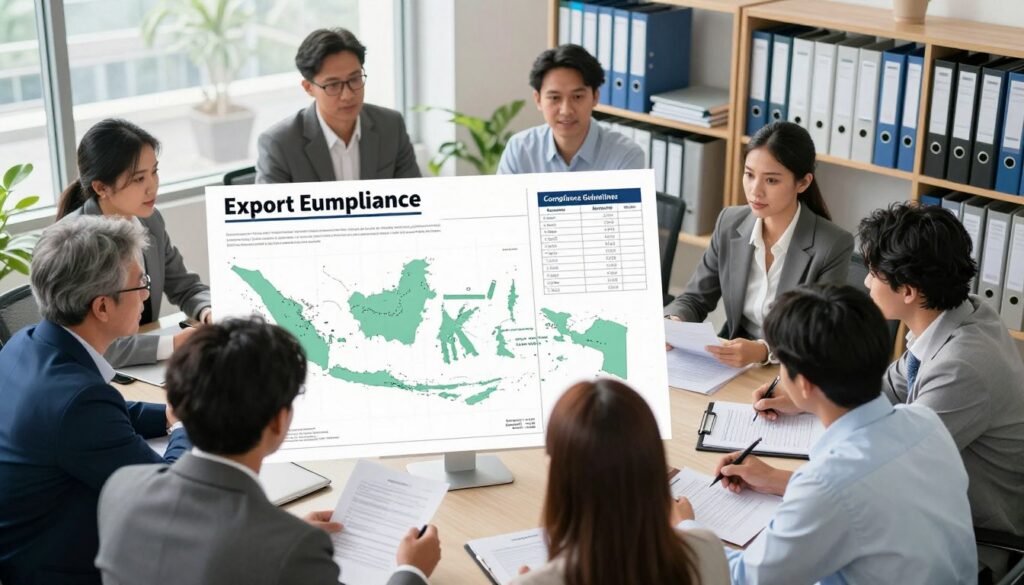
Internal Audits and Record Keeping
Regular internal audits are essential to verify that your documentation remains accurate and up-to-date. You should establish a routine schedule to review your shipping files, ensuring that every invoice, packing list, and certificate matches the physical cargo. Consistency is key when dealing with international authorities.
Proper record keeping also serves as your primary defense during potential audits by government officials. Keep digital and physical copies of all trade documents for at least five years. This organized approach helps you quickly address any inquiries and demonstrates your commitment to export compliance Indonesia.
Partnering with Local Customs Brokers
Navigating the evolving regulatory environment in a foreign market can be challenging for even the most experienced exporters. U.S. companies are strongly encouraged to work with experienced local customs brokers who possess deep knowledge of regional requirements. These professionals act as your eyes and ears on the ground, helping you stay ahead of sudden policy shifts.
Building a strong professional relationship with a local partner allows you to mitigate risks effectively. When you understand the legal requirements and challenges of the market, you can streamline your operations significantly. A trusted broker will ensure your paperwork is formatted correctly, which is a vital component of maintaining long-term export compliance Indonesia.
Conclusion
Expanding your business reach into Indonesia opens doors to a vibrant and growing market. Success depends on your ability to manage complex regulatory frameworks with precision and care.
Preparation remains your greatest asset when dealing with international trade requirements. By mastering the necessary documentation and utilizing digital tools like the Indonesia National Single Window, you position your company for steady growth. These systems simplify the flow of goods and reduce the risk of costly border delays.
Building strong relationships with local customs brokers provides an extra layer of security for your operations. These experts offer deep insights into regional nuances that keep your supply chain moving smoothly. Relying on their knowledge helps you stay ahead of shifting trade policies.
Commitment to accuracy in every filing builds trust with authorities. Regular internal audits ensure your records stay current and compliant with all legal standards. This proactive approach protects your brand reputation while fostering lasting partnerships across the region.
Your journey into this market requires patience and a sharp eye for detail. Stay informed about updates from the Ministry of Trade to maintain your competitive edge. We encourage you to reach out to trade specialists if you need further guidance on specific product categories or shipping logistics.