

Introduction to Private Label Cosmetics in Indonesia
The global beauty and personal care industry is experiencing an unprecedented shift. As consumers become more conscious about what they apply to their skin, the demand for high-quality, ethically sourced, and uniquely branded cosmetics has skyrocketed. Within this dynamic market, private label cosmetics manufacturing in Indonesia has emerged as a powerful solution for entrepreneurs and established brands looking to scale their product lines without the massive overhead of building their own manufacturing facilities.
Indonesia, the largest economy in Southeast Asia, boasts a rapidly growing manufacturing sector, rich biodiversity, and a strategic location that makes it an ideal hub for cosmetic production. Private label manufacturing allows brands to select pre-formulated products or customize formulations, package them under their own brand name, and distribute them to their target audience. This comprehensive guide explores why Indonesia is becoming the go-to destination for private label cosmetics, the manufacturing process, regulatory requirements, and how you can leverage local resources to build a successful beauty brand.
Why Choose Indonesia for Cosmetics Manufacturing?
There are several compelling reasons why brands worldwide are turning their attention to Indonesia for their cosmetic manufacturing needs. The archipelago offers a unique combination of natural resources, skilled labor, and favorable government policies designed to boost the manufacturing and export sectors.
Abundant Natural Resources and Botanical Ingredients
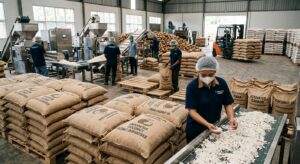
Indonesia is renowned for its mega-biodiversity. The country is home to thousands of plant species that are highly sought after in the cosmetics industry. Ingredients such as coconut oil, aloe vera, essential oils (like patchouli and vetiver), and activated charcoal are abundant. Sourcing these ingredients locally reduces transportation costs and ensures freshness. For instance, activated coconut charcoal is a popular ingredient in purifying face masks and teeth whitening products. Brands looking to source and package such products often consult resources like the Custom Packaging Coconut Charcoal OEM: A Comprehensive Guide to understand the intricacies of white-labeling these specific natural goods.
Competitive Manufacturing Costs
Compared to Western countries and even some neighboring Asian nations, Indonesia offers highly competitive manufacturing and labor costs. This cost-effectiveness does not come at the expense of quality. Many Indonesian factories are equipped with state-of-the-art technology and adhere to international Good Manufacturing Practices (GMP). By partnering with a local private label manufacturer, brands can achieve higher profit margins while delivering premium products to their customers.
Halal Certification Opportunities
With the largest Muslim population in the world, Indonesia is a global leader in the Halal industry. The demand for Halal-certified cosmetics is growing rapidly, not just in Muslim-majority countries, but globally, as consumers associate Halal certification with cleanliness, safety, and ethical production. Manufacturing in Indonesia provides brands with direct access to local authorities like LPPOM MUI, making the process of obtaining Halal certification smoother and more straightforward.
The Private Label Manufacturing Process
Starting a private label cosmetics line in Indonesia involves a systematic process that ensures the final product aligns with your brand vision and meets all regulatory standards. Here is a step-by-step breakdown of how the process typically unfolds.
1. Concept and Formulation
The first step is defining your product. Will you be selling anti-aging serums, organic body lotions, or vibrant color cosmetics? Once the concept is clear, you will work with the manufacturer’s research and development (R&D) team. You can either choose from their extensive library of proven, pre-existing formulas (white labeling) or request a custom formulation tailored to your specific requirements. The latter takes more time and investment but results in a truly unique product.
2. Ingredient Sourcing and Sustainability
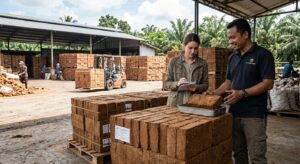
Today’s consumers demand transparency and sustainability. Sourcing raw materials responsibly is a critical step in the manufacturing process. Many organic cosmetic ingredients derived from plants require high-quality agricultural practices. Interestingly, the agricultural sector in Indonesia heavily supports the cosmetics supply chain. Farmers growing botanical extracts often rely on sustainable growing mediums. If you are interested in the agricultural backbone of these organic ingredients, you can explore The Ultimate Guide to Bulk Cocopeat Block Suppliers in Indonesia to see how sustainable farming practices are maintained. Furthermore, understanding the wholesale market for these mediums is crucial, as detailed in the Comprehensive Guide to Coir Pith Growing Media Wholesale in Indonesia. Maintaining a robust supply chain ensures that your cosmetic ingredients are grown in nutrient-rich, environmentally friendly environments.
3. Packaging and Branding
Packaging is the silent ambassador of your brand. In the private label industry, you have the freedom to select primary packaging (bottles, jars, tubes) and secondary packaging (boxes, labels) that resonate with your brand identity. Many Indonesian manufacturers offer end-to-end solutions, including in-house design services to ensure your packaging is not only aesthetically pleasing but also compliant with local and international labeling laws.
4. Production and Quality Control
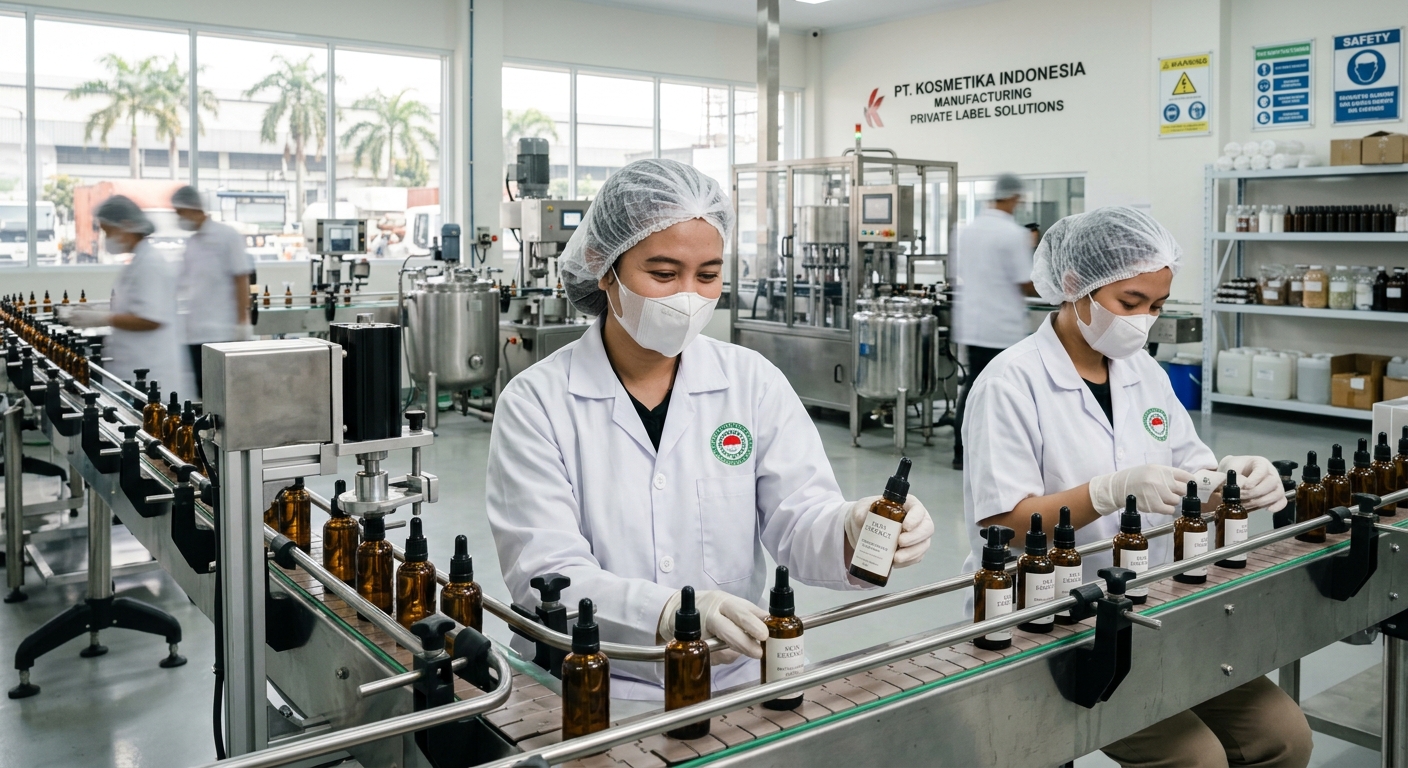
Once the formulation and packaging are approved, mass production begins. Reputable Indonesian manufacturers employ strict quality control measures at every stage of production. This includes testing raw materials upon arrival, monitoring the blending and filling processes, and conducting final inspections of the finished goods. Microbial testing and stability testing are standard procedures to ensure the safety and efficacy of the cosmetics.
Navigating Regulatory Requirements in Indonesia
Compliance is non-negotiable in the cosmetics industry. If you plan to sell your products within Indonesia, you must navigate the regulatory framework set by the Indonesian Food and Drug Authority, known as BPOM (Badan Pengawas Obat dan Makanan).
All cosmetic products must be registered and notified with BPOM before they can be legally distributed or sold in the country. The notification process requires detailed documentation, including the product formula, manufacturing method, and safety assessment. Partnering with a local private label manufacturer is highly advantageous here, as they usually have a dedicated regulatory affairs team to handle the BPOM notification process on your behalf.
If you are manufacturing in Indonesia strictly for export, the regulations may differ. You will need to ensure compliance with the target market’s regulations, such as the FDA in the United States or the CPNP in the European Union. Your Indonesian manufacturing partner can provide the necessary Certificates of Analysis (COA) and Material Safety Data Sheets (MSDS) required for international shipping and customs clearance. It is also essential to consider the cost of logistics and raw material sourcing, much like understanding the Indonesia Cocopeat Supplier Bulk Price: Your Guide to Premium Growing Mediums helps agricultural exporters manage their supply chain economics.
Cost vs. Benefit Analysis: Private Label vs. In-House Manufacturing
To better understand the advantages of using a private label manufacturer in Indonesia, let us look at a comparison between private labeling and setting up your own manufacturing facility.
| Aspect | Private Label Manufacturing | In-House Manufacturing |
|---|---|---|
| Initial Investment | Low to Moderate. No need to purchase machinery or lease a factory. | Extremely High. Requires facility, equipment, and staff. |
| Time to Market | Fast. Pre-formulated products can be launched in weeks. | Slow. Takes months or years to build and formulate. |
| Scalability | High. Easy to scale production up or down based on demand. | Rigid. Scaling requires further capital investment in machinery. |
| Expertise | Leverage the manufacturer’s existing R&D and regulatory knowledge. | Requires hiring a full team of chemists and compliance officers. |
| Focus | Allows the brand to focus 100% on marketing and sales. | Attention is divided between production, maintenance, and marketing. |
Choosing the Right Manufacturing Partner
Your manufacturer is essentially your business partner, and choosing the right one is critical to your brand’s success. When evaluating potential private label cosmetic manufacturers in Indonesia, consider the following criteria:
- Certifications: Ensure the facility has GMP certification and can assist with Halal and BPOM registrations.
- Minimum Order Quantity (MOQ): Check if their MOQs align with your budget and storage capabilities. Some factories offer low MOQs for startups.
- Product Range: Do they specialize in skincare, haircare, or color cosmetics? Choose a manufacturer that aligns with your niche.
- Communication and Transparency: A good manufacturer will be transparent about their sourcing, lead times, and pricing structures.
- Client Testimonials: Ask for references or look at other brands they have successfully manufactured for.
Conclusion
Private label cosmetics manufacturing in Indonesia presents a lucrative opportunity for beauty entrepreneurs worldwide. By tapping into the country’s rich biodiversity, competitive manufacturing costs, and growing expertise in Halal and GMP-certified production, brands can create high-quality, market-ready products with ease. Whether you are looking to launch a new organic skincare line using locally sourced botanical ingredients or seeking to expand your existing portfolio, Indonesia offers the infrastructure, regulatory support, and manufacturing prowess to bring your vision to life. By selecting the right manufacturing partner and understanding the local landscape, you can build a resilient and highly profitable beauty brand.
Frequently Asked Questions (FAQ)
What is the minimum order quantity (MOQ) for private label cosmetics in Indonesia?
MOQs vary significantly depending on the manufacturer and the type of product. Some factories catering to startups offer MOQs as low as 500 to 1,000 units per product. Larger, more established manufacturers may require MOQs of 5,000 units or more. It is best to negotiate this during your initial consultation.
Can an Indonesian manufacturer help me get BPOM certification?
Yes, most reputable private label manufacturers in Indonesia have in-house regulatory teams that will handle the BPOM notification process for you. They understand the documentation required and will ensure your formulation and packaging comply with local laws.
How long does the private label manufacturing process take?
If you choose a pre-existing formula (white label), the process can take anywhere from 4 to 8 weeks, primarily depending on packaging procurement. If you require a custom formulation, the timeline can extend to 3 to 6 months to account for R&D, stability testing, and regulatory approvals.
Are cosmetics manufactured in Indonesia considered high quality?
Absolutely. Indonesia has stringent GMP standards enforced by the government. Furthermore, many manufacturers produce goods for top-tier international brands and utilize advanced technology and high-quality raw materials to ensure world-class standards.