

Introduction to Indonesia Crude Palm Oil Export Regulations
Indonesia is the world’s largest producer and exporter of Crude Palm Oil (CPO), playing a pivotal role in the global vegetable oil market. The export regulations surrounding this vital commodity are complex, frequently updated, and designed to balance domestic supply needs with international market demands. Understanding these regulations is crucial for traders, manufacturers, and stakeholders involved in the palm oil supply chain.
Over the years, the Indonesian government has implemented various policies, including export levies, taxes, and domestic market obligations (DMO). These measures aim to stabilize local cooking oil prices while ensuring that the country benefits economically from its vast agricultural resources. This comprehensive guide delves into the intricacies of Indonesia’s CPO export regulations, providing clarity on current policies and their implications.
The Framework of Indonesia’s Export Policies
The regulatory framework for exporting CPO from Indonesia involves several government ministries, primarily the Ministry of Trade, the Ministry of Finance, and the Ministry of Agriculture. The policies are dynamic, often shifting in response to global price fluctuations and domestic inflation concerns.
Export Taxes and Levies
One of the primary tools used by the Indonesian government is the progressive export tax and levy system. The rates are tied to the international reference price of CPO. When global prices soar, the export taxes and levies increase proportionately. The funds collected from the export levy are managed by the Palm Oil Fund Management Agency (BPDPKS) and are used to support the domestic biodiesel mandate, replanting programs for smallholders, and research and development.
It is important for exporters to stay updated on the monthly reference prices published by the Ministry of Trade, as these dictate the financial viability of export contracts. Understanding these costs is just as crucial as navigating logistics, such as A Complete Guide to Sea Freight Container Shipping in Jakarta, which ensures that physical delivery aligns with regulatory compliance.
Domestic Market Obligation (DMO) and Domestic Price Obligation (DPO)
In recent years, to combat soaring domestic cooking oil prices, Indonesia introduced the Domestic Market Obligation (DMO) and Domestic Price Obligation (DPO). Under the DMO, CPO producers are required to allocate a specific percentage of their production to the domestic market before they are granted export permits. The DPO caps the price at which this domestic allocation can be sold.
Failure to comply with the DMO results in the withholding of export approvals. This policy ensures a steady supply of affordable cooking oil for the Indonesian populace, although it occasionally disrupts international supply chains and affects global prices.
Impact on Downstream Industries
Indonesia’s strategy has increasingly focused on promoting downstream industries to add value to raw CPO. By imposing higher taxes on raw CPO exports compared to refined products, the government incentivizes local processing.
This push for industrialization has spurred growth in sectors like oleochemicals, biodiesel, and consumer goods. For instance, the availability of processed palm oil derivatives is essential for businesses looking into Private Label Cosmetics Manufacturing Indonesia: A Complete Guide. The downstream focus not only boosts export revenues but also creates local employment opportunities.
Documentation and Compliance for Exporters
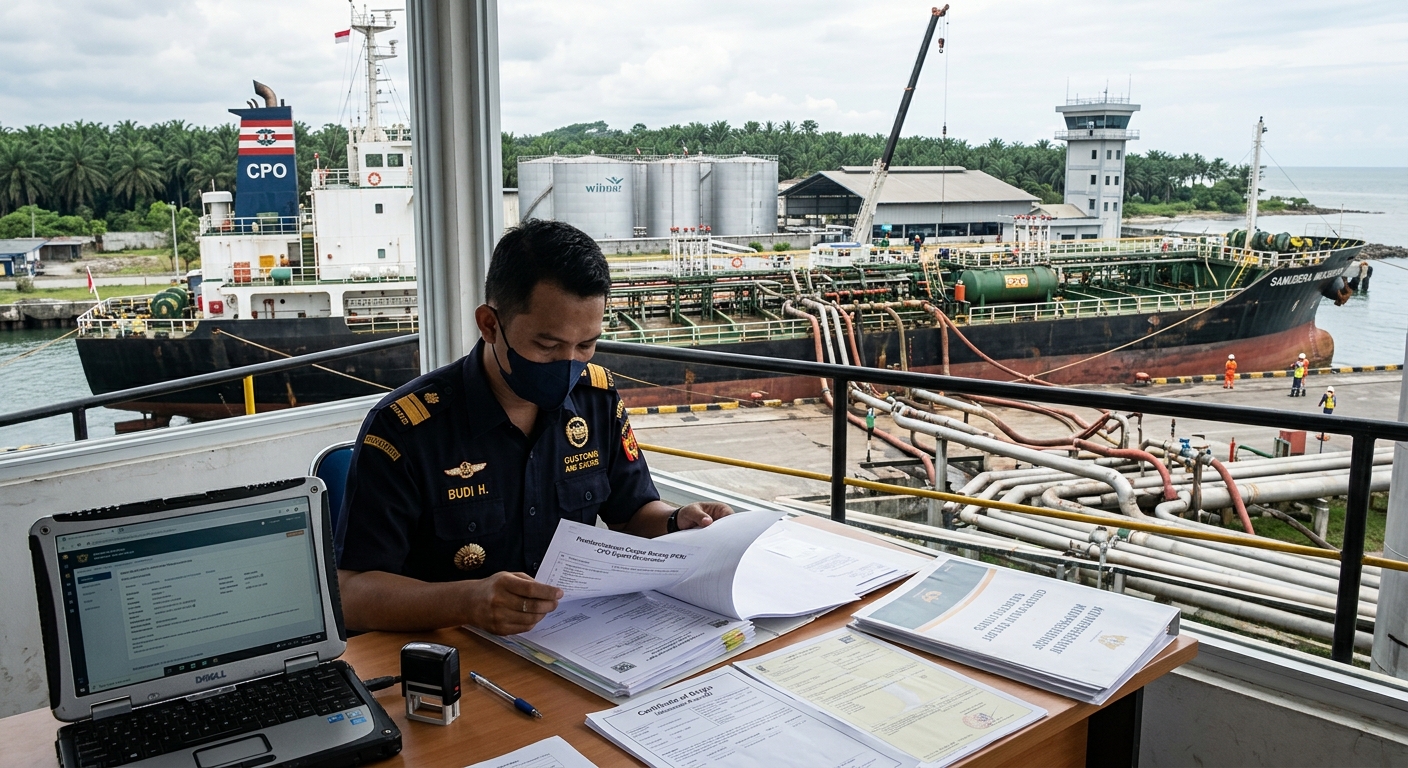
Exporting CPO requires meticulous attention to documentation. Exporters must obtain an Export Approval (Persetujuan Ekspor) from the Ministry of Trade. This approval is contingent upon proving compliance with the DMO requirements.
- Customs Declaration: Accurate filing of the PEB (Pemberitahuan Ekspor Barang).
- Certificate of Origin (SKA): Necessary for claiming tariff preferences in destination countries.
- Phytosanitary Certificates: Required by some importing nations to ensure the product meets health and safety standards.
- Sustainability Certification: Indonesian Sustainable Palm Oil (ISPO) or Roundtable on Sustainable Palm Oil (RSPO) certificates are increasingly demanded by global buyers.
Just as exporters must meticulously prepare paperwork for agricultural and forestry products—detailed in the Comprehensive Guide to Indonesia Wood Product Export Documents—CPO exporters face strict documentary scrutiny to ensure legal and sustainable trade.
Sustainability and the ISPO Mandate
Environmental concerns have placed significant pressure on the Indonesian palm oil industry. Deforestation, biodiversity loss, and greenhouse gas emissions are critical issues. In response, the government made the Indonesian Sustainable Palm Oil (ISPO) certification mandatory for all palm oil plantations, including smallholders.
ISPO aims to improve the competitiveness of Indonesian palm oil in the global market while ensuring environmental sustainability and adherence to labor laws. As international markets, particularly the European Union, implement stricter environmental regulations (like the EU Deforestation Regulation), compliance with sustainability standards becomes non-negotiable for CPO exporters.
Comparative Analysis with Other Agricultural Exports
Indonesia’s approach to regulating CPO exports shares similarities with other agricultural commodities where domestic supply and value addition are prioritized. However, the sheer scale and economic importance of palm oil make its regulations much more stringent and politically sensitive.
For comparison, other agricultural exports like coconut derivatives also have specific guidelines, though generally less restrictive than CPO. Businesses exploring ventures such as A Complete Guide to Private Label Cocopeat Growing Media will find a regulatory environment that promotes export but does not carry the heavy domestic market obligations seen in the palm oil sector.
Challenges and Future Outlook
The frequent changes in export levies, taxes, and DMO requirements pose a significant challenge for exporters, creating uncertainty in long-term contract pricing and supply chain management. The global shift towards sustainable and traceable supply chains requires continuous investment in certification and technology.
Looking forward, Indonesia is likely to maintain its firm grip on CPO exports to protect domestic consumers and promote its biodiesel mandate (such as the B35 program). The ongoing tension between meeting global demand and domestic priorities will continue to shape the regulatory landscape.
Conclusion
Navigating the Indonesia crude palm oil export regulations requires a deep understanding of government policies, tax structures, and sustainability mandates. The delicate balance Indonesia strikes between domestic food security, value-added industrialization, and international trade dictates the flow of this crucial commodity. For businesses involved in the CPO supply chain, staying informed and adaptable is essential for ensuring compliance and maintaining profitability in a dynamic global market.
Frequently Asked Questions (FAQ)
What is the Domestic Market Obligation (DMO) for Indonesian CPO?
The DMO is a government policy requiring palm oil producers to sell a specified percentage of their production to the domestic market at a capped price (DPO) before they are allowed to export. This ensures adequate local supply of cooking oil.
Why does Indonesia change its CPO export taxes so frequently?
Export taxes and levies are tied to the international reference price of crude palm oil. As global prices fluctuate, the government adjusts the rates to manage domestic prices, control inflation, and fund national programs like the biodiesel mandate and smallholder replanting.
Is sustainability certification mandatory for exporting CPO from Indonesia?
Yes, the Indonesian government has made the Indonesian Sustainable Palm Oil (ISPO) certification mandatory for all palm oil producers. Additionally, many international buyers require RSPO (Roundtable on Sustainable Palm Oil) certification to meet global environmental and ethical standards.
How does the CPO export policy affect downstream industries?
The government sets higher export taxes on raw CPO compared to refined palm oil products. This incentivizes local companies to process raw materials domestically, boosting downstream industries like cooking oil manufacturing, oleochemicals, and biodiesel, thereby creating jobs and adding economic value.