

Introduction to Importing Indonesian Charcoal to Europe
The global demand for high-quality charcoal has seen an unprecedented surge over the past decade. Among the top producers globally, Indonesia stands out as a premier source, particularly renowned for its sustainable coconut shell charcoal and hardwood lump charcoal. For European buyers, importing charcoal from Indonesia represents a lucrative opportunity to secure premium products for barbecue, shisha, and industrial applications. However, navigating the complexities of international trade, stringent European Union regulations, and transcontinental logistics requires a comprehensive understanding of the process.
This article provides an in-depth exploration of importing charcoal from Indonesia to Europe. We will cover the types of charcoal available, the rigorous European compliance standards, effective supplier sourcing strategies, packaging considerations, and the logistics of maritime shipping.
Why Choose Indonesia for Charcoal Imports?
Indonesia is uniquely positioned as a leading global exporter of charcoal due to its vast agricultural resources and strategic manufacturing capabilities. The country is the world’s largest producer of coconuts, providing an abundant and sustainable raw material for coconut shell charcoal briquettes. Unlike traditional wood charcoal, coconut shell charcoal is eco-friendly, as it utilizes agricultural waste rather than contributing to deforestation.
- High Heat and Long Burn Time: Indonesian coconut charcoal is prized for its high caloric value, producing intense heat and burning significantly longer than many alternatives.
- Low Ash Content: Premium Indonesian briquettes leave very little ash, making them ideal for high-end shisha lounges and professional barbecue settings.
- Odorless and Smokeless: High-quality production methods ensure that the charcoal does not emit unwanted odors or smoke, preserving the flavor of shisha tobacco or grilled foods.
- Sustainability: Utilizing coconut shells promotes a circular economy, appealing to the increasingly eco-conscious European consumer base.
Types of Charcoal Available in Indonesia
Before initiating the import process, it is essential to understand the different types of charcoal produced in Indonesia to match your target market in Europe.
1. Coconut Shell Charcoal Briquettes
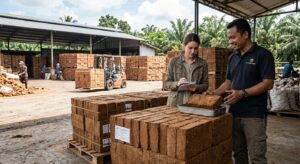
These are manufactured by carbonizing coconut shells, crushing them into powder, mixing them with a natural binder (like tapioca starch), and pressing them into various shapes (cubes, hexagons, or cylinders). They are predominantly used for shisha/hookah and premium BBQ.
2. Hardwood Lump Charcoal
Produced from traditional hardwoods, this type of charcoal is favored by European barbecue enthusiasts and professional chefs for its natural wood flavor and quick ignition. Halaban wood is a popular choice in Indonesia for hardwood charcoal due to its density.
3. Sawdust Briquette Charcoal
Made from compressed sawdust without chemical binders, this charcoal is known for its distinctive hexagonal shape with a hollow center. It is heavily used in the culinary industry across Europe, particularly in Asian restaurants and large-scale grilling operations.
Understanding European Import Regulations
Importing charcoal into the European Union is highly regulated to ensure environmental protection, consumer safety, and fair trade. Navigating these regulations is arguably the most critical step for any European importer.
REACH Compliance
The Registration, Evaluation, Authorisation and Restriction of Chemicals (REACH) regulation is mandatory for importing charcoal into the EU. Charcoal is considered a substance under REACH. Importers bringing in more than one tonne of charcoal per year must register with the European Chemicals Agency (ECHA). Ensuring your Indonesian supplier complies with REACH or provides the necessary data for your registration is paramount.
EUTR and Deforestation Regulations
The European Union Timber Regulation (EUTR) requires importers to exercise due diligence to prevent illegally harvested timber from entering the EU market. While coconut shell charcoal is often exempt from EUTR (as it is an agricultural byproduct), wood-based charcoal falls under strict scrutiny. Importers must verify the origin of the wood and ensure it meets sustainability certifications, such as FSC (Forest Stewardship Council).
Customs and Tariffs
Charcoal typically falls under the HS Code 4402. While many developing nations, including Indonesia, may benefit from the Generalised Scheme of Preferences (GSP) offering reduced or zero tariffs, it is vital to consult with a customs broker in your specific European country to determine the exact duty rates and VAT applications.
Sourcing and Evaluating Indonesian Suppliers
Finding a reliable supplier in Indonesia is the cornerstone of a successful import business. The market is saturated with manufacturers, brokers, and trading companies, making due diligence essential.
When looking for the best materials, reading a Comprehensive Guide to Sourcing Coconut Products from Indonesian Suppliers can provide invaluable insights into the broader agricultural market in Indonesia. It helps importers understand the supply chain from the farm level up to the manufacturing plant.
For specific shisha needs, you might want to review A Complete Guide to Shisha Charcoal Briquettes Wholesale in Jakarta. Jakarta is a major hub for export, and understanding the wholesale dynamics there can give you a competitive edge in pricing and quality negotiation.
Supplier Verification Checklist
- Factory Audits: Always conduct a factory audit, either personally or through a third-party inspection agency, to verify production capacity and working conditions.
- Sample Testing: Request samples before placing a bulk order. Test the charcoal for moisture content, ash content, fixed carbon, and burn time. Send samples to an independent laboratory if necessary.
- Certifications: Ask for necessary export documents and certifications, such as MSDS (Material Safety Data Sheet), SDB (Self-Heating Certificate), and origin certificates.
- Track Record: Request references from other European buyers to gauge the supplier’s reliability and consistency.
Custom Packaging and OEM Solutions
In the highly competitive European charcoal market, branding is everything. Most Indonesian manufacturers offer Original Equipment Manufacturer (OEM) services, allowing you to print your own brand on the packaging.
Understanding your branding options is crucial, as detailed in Custom Packaging Coconut Charcoal OEM: A Comprehensive Guide. Packaging for charcoal requires specific considerations. The inner packaging must be moisture-proof (usually a plastic liner) to prevent the charcoal from absorbing humidity during the long sea voyage. The outer packaging, typically a master carton, must be sturdy enough to withstand stacking and rough handling.
| Packaging Component | Material Options | Purpose |
|---|---|---|
| Inner Liner | PE Plastic, Biodegradable Plastic | Moisture barrier, preserves product integrity |
| Inner Box (Retail) | Corrugated Cardboard, Duplex Paper | Consumer branding, product information |
| Master Carton | 5-ply or 7-ply Corrugated Board | Bulk transport protection, palletizing |
Logistics, Shipping, and Handling
Transporting charcoal from Indonesia to Europe involves complex maritime logistics. Charcoal is classified as a hazardous material under the IMDG (International Maritime Dangerous Goods) Code, specifically Class 4.2 (Substances liable to spontaneous combustion).
The Vanning and Shipping Process
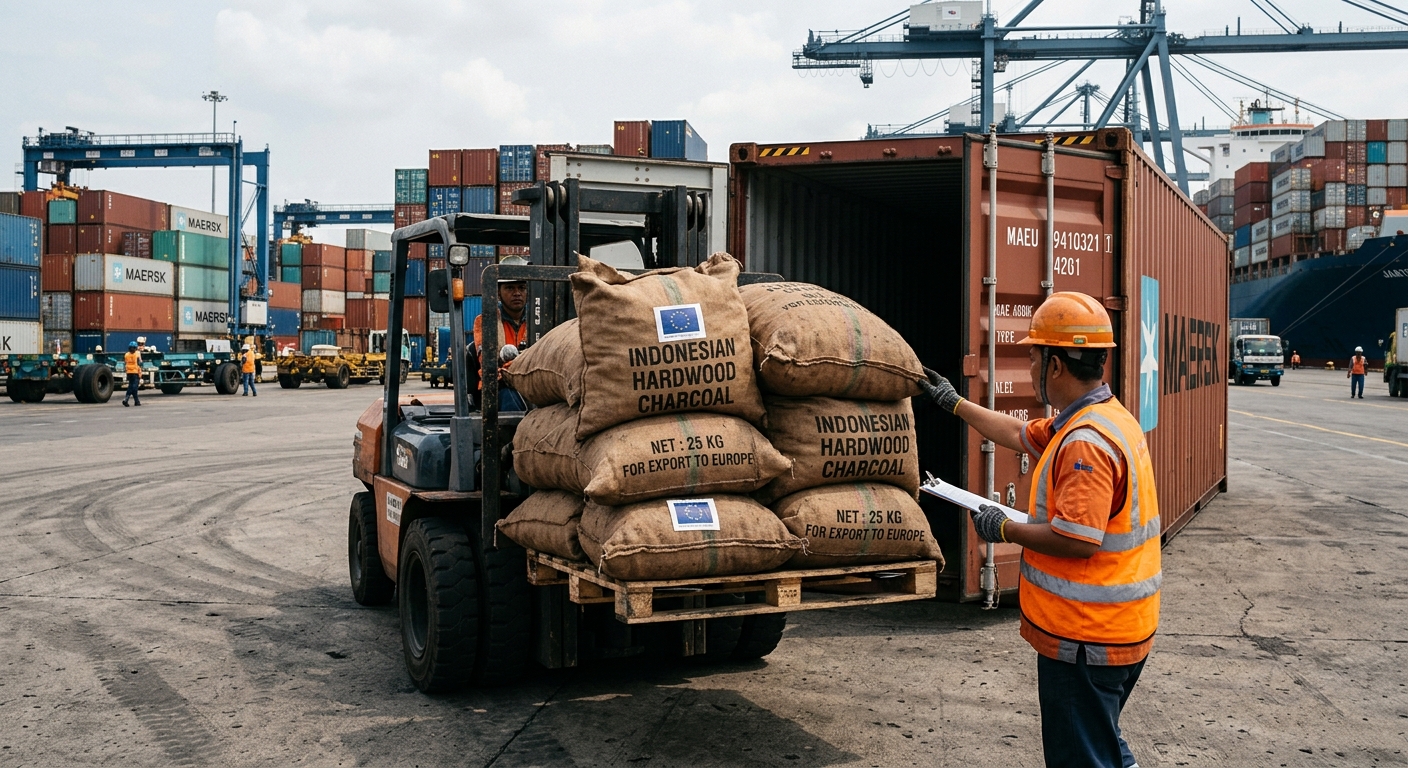
Due to its classification, shipping lines require strict documentation and handling procedures. A Self-Heating Test (SHT) certificate is mandatory to prove that the charcoal will not spontaneously combust during transit. The cargo must be properly vanned (loaded into the container) to ensure adequate ventilation and stability.
Working with established Indonesian export specialists can simplify the logistical hurdles. They understand the specific requirements of major European ports like Rotterdam, Hamburg, and Antwerp, ensuring that your cargo clears customs smoothly upon arrival.
Conclusion
Importing charcoal from Indonesia to Europe is a highly profitable venture when executed with precision and care. By focusing on sustainable sourcing, strictly adhering to European regulations like REACH, meticulously vetting suppliers, and optimizing your logistics strategy, you can build a robust supply chain that delivers premium charcoal to the European market. As consumer preferences continue to shift towards high-quality, eco-friendly products, Indonesian coconut shell charcoal remains an unparalleled choice for forward-thinking importers.
Frequently Asked Questions (FAQ)
What is the HS Code for importing charcoal into Europe?
The standard Harmonized System (HS) Code for wood and coconut shell charcoal is 4402. Specifically, 4402.90 is often used for coconut shell charcoal. However, it is always recommended to verify the exact classification with your local customs authority.
Is REACH registration mandatory for coconut charcoal?
Yes, under the European Union’s REACH regulation, charcoal is considered a chemical substance. If you are importing more than one tonne of charcoal per year into the EU, you must comply with REACH registration requirements to legally place the product on the market.
How long does shipping take from Indonesia to major European ports?
Ocean freight from major Indonesian ports (such as Tanjung Priok in Jakarta or Tanjung Emas in Semarang) to main European ports (like Rotterdam or Hamburg) typically takes between 30 to 45 days, depending on the shipping line, route, and current global maritime traffic conditions.
Why is Indonesian charcoal considered hazardous cargo?
Charcoal is classified under IMDG Class 4.2 because it is a carbon-rich material that can be liable to spontaneous combustion if improperly processed or packed. Shipping lines require a Self-Heating Test certificate from an independent surveyor to verify that the specific batch is safe for ocean transit.