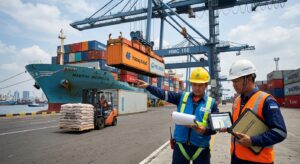



The global trade landscape is shifting rapidly, offering fresh pathways for businesses to grow. Many companies now look toward the United Arab Emirates as a gateway for enhancing indonesian export competitiveness in the middle east. This region provides a unique hub for brands ready to scale their operations internationally.
Success requires more than just a great product. It demands a deep understanding of local trade dynamics and geopolitical shifts. By navigating these complexities, firms can unlock sustainable growth and build lasting partnerships across borders.
Our analysis provides a clear roadmap for your journey. We examine how to leverage economic strengths to overcome regional hurdles. Let us explore the opportunities waiting for your business in this vibrant market.
Key Takeaways
- Identify strategic trade routes through the United Arab Emirates.
- Understand the geopolitical factors influencing regional commerce.
- Leverage unique economic advantages to scale operations effectively.
- Overcome common hurdles in modern cross-border trade.
- Build sustainable growth through local market insights.
The Current Landscape of Indonesia-UAE Trade Relations
For decades, Indonesia and the Middle East have shared deep cultural and religious bonds, but today we are seeing a significant shift toward tangible economic results. While these historical ties provided a strong foundation, the modern era demands a more results-oriented approach to business. Achieving successful trade expansion in the Middle East now requires a transition from purely diplomatic pleasantries to high-impact commercial activity.
Historical Context and Recent Bilateral Agreements
Historically, the connection between Indonesia and the UAE was primarily defined by educational exchanges and shared religious values. These brotherly ties created a sense of mutual trust that remains a vital asset for any business entering the region today. However, the signing of the Indonesia-UAE Comprehensive Economic Partnership Agreement (IUAE-CEPA) has fundamentally changed the game.
This landmark agreement serves as a catalyst for enhancing trade relations by reducing tariffs and streamlining customs procedures. It signals a move away from passive cooperation toward an active, integrated economic partnership. Businesses that leverage these new frameworks will find a much smoother path to market entry than those relying solely on legacy connections.
Key Sectors Driving Trade Growth
Several industries are currently leading the charge in bilateral trade, offering significant potential for Indonesian exporters. Energy, palm oil, and textiles remain traditional pillars, but the focus is rapidly expanding into high-value sectors. The UAE is particularly interested in digital services, food security, and sustainable infrastructure.
By focusing on these high-growth areas, Indonesian companies can ensure their efforts align with the UAE’s national vision for economic diversification. Strategic alignment is the key to unlocking long-term success in this competitive market. Prioritizing these sectors is essential for any firm serious about sustainable trade expansion in the Middle East.
Ultimately, the goal of enhancing trade relations is to build a resilient supply chain that benefits both nations. By moving beyond simple commodity exports and embracing value-added goods, Indonesian businesses can secure a permanent foothold in the Emirates. The current landscape is ripe with opportunity for those ready to adapt to these modern standards.
Strategic Framework for Enhancing Indonesian Export Competitiveness in the Middle East
To thrive in the competitive Middle Eastern landscape, Indonesian businesses must adopt a more proactive strategic framework. Moving beyond traditional trade patterns requires a shift toward data-driven decision-making and long-term planning. By enhancing indonesian export competitiveness in the middle east, companies can secure a stronger foothold in the rapidly evolving UAE economy.
Identifying Competitive Advantages in the UAE Market
A successful entry into the Emirates begins with a comprehensive indonesian export market analysis. This process helps firms identify specific gaps where Indonesian products can outperform international rivals. By focusing on unique value propositions, such as high-quality agricultural goods or specialized manufacturing, businesses can better target local needs.
Research plays a vital role in this discovery phase. For those looking to deepen their understanding of regional trade dynamics, reviewing academic insights on business performance provides a solid foundation for strategic planning. Understanding these nuances allows exporters to tailor their offerings to the specific preferences of UAE consumers.
Aligning Export Strategies with Regional Demand
Effective export growth strategies must prioritize diversification to reduce reliance on traditional partners. By analyzing current trends, Indonesian exporters can pivot their production to meet the high demand for premium, sustainable, and halal-certified goods in the UAE. This alignment ensures that domestic output remains relevant to the sophisticated tastes of the local market.
The following table outlines key factors that businesses should consider when refining their approach to the UAE market:
| Strategic Factor | Focus Area | Expected Outcome |
|---|---|---|
| Market Research | Consumer Trends | Higher Conversion |
| Product Quality | Halal Standards | Increased Trust |
| Logistics | Supply Chain Speed | Reduced Costs |
| Partnerships | Local Distributors | Market Penetration |
By integrating these elements into a cohesive plan, companies can transition from reactive exporting to a proactive, strategy-driven model. This structured approach not only mitigates risks but also maximizes the potential for long-term success in the region.
Navigating the UAE Regulatory and Customs Environment
Mastering the regulatory framework of the UAE is the key to unlocking sustainable growth in the region. While the Emirates offers a wealth of potential, businesses must first clear the hurdle of local compliance. A proactive approach to these bureaucratic requirements is essential for successful middle east market penetration.
Understanding Import Standards and Certification Requirements
The United Arab Emirates maintains rigorous quality and safety standards for all incoming goods. Most products must comply with regulations set by the Ministry of Industry and Advanced Technology (MoIAT). Ensuring your documentation is accurate before shipment prevents costly delays at the border.
Exporters should prioritize obtaining the necessary certificates of conformity early in the process. These certifications verify that your goods meet local health, safety, and environmental benchmarks. By aligning your products with these standards, you create significant export market opportunities that distinguish your brand from non-compliant competitors.
Leveraging Free Trade Agreements for Cost Efficiency
The UAE serves as a vital global trade hub, bolstered by its proximity to the Red Sea and the Strait of Hormuz. These strategic transit points allow for efficient logistics, but the real financial advantage lies in the country’s network of trade deals. Leveraging Comprehensive Economic Partnership Agreements (CEPAs) can drastically reduce tariff burdens for your business.
By utilizing these agreements, companies can optimize their supply chain costs and improve their overall profit margins. This financial efficiency is a cornerstone of long-term middle east market penetration. When you align your logistics strategy with these trade benefits, you unlock new export market opportunities that were previously out of reach.
Staying informed about updates to these agreements is crucial for maintaining a competitive edge. Regularly reviewing your customs strategy ensures that you remain agile in a fast-paced market. Taking these steps will solidify your presence in the Emirates and pave the way for future expansion.
Optimizing Supply Chain and Logistics for Middle Eastern Markets
Building a resilient supply chain is the secret to long-term growth for Indonesian businesses in the UAE. Efficient logistics serve as the backbone of any successful international trade operation. By focusing on these core areas, companies can ensure their goods reach customers on time despite regional challenges.
When optimizing indonesian exports, it is vital to account for potential disruptions in the Middle East. Geopolitical tensions can sometimes impact transit routes and increase overall shipping costs. Having a flexible strategy helps mitigate these risks effectively.
Selecting Reliable Freight and Distribution Partners
Finding the right partner is more than just comparing shipping rates. You need a logistics provider that understands the unique cultural and regulatory landscape of the Emirates. A local partner can navigate customs hurdles much faster than an outsider.
Look for firms that offer end-to-end visibility for your shipments. This transparency allows you to track your inventory in real-time and react quickly to any delays. Prioritizing partners with strong regional networks is a key step in regional export development.
Utilizing UAE Logistics Hubs as a Gateway to the Region
The UAE serves as a world-class logistics hub that connects Asia, Africa, and Europe. By leveraging facilities like Jebel Ali Port or Dubai South, Indonesian exporters can streamline their distribution channels. These hubs act as a central point for warehousing and re-exporting goods to neighboring countries.
Using these advanced facilities allows for faster turnaround times and lower storage costs. It is a smart way to scale your operations without needing to build infrastructure in every single market. Consider the following comparison of logistics approaches to help guide your decision-making process.
| Strategy | Primary Benefit | Best For |
|---|---|---|
| Direct Shipping | Lower initial costs | High-volume, stable markets |
| UAE Hub Consolidation | Faster regional delivery | Expanding into multiple countries |
| Local Third-Party Logistics | Deep market expertise | Navigating complex regulations |
Ultimately, optimizing indonesian exports requires a commitment to constant improvement. By investing in reliable partnerships and utilizing the UAE’s strategic infrastructure, your business can achieve sustainable regional export development. Stay agile, and your brand will thrive in this competitive environment.
Cultural Intelligence and Business Etiquette in the Emirates
Mastering local business etiquette is the secret ingredient to unlocking new export market opportunities in the UAE. While technical specifications and pricing are important, the human element remains the cornerstone of commerce in this region. By prioritizing cultural intelligence, Indonesian businesses can effectively focus on enhancing trade relations with their Emirati counterparts.

Building Trust-Based Relationships with Local Partners
In the Emirates, business is rarely just a transaction; it is a long-term commitment built on personal rapport. You should expect to invest significant time in face-to-face meetings before discussing formal contracts. Hospitality is a key cultural pillar, and accepting coffee or tea during meetings is a sign of respect that helps foster genuine connections.
“In the Middle East, you do not do business with a company; you do business with a person. Trust is the currency of the region, and it is earned through patience and consistent presence.”
It is essential to demonstrate reliability and integrity throughout your interactions. Showing a sincere interest in your partner’s background and local customs will distinguish your brand from competitors. This approach is vital for enhancing trade relations in a market that values loyalty above all else.
| Aspect | Indonesian Approach | Emirati Expectation |
|---|---|---|
| Communication | Indirect/Soft | Respectful/Formal |
| Decision Making | Hierarchical | Consensus-based |
| Meeting Pace | Flexible | Relationship-focused |
Adapting Marketing Communications for the Middle Eastern Consumer
Successful entry into the UAE requires a nuanced approach to your brand messaging. Marketing materials should reflect local values, such as the importance of family, community, and tradition. Using culturally appropriate imagery and respecting religious sensitivities will ensure your message resonates with the local audience.
Language localization is another critical factor that goes beyond simple translation. Your content should feel native and speak directly to the aspirations of the Middle Eastern consumer. By tailoring your outreach, you maximize your export market opportunities and build a brand that feels like a natural part of the local landscape.
Digital Transformation and E-commerce Penetration
Embracing digital transformation is no longer a luxury but a necessity for Indonesian firms aiming to succeed in the Middle East. As the region shifts toward a tech-forward economy, businesses must adapt their outreach to remain competitive. This transition is a critical component of successful middle east market penetration in the current era.
Capitalizing on the UAE’s Growing Digital Marketplace
The United Arab Emirates boasts one of the most advanced digital infrastructures in the world. Indonesian exporters can leverage this by integrating their products into popular local e-commerce platforms. By doing so, you can reach consumers directly and bypass traditional, multi-layered distribution hurdles.
Digital agility allows your brand to respond quickly to shifting consumer preferences. When you utilize local marketplaces, you gain valuable data on buying habits, which is essential for long-term regional export development. Establishing a strong online presence helps build brand recognition before your physical goods even arrive at the port.
Implementing Effective B2B Digital Outreach Strategies
Connecting with potential buyers requires a sophisticated approach to digital networking. Many successful exporters now use professional platforms like LinkedIn to identify key decision-makers in the Emirates. A personalized, data-driven outreach strategy often yields better results than traditional cold calling.
Your digital strategy should focus on providing value through white papers, webinars, and virtual trade showcases. These tools demonstrate your expertise and help foster trust with potential partners. Consistent engagement through these channels is vital for sustained middle east market penetration and broader regional export development.
| Digital Channel | Primary Benefit | Target Audience |
|---|---|---|
| B2B Marketplaces | High visibility | Wholesalers & Retailers |
| LinkedIn Outreach | Direct networking | Decision-makers |
| E-commerce Portals | Direct-to-consumer | End-users |
| Email Marketing | Lead nurturing | Potential partners |
Product Diversification and Value-Added Exports
To succeed in the UAE, Indonesian businesses must shift their focus from raw materials to sophisticated, value-added products. By optimizing indonesian exports, local companies can capture higher margins and build stronger brand recognition in a competitive international landscape.
This transition is not merely an option but a necessity for long-term growth. Moving up the value chain allows exporters to differentiate themselves from low-cost competitors while meeting the specific needs of the modern Emirati consumer.
Moving Beyond Commodities to High-Value Goods
Indonesia has long held a comparative advantage in raw commodities like palm oil and essential oils. However, the real opportunity lies in processing these raw materials into finished, high-value goods such as premium skincare, gourmet food products, and specialized industrial lubricants.
Innovation is the engine of progress. By investing in local manufacturing capabilities, Indonesian firms can transform basic ingredients into luxury items that appeal to the sophisticated tastes of the Middle Eastern market.
Consider the following advantages of shifting toward value-added exports:
- Increased Profit Margins: Finished goods command higher prices than raw materials.
- Brand Loyalty: Unique, high-quality products foster stronger connections with local consumers.
- Market Resilience: Diversified product lines protect businesses from commodity price volatility.
Meeting Halal Certification Standards for Food and Cosmetics
Gaining consumer trust in the UAE requires more than just quality; it demands strict adherence to cultural and religious standards. Halal certification is the gold standard for food and cosmetics in the region, serving as a vital seal of approval for local buyers.
“Trust is the currency of the Middle Eastern market, and Halal certification is the primary way to earn it for consumer goods.”
Exporters must ensure their supply chains are fully compliant with regional Halal requirements. This commitment to transparency and integrity is essential for boosting export performance across the Emirates. When companies prioritize these standards, they effectively remove barriers to entry and position themselves as reliable, long-term partners in the region.
Financial Instruments and Government Support Programs
Expanding your business into the United Arab Emirates requires a solid financial foundation to manage the inherent risks of international trade. The Indonesian government provides a robust framework of support to help local businesses thrive in the Middle East. By leveraging these tools, companies can implement effective export growth strategies that ensure long-term stability.
Accessing Export Financing and Credit Insurance
Financial stability is the backbone of any successful venture abroad. Exporters can access specialized financing through institutions like the Indonesia Exim Bank, which offers credit facilities tailored for international expansion. These instruments are essential for boosting export performance by protecting your capital against non-payment or political risks.
Credit insurance acts as a safety net, allowing firms to offer competitive payment terms to UAE buyers without fearing losses. Utilizing these financial products helps businesses maintain cash flow while navigating the complexities of cross-border transactions. Securing your investment is the first step toward building a sustainable presence in the region.
Utilizing Trade Missions and Embassy Resources
Beyond direct funding, the Indonesian government actively uses diplomatic channels to support national economic interests. Trade missions provide invaluable opportunities to meet potential partners and gain firsthand market intelligence. These events are designed to facilitate export growth strategies that align with the specific needs of the Emirati market.
Your local embassy serves as a vital bridge for networking and regulatory guidance. By engaging with these resources, you can gain a competitive edge and ensure your boosting export performance efforts are well-informed. The following table outlines the key support mechanisms available to Indonesian exporters.
| Support Type | Primary Benefit | Target Audience |
|---|---|---|
| Export Credit Insurance | Risk Mitigation | New Exporters |
| Trade Missions | Market Networking | SMEs & Large Firms |
| Embassy Consultations | Regulatory Insight | All Indonesian Firms |
| Working Capital Loans | Operational Liquidity | Growing Businesses |
Overcoming Common Barriers to Market Entry
A thorough indonesian export market analysis reveals that proactive risk management is the key to long-term success. While the UAE offers immense potential, businesses must navigate various hurdles to ensure sustainable trade expansion in the middle east. Preparation remains your most valuable asset when entering this dynamic region.
Mitigating Risks in Cross-Border Transactions
Political instability and economic fluctuations can create uncertainty for foreign investors. To protect your interests, it is essential to utilize reliable financial instruments such as letters of credit or export credit insurance. These tools provide a safety net against payment defaults and currency volatility.
Building strong relationships with local legal advisors is another critical step. They can help you navigate complex regulatory frameworks and ensure that your contracts are enforceable. Risk mitigation is not just about avoiding problems; it is about creating a stable foundation for your operations.
Addressing Competition from Global Exporters
The UAE market attracts businesses from all over the world, leading to intense competition. To stand out, you must focus on the unique value proposition of your products. Highlighting quality, sustainability, or specific cultural adaptations can give you a competitive edge over larger, more established global players.
Continuous monitoring of market trends allows you to pivot your strategy when necessary. By staying agile, you can maintain your momentum and achieve successful trade expansion in the middle east. Remember that consistency and reliability are often the deciding factors for local partners when choosing between international suppliers.
Conclusion
Building a bridge between Jakarta and Dubai creates endless possibilities for trade. Success in this region demands a blend of strategic planning, cultural awareness, and digital agility. By focusing on high-value goods and meeting strict certification standards, your business can thrive in this competitive landscape.
The process of enhancing indonesian export competitiveness in the middle east relies on your ability to adapt to local preferences. Utilizing the UAE as a primary logistics hub allows you to reach broader markets with greater efficiency. You should view every partnership as a long-term investment in your brand reputation.
Government resources and trade missions remain vital tools for your expansion efforts. Stay proactive by monitoring shifts in consumer demand and regulatory updates. Committing to these practices is essential for enhancing indonesian export competitiveness in the middle east. The path forward is open for those ready to embrace these opportunities with confidence and dedication.