

Understanding Indonesia’s Charcoal Briquette Export Regulations
Indonesia is globally recognized as a powerhouse in the production of high-quality coconut charcoal briquettes. Due to their high heat output, minimal ash content, and eco-friendly nature, international demand has skyrocketed. However, navigating the bureaucratic landscape of Indonesian trade can be complex. For buyers and exporters alike, understanding the strict regulatory framework is essential to ensure a smooth, legal, and hassle-free transaction.
To participate in this lucrative market, business entities must establish a solid legal foundation. Partnering with a registered and verified Indonesian exporter is the first critical step. If you are looking to source high-quality products directly from a reputable supplier, you can explore options like Coconut Charcoal Briquettes Wholesale Indonesia: The Premium Choice for Shisha and BBQ, which complies with all local and international shipping standards.
Mandatory Business Licenses for Exporters
Before any shipment can leave an Indonesian port, the exporting company must possess several foundational business licenses. These regulations are designed to prevent illegal logging and ensure that only high-quality, legally sourced coconut shells are utilized. The essential company documents include:
- NIB (Nomor Induk Berusaha): The Business Identification Number, which serves as the basic registration for any Indonesian business entity.
- NPWP (Nomor Pokok Wajib Pajak): The corporate tax identification number.
- SITU/SIUP: Local business permits indicating compliance with regional zoning and trading laws.
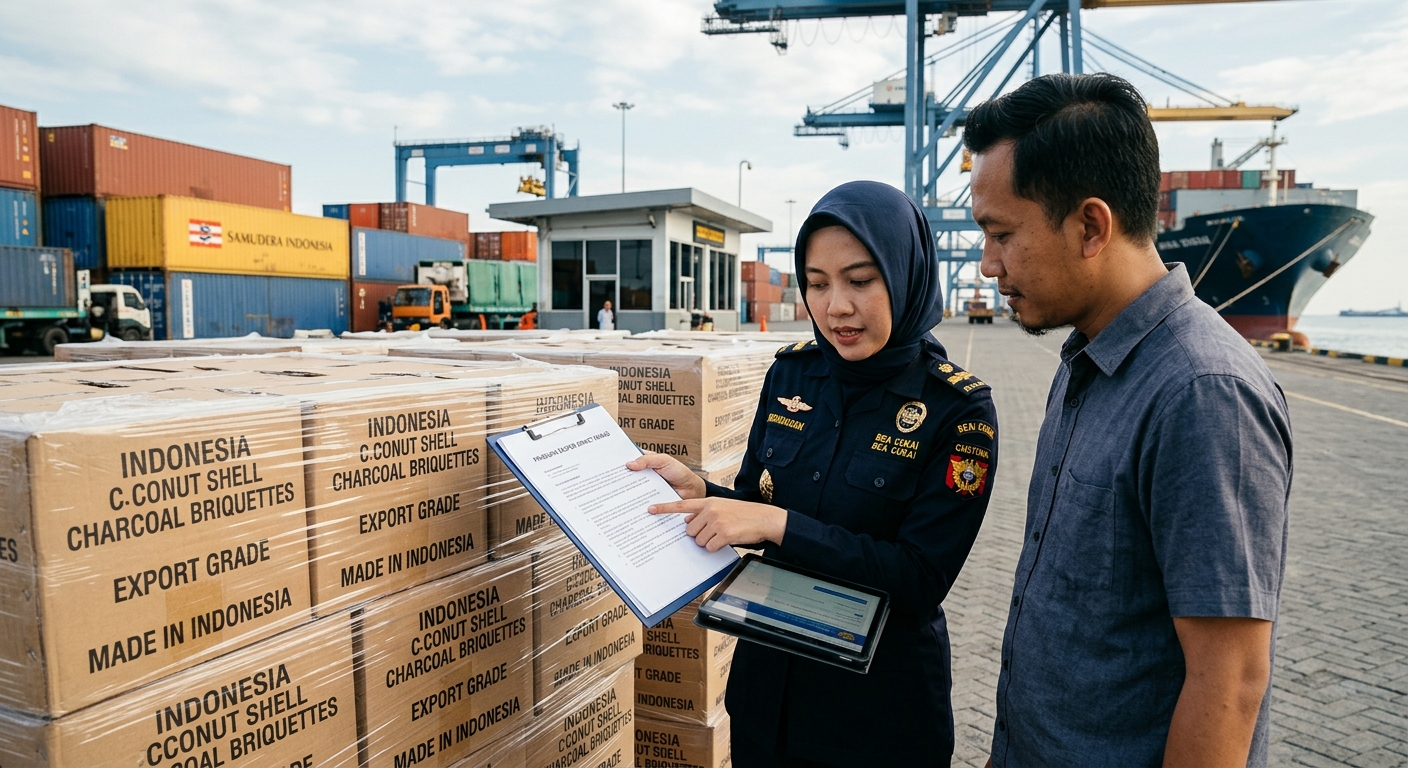
- PEB (Pemberitahuan Ekspor Barang): The official Export Declaration submitted to Indonesian Customs.
For international buyers looking to partner with qualified suppliers, conducting due diligence on these credentials is vital. Working with established platforms like ExportNusa ensures that you are dealing with legally compliant manufacturers who understand the regulatory nuances of global trade.
Safety and Shipping Compliance: The SHT and MSDS
Because charcoal is classified as a hazardous material due to its potential for self-heating and spontaneous combustion, shipping companies and international customs authorities require rigorous safety documentation. The two most critical documents are:
| Document Name | Purpose | Issuing Authority / Standard |
|---|---|---|
| MSDS (Material Safety Data Sheet) | Details the chemical properties, safety precautions, and emergency procedures for handling the charcoal. | Accredited Testing Laboratory |
| SHT (Self-Heating Test) Report | Certifies that the briquettes do not self-heat under standard shipping temperatures (usually Class 4.2 UN standard). | Surveyor Indonesia / Sucofindo |
Without a valid SHT certificate declaring the product as “Non-DG” (Non-Dangerous Goods), shipping lines will refuse to load the cargo, or charge exorbitant rates for dangerous goods handling.
Customs Clearance and Quality Inspection
Indonesian Customs closely monitors the export of natural resource-based products. Phytosanitary certificates from the Agricultural Quarantine Agency may be required to ensure that the organic packaging materials (such as wooden pallets or cardboard boxes) are free from pests. Additionally, a Certificate of Origin (COO) is highly recommended. The COO allows international buyers to claim preferential tariff treatments under various bilateral or multilateral free trade agreements that Indonesia participates in.
Conclusion
Exporting charcoal briquettes from Indonesia requires strict adherence to both local trade laws and international maritime shipping regulations. By securing the necessary licenses, conducting mandatory self-heating tests, and partnering with verified suppliers, exporters can successfully tap into the global demand. Navigating these regulations correctly not only protects your investment but also ensures that premium Indonesian coconut charcoal reaches its destination safely and efficiently.
Frequently Asked Questions (FAQ)
Are coconut charcoal briquettes classified as Dangerous Goods (DG)?
Generally, untreated charcoal is classified as Class 4.2 Dangerous Goods due to self-heating risks. However, if the manufacturer’s briquettes pass the official Self-Heating Test (SHT) from an accredited laboratory, they can be classified and shipped as “Non-DG” (Non-Dangerous Goods), which significantly reduces shipping costs.
What is a Certificate of Origin (COO) and why is it important?
A Certificate of Origin is an official document certifying that the charcoal briquettes were produced in Indonesia. It is crucial for international customs clearance and often allows the importer to benefit from reduced customs duties or tax exemptions in their home country.
Can foreign companies export charcoal directly from Indonesia?
Foreign companies cannot export directly unless they have established a local legal entity (PT PMA) in Indonesia and obtained all necessary export licenses. Alternatively, foreign buyers usually partner with licensed local exporters or use undername export services.