

Understanding Minimum Order Quantity (MOQ) in Indonesia
When businesses look to expand their supply chain into Southeast Asia, Indonesia emerges as a powerhouse for manufacturing and agriculture. However, one of the most critical factors to consider when engaging with these vendors is the Minimum Order Quantity (MOQ). Understanding the MOQ for Indonesian suppliers is essential for effective inventory management, cost control, and establishing long-term, profitable business relationships. This article provides a deep dive into how MOQs work in Indonesia, factors influencing them, and strategies for negotiation.
What is a Minimum Order Quantity (MOQ)?
The Minimum Order Quantity (MOQ) is the lowest quantity of a certain product that a supplier is willing to sell. If a buyer cannot meet this minimum requirement, the supplier will typically decline the order or charge a significantly higher price per unit. Suppliers implement MOQs to ensure that the cost of production, labor, and materials is covered, allowing them to maintain a profitable margin.
In Indonesia, MOQs can vary drastically depending on the industry, the type of product, and the size of the manufacturing facility. For instance, mass-produced items like textiles or basic furniture may have higher MOQs compared to specialized or handmade crafts.
Factors Influencing MOQs for Indonesian Suppliers
Several key factors dictate why Indonesian suppliers set specific MOQs:
- Production Setup Costs: Every time a factory prepares a new production run, there are setup costs involved. This includes calibrating machinery, preparing molds, and allocating labor. High MOQs help distribute these fixed costs over a larger number of units.
- Raw Material Sourcing: Suppliers often have to purchase raw materials in bulk to secure favorable pricing. If a buyer orders a small quantity, the supplier may be left with excess materials that tie up their capital. For example, if you are reading a Comprehensive Guide to Sourcing Coconut Products from Indonesian Suppliers, you will note that agricultural yields heavily dictate bulk purchasing requirements.
- Economies of Scale: Larger production runs are generally more efficient. Factories can optimize their labor and machine time, reducing the cost per unit. Suppliers pass some of these savings onto the buyer, making larger orders mutually beneficial.
- Customization Level: Products that require extensive customization or private labeling usually come with higher MOQs. Standardized, off-the-shelf products may have lower minimums since the supplier likely holds them in inventory.
Industry-Specific MOQ Trends in Indonesia
1. Agriculture and Food Products
Indonesia is rich in natural resources, making it a prime location for sourcing agricultural goods such as coffee, spices, and organic products. The MOQ in this sector is often dictated by standard shipping container sizes (e.g., a 20-foot or 40-foot container) to minimize freight costs and prevent spoilage. If you are interested in this sector, reviewing a resource like Sourcing Organic Agricultural Products from Indonesia: A Complete Guide can provide valuable insights into typical volume expectations.
2. Furniture and Handicrafts
Indonesia, particularly regions like Jepara and Bali, is world-renowned for its furniture and artisanal handicrafts. For large furniture pieces, the MOQ is frequently set at one 20-foot container (FCL – Full Container Load). However, for smaller handicrafts, suppliers might accept orders based on a minimum monetary value (e.g., $3,000 to $5,000) rather than a strict unit count.
3. Textiles and Garments
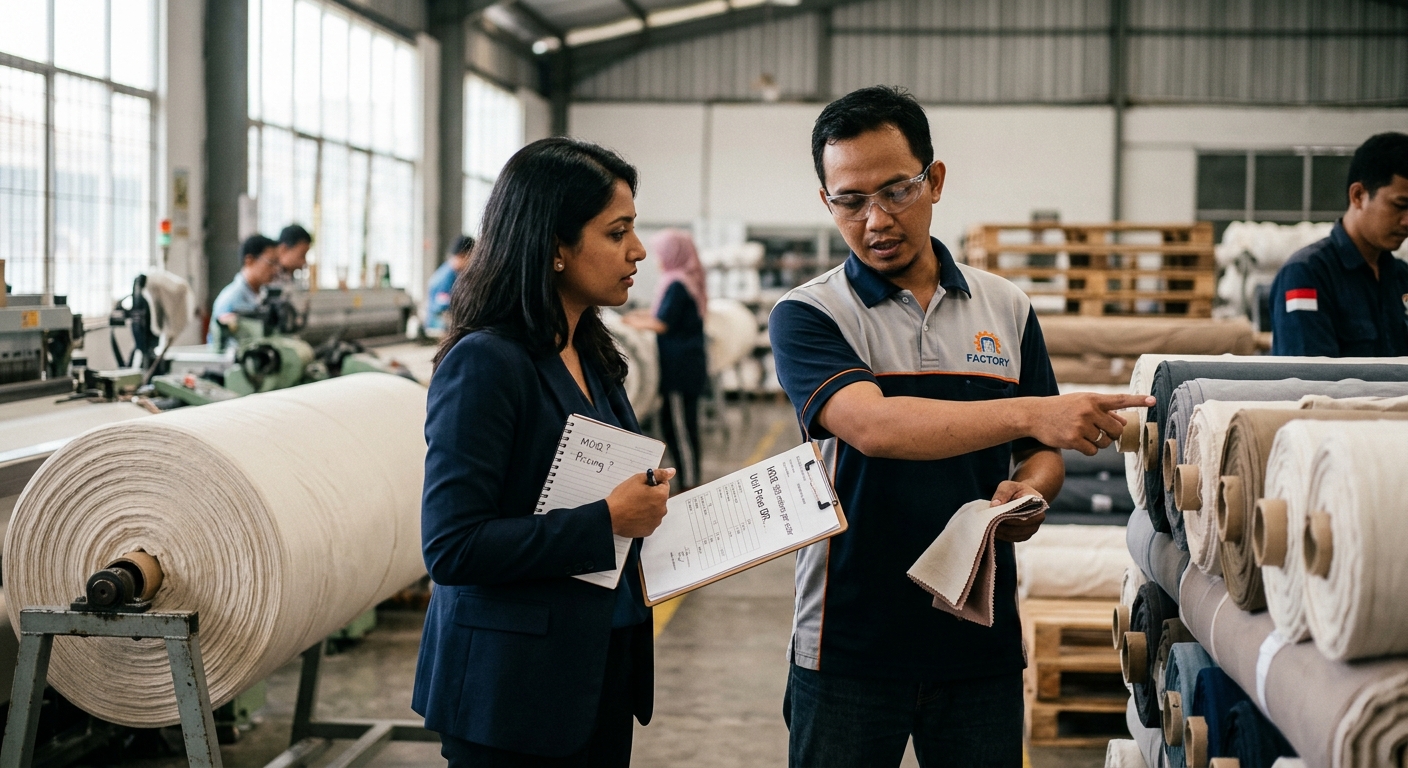
The textile industry usually measures MOQs per style, color, or fabric type. Standard MOQs for garments can range from 300 to 1,000 pieces per color/style. Fabric suppliers may require minimums of 1,000 to 3,000 yards, depending on whether the fabric is a standard weave or custom-dyed.
Strategies for Negotiating MOQs in Indonesia
Many buyers are intimidated by high MOQs, especially when testing a new market or product. However, MOQs are often negotiable if approached strategically. Here are effective ways to negotiate with Indonesian suppliers:
1. Understand the Supplier’s Constraints
Before asking for a lower MOQ, try to understand why the supplier has set that minimum. Are they restricted by their raw material supplier? Are the setup costs too high? If the constraint is raw materials, you might offer to pay for the excess materials upfront, which the supplier can hold for your future orders.
2. Offer to Pay a Higher Price per Unit
If you only need a small quantity for a trial run, offer to pay a premium price per unit. This compensates the supplier for the inefficiencies of a short production run. Once the product proves successful in your market, you can increase your order size and negotiate the unit price down to standard bulk rates.
3. Consolidate Your Orders
Instead of ordering a large quantity of a single item, ask the supplier if you can meet the MOQ by mixing different products. For example, if the MOQ is 500 units, you might negotiate to order 250 units of Product A and 250 units of Product B, provided they use similar materials and production processes.
4. Build a Long-Term Relationship
Indonesian business culture places a high value on trust and personal relationships. Communicate your long-term business plans and growth projections. If a supplier believes that a small initial order is a stepping stone to massive future orders, they are more likely to be flexible. Be transparent and professional in your communications.
The Role of Logistics and Export Procedures
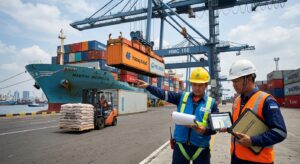
When planning your order quantities, you must also consider logistics and export compliance. Shipping Less than Container Load (LCL) is possible for smaller MOQs, but it increases the risk of damage and results in higher freight costs per unit compared to Full Container Load (FCL). Additionally, dealing with customs can be complex. You must ensure that all export documentation is handled correctly to avoid delays. For detailed assistance on navigating these regulations, you should consult a Comprehensive Guide to Indonesia Export Custom Clearance Services to ensure your goods move smoothly across borders.
Partnering with a reliable local export company is often the best strategy to manage both supplier relationships and logistics. A professional service can act as your boots on the ground. For instance, working with an experienced export partner can drastically reduce the friction involved in negotiating terms, managing quality control, and handling complex shipping requirements.
Comparing Typical MOQs Across Industries
To give you a clearer picture, here is a general overview of typical MOQs you might encounter when dealing with Indonesian suppliers:
| Industry / Product Type | Typical MOQ Structure | Common Variables |
|---|---|---|
| Agriculture (Coffee, Spices) | 1 Metric Ton to 1x20ft Container | Harvest seasonality, packaging type |
| Furniture | 1x20ft Container (mixed items) | Wood type, custom designs |
| Garments / Apparel | 300 – 1,000 pcs per style/color | Fabric availability, custom dyeing |
| Handicrafts (Rattan, Bamboo) | $3,000 – $5,000 minimum spend | Artisan availability, complexity |
Conclusion
Navigating the Minimum Order Quantity for Indonesian suppliers is a critical step in building a robust international supply chain. While MOQs protect the supplier’s margins, they do not have to be an insurmountable hurdle for buyers. By understanding the underlying costs of production, communicating effectively, and exploring flexible negotiation tactics, you can find a middle ground that benefits both parties. Furthermore, integrating proper logistics and customs planning ensures that once your goods are produced, they reach your target market efficiently. Indonesia remains a highly competitive and lucrative sourcing destination for those willing to understand its business landscape.
Frequently Asked Questions (FAQ)
Why are MOQs in Indonesia sometimes based on container sizes?
Suppliers often base MOQs on container sizes (like a 20-foot container) to maximize shipping efficiency and lower the overall freight cost per unit, which makes the final landed cost more competitive for the buyer.
Can I negotiate an MOQ if I am a first-time buyer?
Yes, many Indonesian suppliers are open to negotiation with first-time buyers. You can often secure a lower MOQ for a trial order by offering to pay a slightly higher unit price to cover the supplier’s setup costs.
Does product customization increase the MOQ?
Absolutely. Custom products require new molds, specialized materials, or adjustments to machinery. To absorb these fixed setup costs, suppliers must demand higher MOQs compared to off-the-shelf, standard products.
How do I verify if a supplier’s MOQ is reasonable?
You can verify if an MOQ is reasonable by sourcing quotes from multiple suppliers within the same industry in Indonesia. Comparing these quotes will give you a baseline understanding of the industry standard for that specific product.