

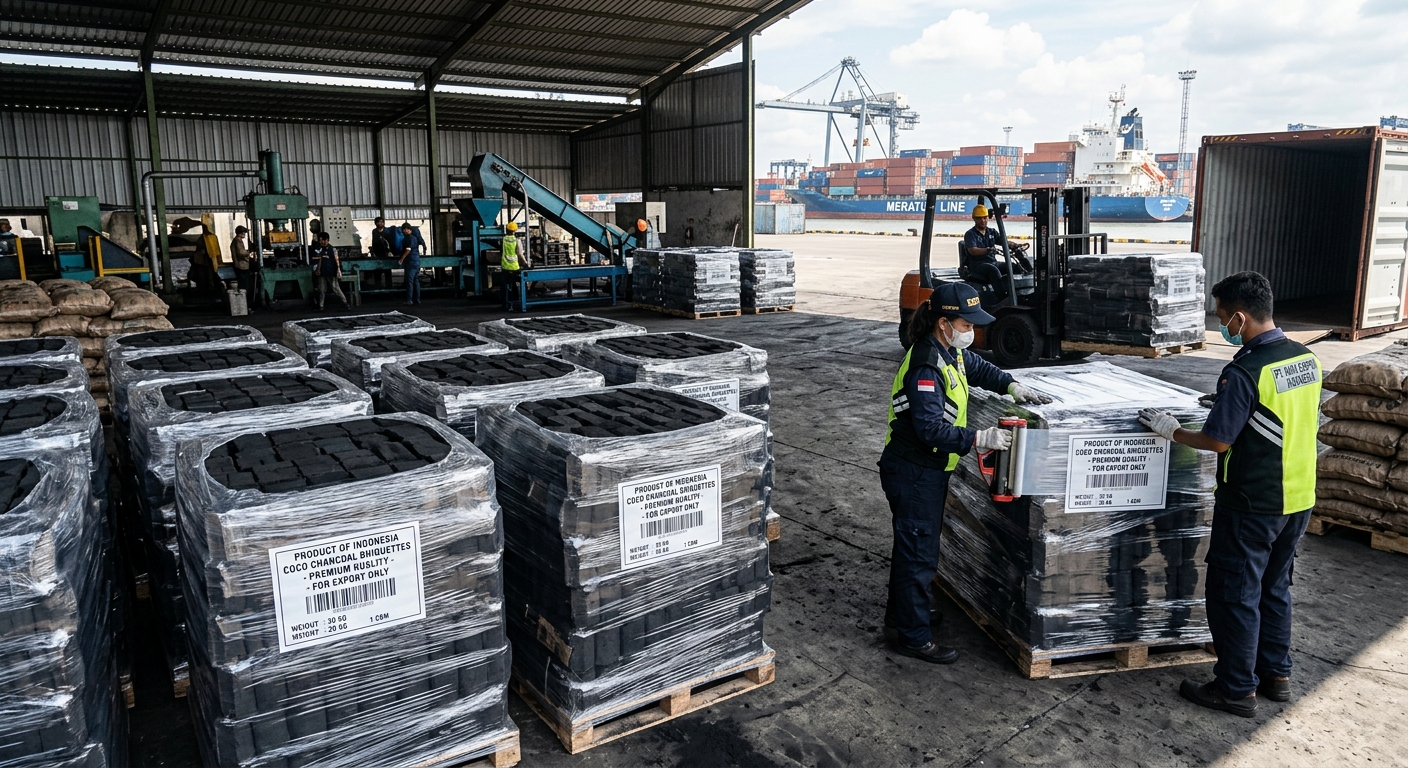
Introduction to Indonesia’s Charcoal Briquette Industry
Indonesia has established itself as a global powerhouse in the production and export of charcoal briquettes, particularly those made from coconut shells. Renowned for their high burning heat, long burning time, and minimal ash production, Indonesian charcoal briquettes are in high demand across the Middle East, Europe, and North America. They are primarily utilized for shisha (hookah) and barbecue purposes. Navigating the Indonesia charcoal briquette export process, however, requires a deep understanding of international trade regulations, quality standards, shipping logistics, and customs documentation. This comprehensive guide will walk you through every step of the export journey, ensuring a smooth and profitable international trade operation.
Understanding the Product: Types and Quality Standards
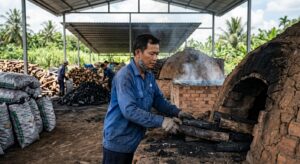
Before diving into the export logistics, it is crucial to understand the product you are dealing with. Charcoal briquettes from Indonesia generally fall into two main categories: coconut shell briquettes (mostly for shisha) and hardwood or sawdust briquettes (mostly for BBQ). The international market demands rigorous quality standards. Key specifications include moisture content (usually below 5%), ash content (ranging from 1.5% to 2.5% for premium shisha), volatile matter, fixed carbon (ideally above 80%), and a high gross calorific value. Achieving these metrics requires strict quality control during carbonization, mixing, pressing, and drying phases.
Exporters must also understand that diversification in the biomass sector is common. Many buyers looking for sustainable agricultural and biomass products often source a variety of items from the region. If you are building a broad portfolio of premium export products, maintaining strict quality controls across all your offerings is paramount for long-term success. Similar to how agricultural by-products require precise specifications—as detailed in The Ultimate Guide to Cocopeat Low EC Bulk Orders for Commercial Agriculture—charcoal briquettes demand exacting standards to ensure buyer satisfaction and repeat orders.
Legal Requirements and Business Registration
To export goods legally from Indonesia, your business must be properly registered. The Indonesian government has streamlined this process through the Online Single Submission (OSS) system. Exporters must obtain a Business Identification Number (NIB – Nomor Induk Berusaha), which serves as the basic import-export license. Additionally, your company must have a Taxpayer Identification Number (NPWP). For charcoal and wood-based products, you may also need specific certifications from the Ministry of Environment and Forestry, as well as a V-Legal Document (SVLK) if your briquettes contain wood components, ensuring the timber is legally sourced.
Packaging and Labeling Standards
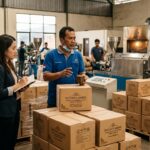
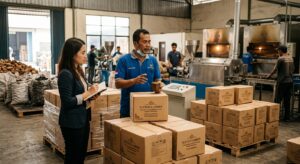
Proper packaging is vital for both marketing and logistical safety. Shisha charcoal is typically packaged in inner boxes (usually 1kg, 2kg, or 3kg) made of duplex cardboard, which are then placed into master carton boxes (usually 10kg or 20kg). For BBQ charcoal, double-layered kraft paper bags or woven plastic bags are common. Because charcoal is a combustible material, packaging must be robust enough to withstand ocean transit without breaking down or absorbing moisture.
Documentation and Certifications
Exporting charcoal requires an extensive set of documents. Missing or incorrect paperwork can lead to cargo rejection or heavy fines. The standard documents include the Commercial Invoice, Packing List, and Bill of Lading (B/L). Furthermore, because charcoal is often classified as a dangerous good (Class 4.2 – Spontaneously Combustible), you must provide a Material Safety Data Sheet (MSDS). To prove the cargo is safe for transport, a Self-Heating Test (SHT) certificate issued by an independent surveyor (such as Sucofindo or Carsurin) is mandatory for shipping lines. A Certificate of Origin (CoO) is also essential, allowing the buyer to claim preferential tariffs in their home country.
Customs Clearance and Freight Forwarding
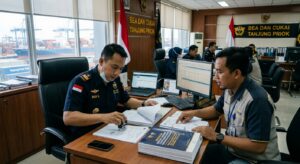
The customs clearance process involves submitting an Export Declaration (PEB – Pemberitahuan Ekspor Barang) to the Indonesian Customs Authority. Navigating the customs system can be complex, and most exporters rely on licensed customs brokers (PPJK) to handle the electronic data interchange and physical inspections. Understanding the costs associated with these services is essential for calculating your final margins. For a detailed breakdown of these expenses, you should review Indonesia Customs Broker Fees and Regulations: A Comprehensive Guide.
Shipping Logistics and Container Loading
Shipping charcoal requires specific logistical planning. Due to its classification, not all shipping lines accept charcoal, and those that do often charge a premium for dangerous goods (DG) containers. A standard 20-foot container can hold approximately 18 to 20 metric tons of briquettes without pallets, or slightly less if palletized. It is vital to ensure that the container is well-ventilated and that the loading process minimizes empty space to prevent cargo shift during rough sea conditions.
Understanding Destination Duties and Import Taxes
Your responsibility as an exporter does not end once the ship leaves the port. Understanding the financial implications for your buyer is a cornerstone of good B2B relationships. Buyers will face local import duties and taxes based on the Harmonized System (HS) code of the charcoal (usually 4402.90). To better assist your clients and negotiate effectively, it is highly recommended to read the Comprehensive Guide to Customs Duty Rates for Importing from Indonesia. By providing clear guidance on what buyers can expect regarding landed costs, you position your company as a reliable and transparent partner.
Cost Analysis of the Export Process
| Cost Category | Description | Estimated Share of Total Cost |
|---|---|---|
| Raw Materials | Coconut shells, tapioca binder, etc. | 40% – 50% |
| Production & Labor | Carbonization, crushing, mixing, pressing, drying | 20% – 25% |
| Packaging | Inner boxes, master cartons, plastic liners | 10% – 15% |
| Logistics & Export Fees | Inland trucking, terminal handling, SHT testing, customs | 10% – 15% |
| Miscellaneous | Bank charges, broker fees, certifications | 5% – 10% |
Conclusion
The Indonesia charcoal briquette export process offers lucrative opportunities for businesses willing to navigate its complexities. From sourcing high-quality coconut shells to passing stringent Self-Heating Tests and securing space on commercial vessels, every step demands meticulous attention to detail. By securing the necessary licenses, adhering strictly to international quality standards, partnering with experienced freight forwarders, and understanding the financial mechanisms of international trade, exporters can successfully tap into the growing global demand for premium Indonesian charcoal. Patience, compliance, and strong relationships with buyers and logistical partners are the ultimate keys to long-term success in this industry.
Frequently Asked Questions
What is the HS Code for coconut charcoal briquettes?
The most common Harmonized System (HS) code used for coconut shell charcoal briquettes is 4402.90. However, always verify with your local customs authority and the destination country’s regulations to ensure proper classification.
Why is the Self-Heating Test (SHT) required for charcoal exports?
Charcoal is classified as a spontaneously combustible material (Dangerous Goods Class 4.2). The SHT certificate proves that a specific batch of charcoal is stable and will not catch fire on its own during the long ocean transit, ensuring the safety of the vessel and crew.
How long does the export process take from order to shipment?
Typically, the process takes between 3 to 6 weeks. This includes production time (if not in stock), packaging, laboratory testing for the SHT certificate (which alone can take 7-10 days), container booking, and customs clearance.
Can I ship charcoal in a Less than Container Load (LCL)?
While technically possible, it is extremely difficult and rare. Because charcoal is a dangerous good, shipping lines usually require Full Container Loads (FCL). Mixing charcoal with other general cargo in an LCL shipment poses significant safety risks and is widely rejected by consolidators.