

Introduction to B2B Exports from Indonesia
Indonesia is rapidly establishing itself as a global powerhouse in the export market. With rich natural resources, a growing manufacturing sector, and strategic geographical positioning, the archipelago offers immense opportunities for Business-to-Business (B2B) trade. However, engaging in international trade requires a deep understanding of the local regulatory environment. Navigating the export document requirements in Indonesia is critical for ensuring seamless transactions, avoiding costly customs delays, and maintaining compliance with international trade laws.
This article provides an in-depth analysis of the essential documents required for exporting goods from Indonesia in a B2B context. Whether you are dealing with agricultural commodities, manufactured goods, or specialized products, understanding these requirements is the foundation of a successful export strategy.
The Indonesian Legal Framework for Exporters
Before a company can legally export goods from Indonesia, it must be properly registered and licensed. The Indonesian government has streamlined this process through the Online Single Submission (OSS) system, which serves as a centralized portal for business licensing.
Nomor Induk Berusaha (NIB)
The foremost requirement for any corporate entity wishing to export is obtaining a Nomor Induk Berusaha (NIB), or Business Identification Number. The NIB serves multiple purposes: it acts as the company’s registration certificate, importer/exporter identification number (API/NIK), and customs access right. Without an active NIB, customs clearance for commercial shipments is impossible.
Taxpayer Identification Number (NPWP)
Alongside the NIB, businesses must possess a valid NPWP (Nomor Pokok Wajib Pajak). This tax identification number is mandatory for all financial transactions, tax filings, and customs declarations associated with exporting goods.
Core Export Documents in Indonesia
For standard B2B transactions, a universal set of shipping and commercial documents is required. These documents facilitate customs clearance in both Indonesia and the destination country, while also serving as proof of the transaction for payment purposes (such as Letters of Credit).
1. Pemberitahuan Ekspor Barang (PEB)
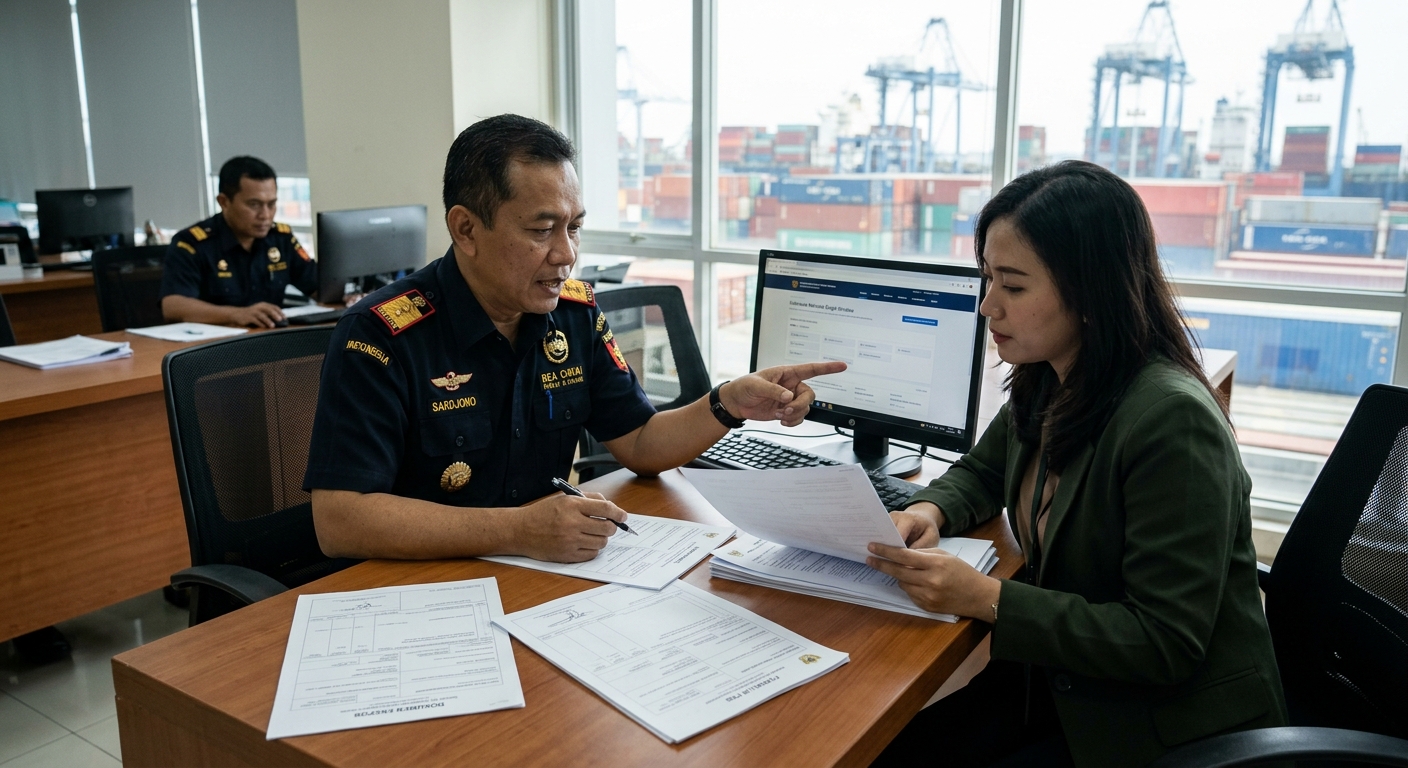
The PEB, or Export Declaration, is the primary customs document submitted to the Indonesian Directorate General of Customs and Excise. This document details the exporter, consignee, description of goods, quantity, value, and intended destination. Once the PEB is approved, customs issues a NPE (Nota Pelayanan Ekspor), which grants permission for the goods to be loaded onto the departing vessel or aircraft.
2. Commercial Invoice
The commercial invoice is a formal demand for payment and the fundamental document used by customs authorities globally to assess duties and taxes. It must include precise details such as buyer and seller information, invoice number, date, itemized description of goods, unit prices, total value, and the agreed Incoterms (e.g., FOB, CIF, EXW).
3. Packing List
The packing list supplements the commercial invoice by detailing how the goods are packaged. It includes information on the number of cartons, gross and net weights, dimensions, and shipping marks. Customs officials rely heavily on the packing list during physical inspections to verify that the cargo matches the documentation.
4. Bill of Lading (B/L) or Air Waybill (AWB)
The Bill of Lading (for sea freight) or Air Waybill (for air freight) is the official contract of carriage between the shipper and the freight forwarder or carrier. In B2B transactions, the B/L serves as a document of title, meaning whoever holds the original document legally owns the cargo. It contains details regarding the vessel, port of loading, port of discharge, and cargo weight.
5. Certificate of Origin (COO)
The Certificate of Origin, known locally as Surat Keterangan Asal (SKA), certifies that the exported goods were wholly obtained, produced, or manufactured in Indonesia. This document is particularly vital if the destination country shares a Free Trade Agreement (FTA) with Indonesia, as it allows the importer to claim preferential tariff rates.
Product-Specific Export Requirements
While the core documents apply to almost all shipments, certain commodities require additional permits, licenses, or certifications due to environmental, safety, or quality regulations.
Exporting Palm Oil and Derivatives
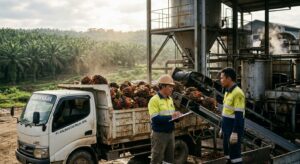
Indonesia is the world’s largest producer of palm oil. Due to strict international quality standards, exporting palm oil requires meticulous documentation. Buyers demand proof of the product’s chemical and physical properties before accepting a shipment. For a detailed breakdown of these quality assurance requirements, you can review Understanding the Certificate of Analysis for Palm Oil Export: A Complete Guide, which explains the essential testing parameters and laboratory documentation needed for B2B palm oil trade.
Exporting Coconut and Charcoal Products
Coconut products, particularly charcoal briquettes, are highly sought after in the Middle East, Europe, and North America. However, charcoal is often classified as a dangerous good (self-heating substance) under international maritime regulations. Exporters must provide an MSDS (Material Safety Data Sheet) and specific self-heating test certificates. If you are venturing into this lucrative market, it is highly recommended to read The Ultimate Guide to BBQ Coconut Charcoal Briquettes in Indonesia to understand the nuances of production and compliance.
Furthermore, sourcing these materials in large volumes requires strategic planning and a solid understanding of the local supply chain. Buyers and traders can greatly benefit from consulting A Comprehensive Guide to Bulk Sourcing Coconut Products in Indonesia to ensure they partner with reputable manufacturers who can provide the necessary export paperwork.
Document Requirement Summary Table
| Document Name | Issuing Authority / Creator | Purpose |
|---|---|---|
| NIB (Business Identification Number) | OSS System (Ministry of Investment) | Legal company registration and customs access |
| PEB (Export Declaration) | Exporter / Customs Broker | Official declaration of export to Indonesian Customs |
| Commercial Invoice | Exporter | Proof of transaction, value, and terms of sale |
| Packing List | Exporter | Detailed breakdown of cargo packaging and weights |
| Bill of Lading / Air Waybill | Shipping Line / Airline / Freight Forwarder | Contract of carriage and document of title |
| Certificate of Origin (COO) | Ministry of Trade | Proof of Indonesian origin for tariff preferences |
Navigating Customs and Working with Partners
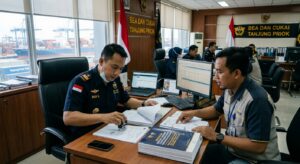
The complexity of B2B export documentation means that minor errors can result in significant delays, demurrage charges, or even the seizure of goods. To mitigate these risks, many international buyers rely on local expertise. Working with experienced forwarders, customs brokers, and reputable export companies ensures that all paperwork is accurately prepared, submitted on time, and fully compliant with the latest regulations set forth by the Indonesian Ministry of Trade.
Conclusion
Successfully exporting goods from Indonesia to international B2B buyers hinges on a thorough understanding of documentation requirements. From establishing your legal right to export via the NIB, to securing the standard shipping documents like the PEB, Commercial Invoice, and Bill of Lading, every piece of paper plays a vital role. Additionally, recognizing that specific commodities like palm oil and coconut charcoal demand specialized certificates will safeguard your business against compliance failures. By meticulously preparing these documents and leveraging experienced local partners, exporters can ensure smooth, profitable, and globally compliant trade operations.
Frequently Asked Questions (FAQ)
What happens if my PEB (Export Declaration) has an error?
If a PEB is submitted and approved with errors, it can cause discrepancies during customs inspections. Exporters can submit an amendment request (redress) to the customs authority, but this often causes delays. It is crucial to verify all data against the commercial invoice and packing list before initial submission.
Do I need a Certificate of Origin for every export shipment?
While not strictly mandatory for the physical exit of goods from Indonesia, a Certificate of Origin is almost always requested by the B2B buyer. It is essential if the buyer wishes to claim reduced import tariffs under an existing Free Trade Agreement (FTA).
Are there any export taxes in Indonesia?
Yes, Indonesia imposes export levies and duties on specific raw commodities to encourage domestic downstream processing. Products like crude palm oil (CPO), mineral ores, and certain types of unprocessed wood are subject to these taxes. Manufactured and finished goods generally do not incur export duties.
What is a V-Legal Document and when is it needed?
A V-Legal (SVLK) document is a specific certification required for exporting timber and wood-based products from Indonesia. It proves that the timber was legally harvested, aligning with international regulations like the EU Timber Regulation (EUTR) to combat illegal logging.