

Introduction to Indonesia’s Coconut Derivatives Industry
Indonesia is recognized globally as one of the largest producers of coconuts. The archipelago’s tropical climate provides the perfect environment for coconut cultivation, resulting in abundant yields and high-quality raw materials. For global businesses, partnering with an Indonesia coconut derivatives supplier B2B offers immense opportunities to access premium products that cater to various industries, including food and beverage, cosmetics, agriculture, and manufacturing.
As international demand for sustainable, natural, and plant-based products surges, Indonesian suppliers have modernized their operations to meet stringent global standards. Whether you are seeking desiccated coconut, coconut oil, coconut sugar, or industrial derivatives like coconut shell charcoal, understanding the landscape of this vibrant industry is crucial for successful B2B sourcing.
Key Coconut Derivatives Available for B2B Sourcing
When dealing with an Indonesia coconut derivatives supplier B2B, buyers can explore a vast array of products. The versatility of the coconut means that almost every part of the nut can be processed into valuable commodities.
1. Edible Coconut Products
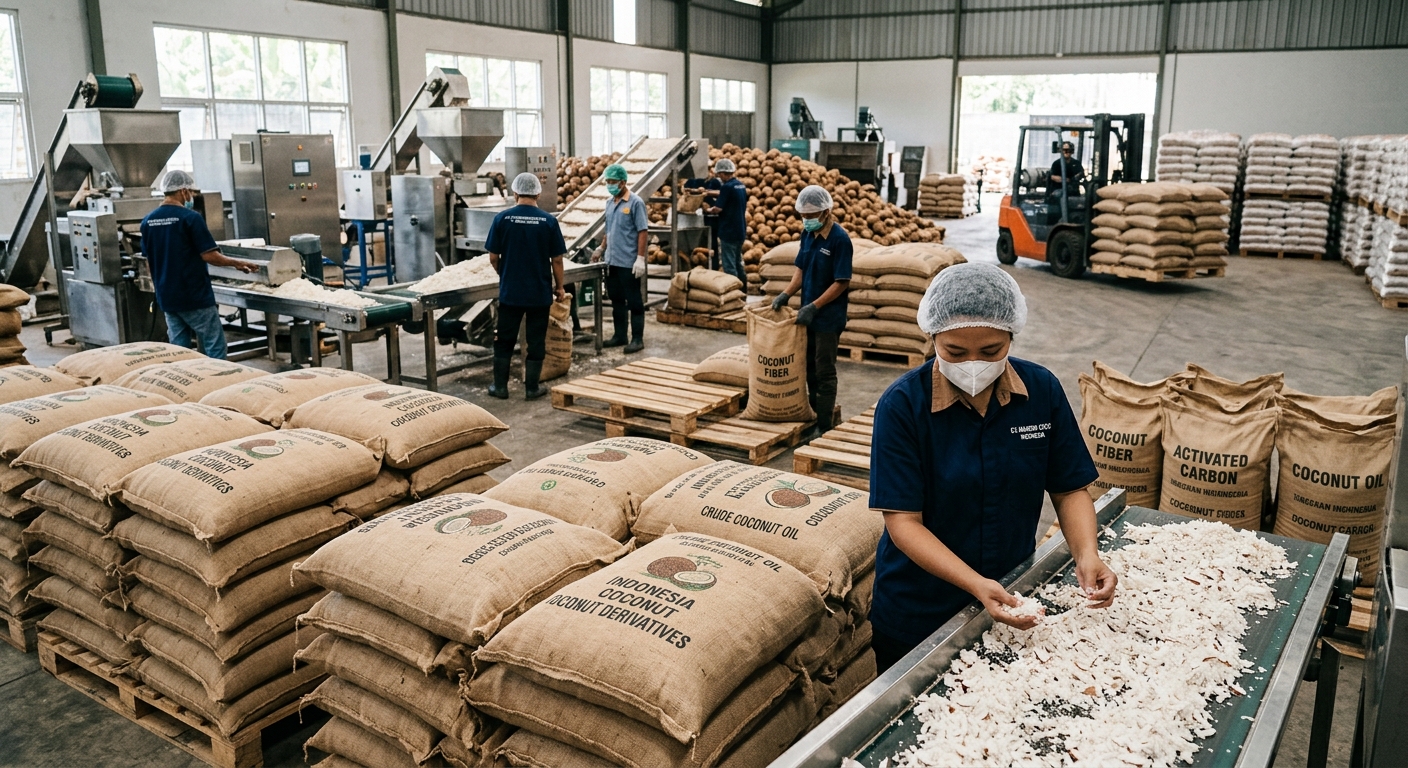
Edible coconut derivatives are highly sought after in the food and beverage industry. These include desiccated coconut, coconut cream, coconut milk, and coconut water. Additionally, organic coconut sugar has become a popular low-glycemic sweetener alternative in Western markets. The quality of these products relies heavily on the freshness of the raw material and advanced processing techniques.
2. Coconut Oils
Coconut oil remains a staple export. Virgin Coconut Oil (VCO) is prized for its health benefits and use in premium cosmetics and dietary supplements. Meanwhile, RBD (Refined, Bleached, and Deodorized) coconut oil is extensively used in commercial food preparation and industrial applications.
3. Industrial and Agricultural Derivatives
Beyond food, coconut by-products offer significant value. Cocopeat (coconut coir dust) and coconut fiber are essential in agriculture and horticulture as sustainable growing mediums and soil conditioners. Furthermore, coconut shell charcoal and its upgraded form, activated carbon, are critical for water purification, air filtration, and metallurgy.
Here is a comparison of common coconut oils sourced from Indonesia:
| Product Type | Processing Method | Primary Application | Aroma and Flavor |
|---|---|---|---|
| Virgin Coconut Oil (VCO) | Cold-pressed, unrefined | Cosmetics, Supplements, Direct Consumption | Strong coconut aroma and taste |
| RBD Coconut Oil | Refined, Bleached, Deodorized | Commercial Frying, Industrial Baking | Neutral aroma and taste |
| Crude Coconut Oil (CNO) | Expeller-pressed, unrefined | Further refinement into oleochemicals | Strong, raw odor |
Navigating the B2B Sourcing Landscape
Sourcing effectively from Indonesia requires a strategic approach. Buyers must ensure that their chosen Indonesia coconut derivatives supplier B2B complies with international quality certifications such as ISO, HACCP, FDA, and organic certifications where applicable.
For businesses looking to create customized product lines, exploring OEM services can be highly beneficial. You can read a Comprehensive Guide to OEM Manufacturing Coconut Products in Indonesia to understand how local manufacturers can tailor products to your exact specifications.
Moreover, utilizing digital platforms has streamlined the sourcing process. Understanding how to navigate these directories is key to finding verified suppliers. For more insights on this, refer to the article on Navigating Indonesian B2B Export Platform Commodities: A Comprehensive Guide. Platforms like ExportNusa have made it easier than ever to connect directly with reputable Indonesian producers.
While coconuts are a major commodity, Indonesia is also a powerhouse for other agricultural exports. If your sourcing needs expand beyond coconuts, you might also find value in learning about Sourcing Crude Palm Oil in Indonesia: A Comprehensive Guide.
Ensuring Sustainability and Quality
Sustainability is a pressing concern in global supply chains. When selecting an Indonesia coconut derivatives supplier B2B, it is vital to inquire about their environmental and social practices. Many top-tier suppliers now implement zero-waste production facilities, where every part of the coconut is utilized. Furthermore, ethical labor practices and fair trade initiatives ensure that local farming communities benefit from international trade.
Quality control should include regular third-party testing and transparent documentation. Establishing clear communication channels and setting expectations regarding lead times, minimum order quantities (MOQs), and shipping logistics will pave the way for a smooth and profitable partnership.
Conclusion
Partnering with a reliable Indonesia coconut derivatives supplier B2B opens doors to a diverse range of high-quality, versatile products. From edible goods to industrial materials, Indonesia’s capacity to deliver sustainable and premium coconut derivatives is unmatched. By leveraging comprehensive sourcing guides, utilizing reliable B2B platforms, and prioritizing sustainability and quality control, global buyers can build long-term, mutually beneficial relationships with Indonesian suppliers, securing a steady supply of this invaluable commodity for their respective markets.
Frequently Asked Questions (FAQ)
What are the most popular coconut derivatives sourced from Indonesia?
The most popular coconut derivatives include Virgin Coconut Oil (VCO), desiccated coconut, coconut sugar, cocopeat, and coconut shell charcoal. These cater to the food, cosmetics, and agricultural industries.
How can I verify the reliability of an Indonesia coconut derivatives supplier B2B?
You can verify a supplier’s reliability by checking their international certifications (such as ISO, HACCP, or Organic certificates), requesting product samples, asking for client references, and utilizing trusted B2B platforms to check their export history and verification status.
What is the difference between VCO and RBD coconut oil?
Virgin Coconut Oil (VCO) is cold-pressed and unrefined, retaining the natural aroma and flavor of coconuts, making it ideal for cosmetics and direct consumption. RBD (Refined, Bleached, Deodorized) coconut oil is highly processed to remove impurities, odors, and flavors, making it suitable for high-heat commercial cooking and industrial food production.