

Introduction to Sea Freight Shipping from Indonesia to the USA
The trade relationship between Indonesia and the United States has grown significantly over the years, making efficient logistics crucial for businesses involved in international trade. Sea freight remains the most cost-effective and reliable method for transporting large volumes of goods across the Pacific Ocean. Navigating the complexities of ocean freight requires a deep understanding of shipping lines, routes, transit times, and the necessary regulatory compliance to ensure a smooth supply chain.
This comprehensive guide explores the primary sea freight shipping lines operating between Indonesia and the USA, the types of container services available, key ports of origin and destination, and the vital documentation required for a successful shipment. Whether you are exporting agricultural products, textiles, or manufactured goods, understanding these elements is essential for optimizing your logistics operations.
Major Ports in Indonesia and the USA
Key Indonesian Export Ports
Indonesia’s vast archipelago relies heavily on its maritime infrastructure to facilitate international trade. The primary gateways for sea freight bound for the United States include:
- Port of Tanjung Priok (Jakarta): The largest and busiest seaport in Indonesia, handling the majority of the country’s containerized cargo. If you are shipping from the capital region, reviewing A Complete Guide to Sea Freight Container Shipping in Jakarta can provide valuable insights into local port operations and carrier availability.
- Port of Tanjung Perak (Surabaya): Serving East Java, this port is crucial for agricultural exports and manufactured goods from the eastern part of the country.
- Port of Belawan (Medan): Located in North Sumatra, it is a key exit point for commodities such as palm oil, rubber, and coffee.
Major US Import Ports
Vessels departing from Indonesia typically arrive at major coastal hubs in the United States, which act as distribution centers for the rest of the country:
- West Coast Ports: The Ports of Los Angeles and Long Beach are the primary gateways for trans-Pacific trade, offering the shortest transit times from Southeast Asia. The Port of Seattle and the Port of Oakland also handle significant cargo volumes.
- East Coast Ports: The Port of New York and New Jersey, the Port of Savannah, and the Port of Charleston receive shipments via the Panama Canal or the Suez Canal route.
- Gulf Coast Ports: The Port of Houston is a vital entry point, particularly for goods destined for the southern and central United States.
Top Sea Freight Shipping Lines
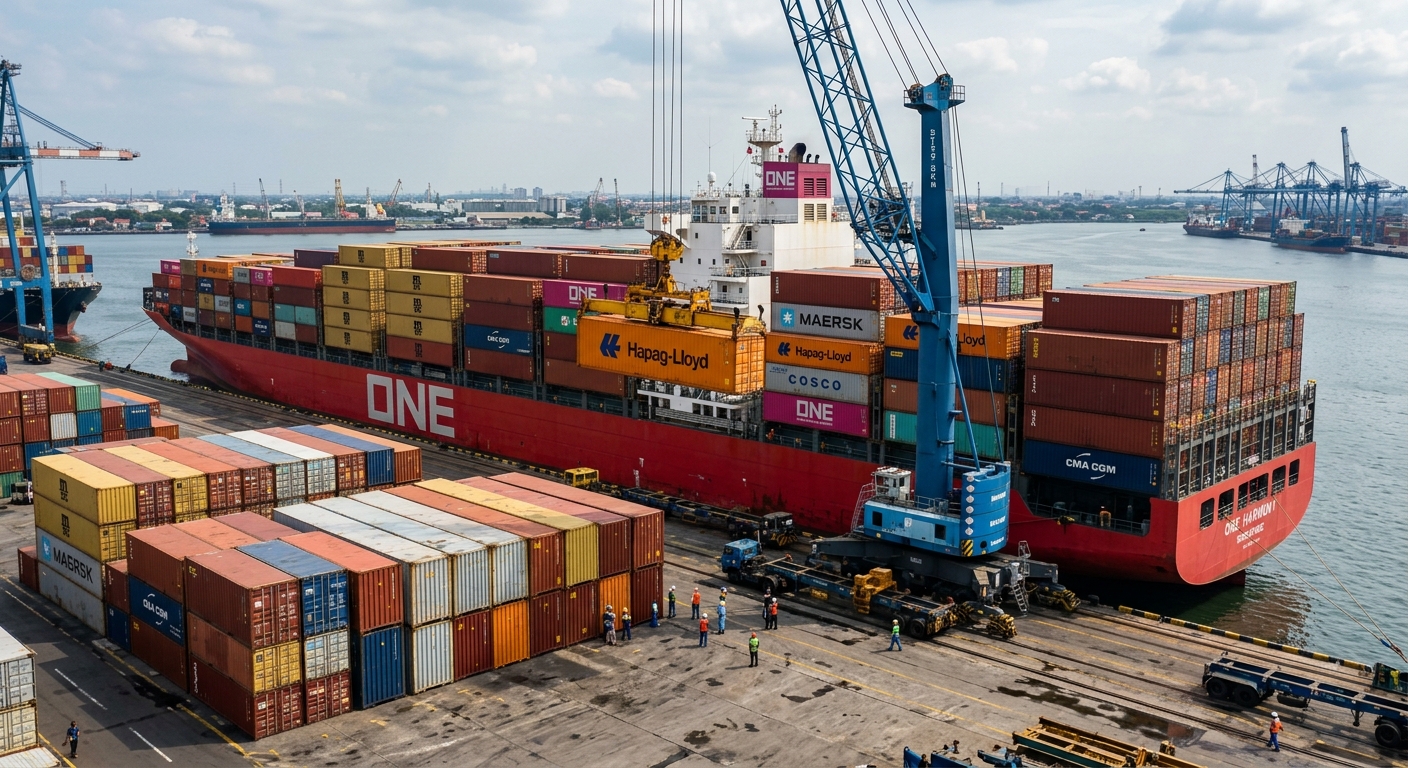
Several major international shipping lines offer regular services from Indonesian ports to the USA. These carriers provide various routing options, transit times, and service levels to accommodate different cargo needs. Some of the leading shipping lines include:
- Maersk Line: The world’s largest container shipping company offers extensive global coverage and frequent sailings from Jakarta and Surabaya to both the US West and East Coasts.
- Mediterranean Shipping Company (MSC): MSC provides robust trans-Pacific services with reliable schedules and a vast network of transshipment hubs.
- CMA CGM: This French carrier offers dedicated services connecting Southeast Asia to North America, known for its modern fleet and efficient logistics solutions.
- Evergreen Line: A major player in the trans-Pacific market, Evergreen offers competitive transit times and reliable capacity for Indonesian exporters.
- Hapag-Lloyd: Providing extensive connections through major transshipment ports like Singapore and Port Klang, Hapag-Lloyd ensures seamless delivery to various US destinations.
Container Options and Freight Types
When booking sea freight, shippers must choose the appropriate container type and shipping method based on the volume and nature of their cargo. The two primary modes of containerized shipping are:
Full Container Load (FCL)
FCL shipping involves booking an entire container for your goods. It is the most secure and cost-effective method for large shipments. Standard container sizes include 20-foot, 40-foot, and 40-foot high-cube containers. Specialized containers, such as reefers (refrigerated containers) and open-top containers, are also available for perishable or oversized cargo.
Less than Container Load (LCL)
For smaller shipments that do not fill a whole container, LCL is an ideal solution. Your goods will be consolidated with cargo from other shippers in a single container. While LCL offers cost savings for low-volume shipments, it generally requires a longer transit time due to the consolidation and deconsolidation processes at the origin and destination ports.
Export Documentation and Compliance
Proper documentation is the backbone of international shipping. Errors or omissions can lead to costly delays, demurrage charges, and customs penalties. To ensure a smooth export process, shippers must meticulously prepare the required paperwork. For a detailed breakdown of necessary documents, consult A Complete Guide to Export Documentation for Shipping from Indonesia.
Key documents typically required include:
- Commercial Invoice: A detailed bill of sale detailing the transaction between the buyer and seller.
- Packing List: An itemized list of the cargo, including weights, dimensions, and packaging details.
- Bill of Lading (B/L): The official transport document issued by the shipping line, serving as a receipt of goods and a contract of carriage.
- Certificate of Origin: A document verifying the country in which the goods were manufactured.
- Export Licenses and Permits: Required for specific regulated commodities.
Navigating Indonesian Customs Clearance
Before cargo can be loaded onto a vessel, it must clear Indonesian customs. The Directorate General of Customs and Excise (DJBC) oversees this process to ensure all export regulations are met and necessary taxes or duties are paid. Understanding the procedural requirements is vital for avoiding delays. For an in-depth look at these procedures, read the Indonesia Customs Clearance Process for Exporters: A Complete Guide.
Exporters must submit the Pemberitahuan Ekspor Barang (PEB) or Export Declaration through the customs electronic system. Once the PEB is approved and any applicable export duties are settled, customs will issue a Nota Pelayanan Ekspor (NPE), allowing the goods to enter the port area.
It is important to note that certain commodities attract specific export taxes. For instance, if you are trading in agricultural products, you should familiarize yourself with specific regulations by Understanding Indonesia Export Taxes on Crude Palm Oil: A Comprehensive Guide. Adhering to commodity-specific regulations is essential for compliance and accurate financial planning.
Factors Influencing Freight Rates and Transit Times
Sea freight rates and transit times from Indonesia to the USA fluctuate based on several dynamic factors:
- Distance and Routing: Direct sailings are faster but generally more expensive. Shipments requiring transshipment in hubs like Singapore or Busan will have longer transit times.
- Seasonality: Peak shipping seasons, typically late summer through fall (in preparation for holiday shopping), see higher demand, leading to increased freight rates and potential capacity constraints.
- Fuel Costs (Bunker Surcharges): Global oil prices directly impact carrier operational costs, which are passed on to shippers through bunker adjustment factors (BAF).
- Port Congestion: Delays at major ports, whether due to labor strikes, weather events, or high volume, can significantly extend transit times and incur additional demurrage or detention fees.
Conclusion
Shipping goods via sea freight from Indonesia to the USA involves a complex but manageable sequence of steps, from selecting the right shipping line and container type to ensuring meticulous documentation and customs compliance. By leveraging major ports like Tanjung Priok and utilizing the services of established global carriers, businesses can effectively bridge the distance across the Pacific. Understanding the nuances of export regulations, securing the correct paperwork, and anticipating market fluctuations are the keys to a resilient and cost-effective international supply chain.
Frequently Asked Questions (FAQ)
What is the average transit time for sea freight from Indonesia to the USA?
Transit times typically range from 25 to 35 days for West Coast ports (like Los Angeles) and 35 to 45 days for East Coast ports (like New York), depending on the shipping line, routing, and whether the service involves transshipment.
How do I choose between FCL and LCL for my shipment?
Choose FCL (Full Container Load) if your cargo volume is roughly 15 cubic meters or more, as it offers better security and faster transit. Choose LCL (Less than Container Load) for smaller shipments to save costs, keeping in mind that transit times may be slightly longer due to consolidation.
Do I need a customs broker to ship from Indonesia to the USA?
While it is not legally mandatory, highly recommended. A licensed customs broker has the expertise to navigate complex export regulations in Indonesia and import regulations in the US, ensuring compliance and preventing costly delays.
What are the peak seasons for shipping on this route?
The traditional peak season for trans-Pacific shipping runs from August to November as retailers stock up for the holiday season. During this time, space is tighter, and freight rates are generally higher.