

Introduction to Indonesia’s Palm Oil Dominance
Indonesia stands as the undisputed titan in the global palm oil industry, consistently ranking as the world’s largest producer and exporter of Crude Palm Oil (CPO). Because palm oil is an essential ingredient in an astonishing array of everyday consumer products—from cosmetics and biofuels to packaged foods and cleaning supplies—Indonesia’s domestic policies regarding this commodity have profound ripple effects across the global economy. Among the most closely watched of these policies are the Indonesia export taxes on crude palm oil. These fiscal mechanisms are designed to balance domestic supply, stabilize local cooking oil prices, and fund domestic sustainability programs, yet they frequently cause volatility in international commodity markets.
Understanding the intricacies of these export taxes is vital for international traders, economists, and global supply chain managers. This article delves deeply into the structure of Indonesia’s export taxes and levies on CPO, examining the historical context, the operational mechanics of the tax brackets, and the broader implications for global trade and local economic diversification.
The Dual Mechanism: Export Taxes and Export Levies
Unlike standard flat-rate tariffs, Indonesia employs a dynamic, two-tiered system to tax outgoing shipments of crude palm oil and its derivatives. This system comprises an Export Tax (Bea Keluar) and an Export Levy (Pungutan Ekspor).
1. The Export Tax
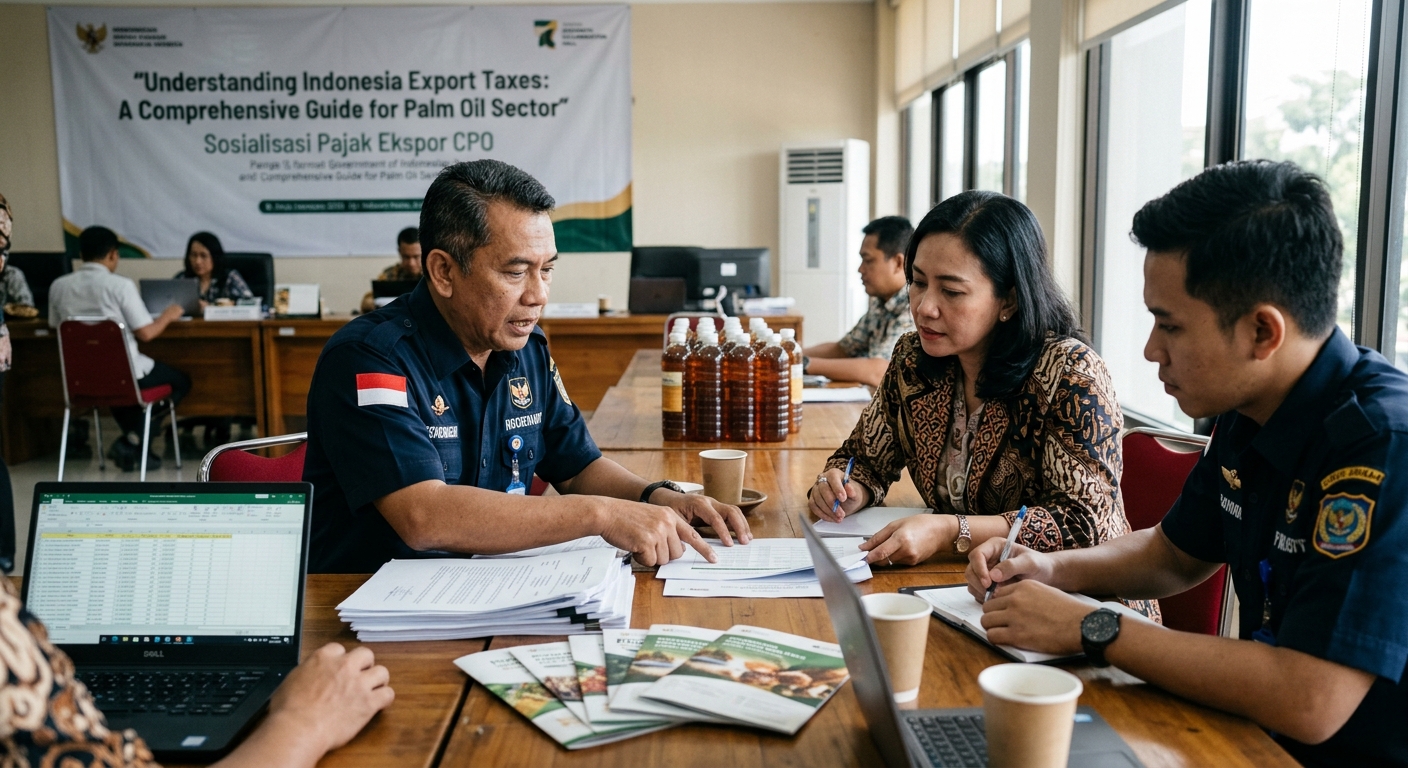
The Ministry of Finance routinely issues regulations outlining the CPO export tax structure. This tax is progressive and is directly pegged to a government-determined reference price. When global palm oil prices soar, the export tax increases proportionally. Conversely, when prices dip below a specified threshold, the export tax can drop to zero. The primary objective of the export tax is to ensure that local refiners and consumers have adequate access to CPO before it is shipped overseas, thereby protecting the domestic market from inflationary spikes caused by global commodity rallies.
2. The Export Levy
In addition to the standard export tax, the Indonesian government imposes an export levy, which is collected by the Palm Oil Plantation Fund Management Agency (BPDPKS). The funds generated from this levy are earmarked for specific industry-enhancing purposes. Primarily, they subsidize Indonesia’s ambitious biodiesel mandate (such as the B35 program), which aims to reduce the nation’s reliance on imported fossil fuels while simultaneously absorbing excess CPO supply. Furthermore, the levy funds smallholder replanting programs, industry research, and promotional campaigns aimed at countering negative environmental narratives surrounding palm oil cultivation.
How the Reference Price Determines Tax Brackets
The core of Indonesia’s export tax policy is the reference price, an average metric calculated based on CPO prices in international exchanges, specifically factoring in markets like Bursa Malaysia Derivatives and the Indonesia Commodity and Derivatives Exchange (ICDX). The Ministry of Trade updates this reference price periodically—often monthly or bi-weekly, depending on current regulatory frameworks.
| CPO Reference Price (USD/MT) | Export Tax Range (USD/MT) | Export Levy Range (USD/MT) |
|---|---|---|
| Below $680 | $0 | $0 – $50 |
| $680 – $730 | $18 – $24 | $50 – $75 |
| $730 – $800 | $33 – $52 | $75 – $85 |
| Above $800 | Progressive up to $200+ | Progressive up to $115+ |
Note: The table above represents an illustrative historical bracket system. The exact figures are subject to frequent adjustments by the Indonesian Ministry of Finance based on dynamic global economic conditions.
Impacts on the Global Edible Oil Market
Because Indonesia controls over half of the global palm oil supply, any adjustment to its export taxes sends immediate shockwaves through the edible oils complex. When Indonesia hikes its export taxes or levies, the cost of acquiring Indonesian CPO increases for international buyers. This naturally drives up the benchmark prices on the global market.
Such policy shifts do not exist in a vacuum. A spike in Indonesian CPO prices often forces price-sensitive importers, particularly in massive consumption markets like India and China, to seek alternatives. Buyers may pivot to purchasing CPO from Malaysia, Indonesia’s primary competitor, or substitute palm oil with other vegetable oils such as soybean oil, sunflower oil, or rapeseed oil. Consequently, Indonesia’s export tax policies indirectly support the global pricing structure of the entire agricultural oilseed complex.
Impacts on Domestic Downstream Industries
A major strategic goal of the progressive export tax system is the promotion of domestic downstream industries. By making the raw export of Crude Palm Oil less lucrative due to high tariffs, the government incentivizes producers to process the CPO domestically into higher-value refined products, such as oleochemicals, refined bleached deodorized (RBD) palm olein, and biodiesel.
This strategy is part of a broader national initiative to capture more value-add within Indonesia’s borders. The export taxes on processed palm oil products are deliberately set much lower than those on crude palm oil. This differential essentially guarantees local refiners a steady, discounted supply of raw materials compared to their international counterparts, bolstering Indonesia’s manufacturing sector and creating domestic employment opportunities.
Diversification of Indonesian Exports and Logistics
While palm oil remains a cornerstone of Indonesia’s export economy, the volatility associated with commodity pricing and fluctuating export taxes has encouraged many local entrepreneurs and international investors to explore other lucrative export avenues. Indonesia boasts a wealthy tapestry of natural resources and skilled artisanship, making it a prime sourcing destination for a variety of goods.
For example, the furniture industry in Java and Bali has seen tremendous growth, appealing to global buyers seeking both traditional craftsmanship and modern design. Importers looking to navigate this specific sector often face unique procurement challenges. For those looking to diversify, reading about Understanding Minimum Order Quantity for Indonesian Furniture: A Guide for Importers is highly recommended to streamline the purchasing process.
Furthermore, moving goods out of the archipelago requires a deep understanding of maritime logistics. Whether shipping heavy machinery, delicate furniture, or refined palm products, shipping costs are a critical variable. Similarly, calculating logistics is crucial, as detailed in the Comprehensive Guide to Freight Forwarding Costs from Jakarta to Rotterdam. Understanding these overheads ensures that export ventures remain profitable.
Additionally, the agricultural and biomass sectors are expanding beyond palm. Coconut derivatives and charcoal are becoming highly sought-after commodities. Other alternative exports include biomass products, detailed in The Ultimate Guide to Private Label Shisha Charcoal Manufacturing. Finding reliable suppliers for premium export products is essential for international businesses aiming to secure a competitive edge while sourcing directly from Indonesia.
Navigating the Regulatory Environment
For international buyers and local exporters alike, staying abreast of Indonesia’s changing export tax landscape is mandatory. The rapid fluctuations in the reference price mean that profit margins can be wiped out or multiplied within a matter of weeks. Companies involved in the CPO trade typically employ dedicated regulatory analysts whose sole function is to monitor announcements from the Indonesian Ministry of Trade and the Ministry of Finance.
Furthermore, adherence to sustainability standards, such as the Indonesian Sustainable Palm Oil (ISPO) and the Roundtable on Sustainable Palm Oil (RSPO), plays a growing role in market access. While the export tax mechanisms primarily deal with economics, the broader geopolitical environment—including the European Union’s Deforestation Regulation (EUDR)—is forcing Indonesia to utilize its export levies to fund stronger traceability and sustainability compliance among smallholder farmers.
Conclusion
Indonesia’s export taxes on crude palm oil are sophisticated macroeconomic tools designed to shield domestic consumers from global price shocks, fund vital national energy initiatives, and promote the growth of local downstream refining industries. While these policies achieve significant domestic objectives, they also inject a degree of volatility into international vegetable oil markets. Stakeholders involved in global commodities must maintain a vigilant watch over Indonesia’s reference prices, tax brackets, and levy structures, as these fiscal levers ultimately dictate the rhythm of the global edible oil trade. As Indonesia continues to balance its role as a global supplier with its domestic economic ambitions, its CPO export tax policies will remain a focal point of international trade analysis.
Frequently Asked Questions
What is the difference between Indonesia’s CPO export tax and export levy?
The export tax goes into the general state treasury and is primarily used as a trade barrier to ensure domestic supply and stabilize local cooking oil prices. The export levy is collected by a specialized agency (BPDPKS) and is specifically earmarked to fund the domestic biodiesel mandate, replanting programs for smallholder farmers, and industry research.
How often does the Indonesian government update the CPO reference price?
The Ministry of Trade typically reviews and updates the CPO reference price on a monthly or sometimes bi-weekly basis. This frequency allows the government to respond swiftly to volatile global commodity markets and adjust the tax brackets accordingly.
Why does Indonesia tax crude palm oil higher than refined palm oil?
Indonesia deliberately applies higher taxes to raw CPO compared to refined products to incentivize domestic downstream processing. By making it more expensive to export the raw material, the government encourages businesses to refine the oil within Indonesia, thereby creating jobs and capturing more economic value before export.
How do Indonesia’s export taxes affect global vegetable oil prices?
Because Indonesia is the world’s largest exporter of palm oil, high export taxes increase the overall cost of CPO for international buyers. This restricted and more expensive supply often drives up the benchmark prices for palm oil globally, which in turn can lift the prices of competing substitute oils like soybean and sunflower oil.