


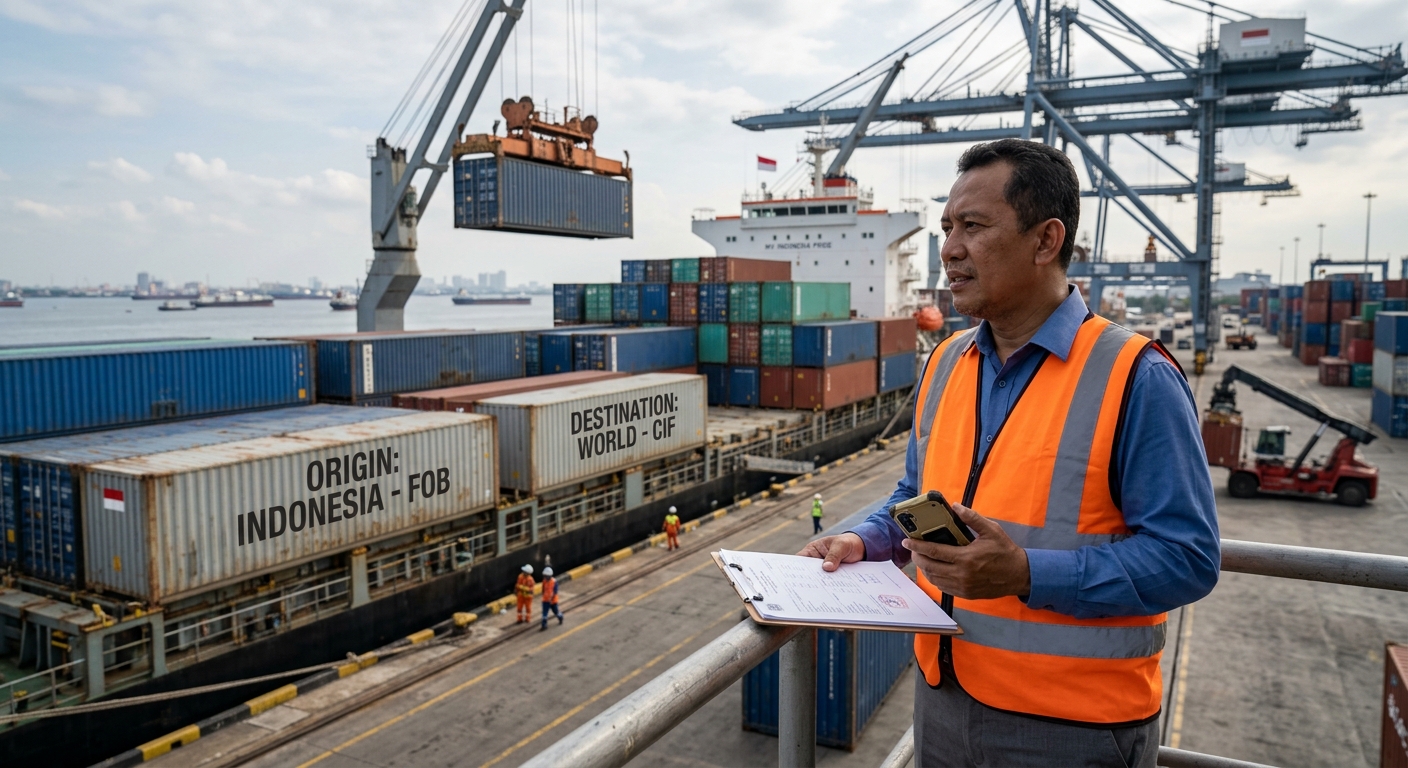
Introduction to Shipping from Indonesia
When sourcing products from Southeast Asia, particularly Indonesia, understanding international shipping terms (Incoterms) is critical to your business’s success and profitability. Two of the most commonly utilized Incoterms in global trade are FOB (Free On Board) and CIF (Cost, Insurance, and Freight). Whether you are importing furniture from Jepara, coffee from Sumatra, or specialized agricultural goods, selecting the correct shipping agreement dictates who bears the risk, manages the logistics, and covers the costs at various stages of the journey. This comprehensive guide explores the intricacies of FOB vs CIF shipping from Indonesia to help you make informed decisions for your supply chain.
Understanding FOB (Free On Board) Shipping
Under an FOB agreement, the seller in Indonesia is responsible for manufacturing the goods, packaging them securely for export, transporting them to the designated Indonesian port (such as Tanjung Priok in Jakarta or Tanjung Perak in Surabaya), clearing customs for export, and loading the cargo onto the vessel chosen by the buyer. Once the goods pass the ship’s rail, the risk and responsibility transfer entirely to the buyer.
Advantages of FOB for Importers
Many experienced buyers prefer FOB when shipping from Indonesia because it offers a high degree of control over the freight process. By choosing your own freight forwarder, you can negotiate better shipping rates, optimize transit times, and gain superior visibility over the shipment’s progress. You are not at the mercy of the seller’s logistics provider, who might choose a cheaper, slower route to maximize their own profit margins. Furthermore, having control over the insurance policy ensures that you are adequately covered against loss or damage.
Disadvantages of FOB
The primary drawback of FOB is the administrative burden placed on the buyer. You must coordinate with a freight forwarder, manage the ocean freight logistics, and handle unexpected delays or port congestion once the goods leave Indonesia. For novice importers, managing these variables across different time zones and navigating international maritime law can be daunting.
Understanding CIF (Cost, Insurance, and Freight) Shipping
In a CIF arrangement, the Indonesian seller assumes a significantly broader set of responsibilities. The seller pays for the costs, marine insurance, and freight necessary to bring the goods to the buyer’s named port of destination. While the seller arranges and pays for the transportation and insurance to the destination port, the actual risk of loss or damage transfers to the buyer as soon as the goods are loaded onto the vessel in Indonesia.
Advantages of CIF for Importers
CIF is highly attractive to new buyers or those with smaller businesses who lack established relationships with international freight forwarders. The process is much simpler: you pay a single, comprehensive price to the Indonesian supplier, and they handle the complexities of booking the vessel, organizing export clearance, and securing a base level of insurance. This hands-off approach allows buyers to focus on their core business activities, such as marketing and sales, rather than getting bogged down in logistical planning. When learning the ropes, consulting the Indonesia Export Import Procedures Manual: A Complete Guide can provide invaluable insights into how these responsibilities play out.
Disadvantages of CIF
The convenience of CIF comes at a cost. Indonesian suppliers typically mark up the freight and insurance charges to cover their administrative time and protect against currency fluctuations, making CIF more expensive overall than FOB. Additionally, the seller is only obligated to obtain minimum insurance coverage. If the goods are high-value or highly susceptible to damage, this minimum coverage may be insufficient. Buyers also face less transparency; the seller might use a slow shipping line to cut costs, leading to extended transit times that disrupt the buyer’s inventory management.
FOB vs CIF: Key Differences Summarized
To better illustrate the differences between these two common Incoterms when dealing with Indonesian exports, consider the following breakdown of responsibilities:
| Responsibility | FOB (Free On Board) | CIF (Cost, Insurance, and Freight) |
|---|---|---|
| Export Packaging | Seller | Seller |
| Loading at Origin Port | Seller | Seller |
| Export Customs Clearance | Seller | Seller |
| Ocean Freight Charges | Buyer | Seller |
| Marine Insurance | Buyer | Seller |
| Unloading at Destination | Buyer | Buyer |
| Import Customs Clearance | Buyer | Buyer |
| Risk Transfer Point | Once loaded on vessel at origin | Once loaded on vessel at origin |
Choosing the Right Incoterm for Your Indonesian Imports
The decision between FOB and CIF often hinges on your experience level, the volume of your imports, and the specific commodities you are purchasing. For instance, if you are sourcing unique biomass products, reviewing the Importing Charcoal from Indonesia to Europe: The Ultimate Guide can help you understand the specific maritime requirements and risks associated with highly regulated goods. In such cases, FOB might be preferable so you can ensure your chosen freight forwarder specializes in hazardous or semi-hazardous materials.
Conversely, if you are purchasing bulk agricultural products and want a streamlined procurement process, CIF might seem appealing. Before making a decision, you might consult resources like the Indonesia Cocopeat Supplier Bulk Price: Your Guide to Premium Growing Mediums to understand how product pricing and freight markups interact. To ensure competitive rates and reliable delivery, many businesses prefer partnering with an experienced export company that can offer transparent terms and guidance tailored to your specific logistics needs.
Ultimately, as your import volume from Indonesia grows, transitioning from CIF to FOB is generally recommended. The cost savings, increased control over transit times, and ability to consolidate shipments from multiple Indonesian suppliers into a single container (LCL to FCL) make FOB the superior choice for scaling businesses.
Conclusion
Navigating the complexities of international trade requires a firm grasp of Incoterms. When shipping from Indonesia, choosing between FOB and CIF is a foundational decision that impacts your landed costs, risk exposure, and logistical oversight. While CIF offers convenience for beginners by bundling freight and insurance into the supplier’s invoice, FOB provides seasoned importers with the control and cost-efficiency needed to maximize profit margins. By assessing your internal logistical capabilities, understanding the nature of your imported goods, and working with reliable Indonesian partners, you can select the shipping agreement that best aligns with your strategic business goals.
Frequently Asked Questions (FAQ)
What is the main difference between FOB and CIF?
The primary difference lies in who pays for the ocean freight and insurance. In FOB, the buyer is responsible for these costs and chooses the freight forwarder. In CIF, the seller pays for the freight and minimum insurance to transport the goods to the buyer’s destination port.
When does the risk transfer from the seller to the buyer in FOB and CIF?
Interestingly, the risk transfer point is the same for both FOB and CIF. The risk of loss or damage to the goods shifts from the Indonesian seller to the buyer as soon as the goods are safely loaded onto the vessel at the port of origin in Indonesia.
Is CIF always more expensive than FOB?
Generally, yes. Sellers typically add a markup to the freight and insurance costs they arrange under CIF terms to cover their administrative efforts and mitigate risk. By managing freight yourself under FOB terms, you can often negotiate better rates directly with shipping lines or forwarders.
Can I use FOB or CIF for air freight from Indonesia?
No, FOB and CIF are specifically designed for sea and inland waterway transport. If you are shipping via air freight from Indonesia, the appropriate Incoterms would be FCA (Free Carrier) instead of FOB, and CIP (Carriage and Insurance Paid To) instead of CIF.