

Introduction to Shipping Terms in Indonesia
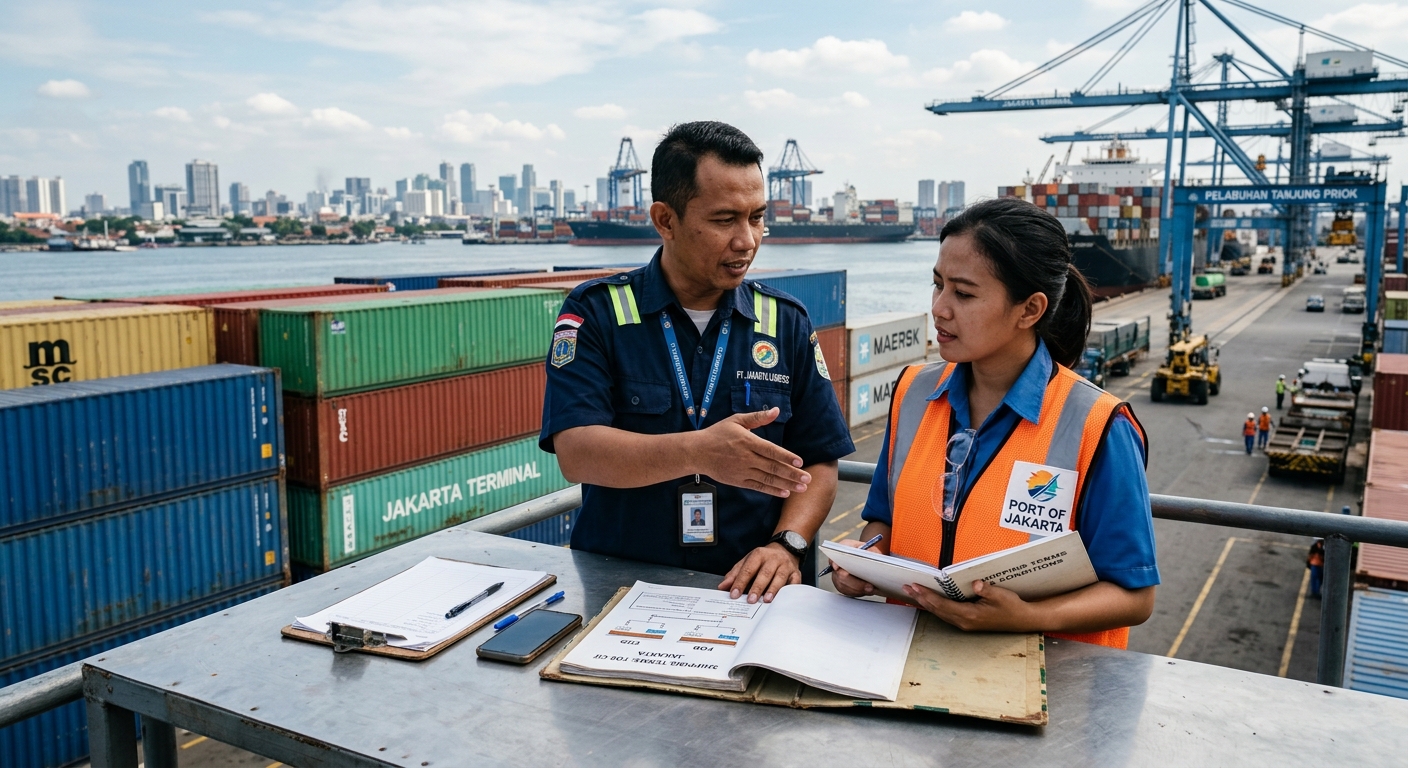
When engaging in international trade, particularly when importing from or exporting to Indonesia, understanding shipping terms—specifically Incoterms—is crucial. Jakarta, serving as the commercial and logistical hub of Indonesia, sees a massive volume of trade passing through its ports, most notably Tanjung Priok. Among the various Incoterms available, Free on Board (FOB) and Cost, Insurance, and Freight (CIF) are two of the most commonly used terms. This article provides an in-depth comparison of FOB vs CIF Jakarta shipping terms to help businesses make informed logistical decisions.
Understanding FOB (Free on Board) Jakarta
The FOB Incoterm means that the seller fulfills their delivery obligation when the goods are loaded on board the vessel at the named port of shipment—in this case, Jakarta. From that point onward, the buyer assumes all costs and risks associated with the goods.
Seller’s Responsibilities under FOB Jakarta
- Export packaging and marking.
- Transporting the goods to the Port of Jakarta (Tanjung Priok).
- Handling export customs clearance.
- Loading the goods onto the designated vessel.
It is important to note that the seller is responsible for ensuring the goods are ready for export. If you are dealing with hazardous materials, you should consult A Comprehensive Guide to Exporting Dangerous Goods from Indonesian Ports to ensure full compliance with local regulations.
Buyer’s Responsibilities under FOB Jakarta
- Paying for the ocean freight from Jakarta to the destination port.
- Purchasing marine insurance (optional but highly recommended).
- Handling import customs clearance at the destination.
- Onward transportation from the destination port to the final facility.
Understanding CIF (Cost, Insurance, and Freight) Jakarta
Under the CIF Incoterm, the seller is responsible for paying the costs and freight necessary to bring the goods to the named port of destination. Additionally, the seller must procure marine insurance against the buyer’s risk of loss of or damage to the goods during the carriage.
Seller’s Responsibilities under CIF Jakarta
- Export packaging and inland transport to the port of origin.
- Export customs clearance.
- Payment of ocean freight to the port of destination (Jakarta, if importing into Indonesia).
- Providing minimum insurance coverage for the goods during transit.
If you are an exporter based in Indonesia using CIF terms to ship globally, mastering local procedures is vital. You can find valuable information by Navigating the Customs Clearance Process for Exporting from Indonesia.
Buyer’s Responsibilities under CIF Jakarta
- Unloading costs at the destination port (unless included in the freight contract).
- Import customs clearance and applicable duties/taxes.
- Onward transport from the destination port.
FOB vs CIF: Key Differences at a Glance
| Feature | FOB Jakarta | CIF Jakarta |
|---|---|---|
| Freight Costs | Paid by the Buyer | Paid by the Seller |
| Insurance | Buyer’s responsibility | Seller provides minimum coverage |
| Risk Transfer | When goods are loaded on the vessel | When goods are loaded on the vessel |
| Control over Shipping | Buyer selects the carrier and route | Seller selects the carrier and route |
Which Term Should You Choose?
Choosing between FOB and CIF depends largely on your experience in international trade, your relationship with freight forwarders, and your desire for control over the supply chain.
When to Choose FOB
FOB is generally preferred by experienced buyers who have established relationships with reliable freight forwarders. By controlling the freight and insurance, buyers can often negotiate better rates and avoid marked-up costs from the seller. This term provides maximum visibility and control over the shipment once it leaves Jakarta. When sourcing products, it is also crucial to understand supplier requirements, such as order volumes. For more insights on this, refer to A Complete Guide to Minimum Order Quantity (MOQ) in B2B Indonesia.
When to Choose CIF
CIF is often better suited for buyers who are new to international trade or dealing with small shipments where the hassle of arranging freight and insurance outweighs the potential cost savings. The seller handles the complex logistics of moving the goods to the destination port. However, buyers should be cautious, as sellers might inflate the shipping and insurance costs to increase their profit margins. If you are looking for reliable export partners, platforms like exportnusa.com can help connect you with reputable Indonesian businesses.
Conclusion
Understanding the nuances between FOB and CIF Jakarta shipping terms is fundamental for anyone involved in importing from or exporting to Indonesia. While FOB offers the buyer more control and potential cost savings on freight, CIF provides convenience by placing the burden of arranging transport and insurance on the seller. By carefully evaluating your business’s logistical capabilities, risk tolerance, and budget, you can select the Incoterm that best aligns with your international trade strategy.
Frequently Asked Questions (FAQ)
Does risk transfer at the same point in FOB and CIF?
Yes. In both FOB and CIF, the risk of loss or damage to the goods transfers from the seller to the buyer as soon as the goods are loaded on board the vessel at the port of origin.
Is insurance mandatory for FOB shipments?
No, insurance is not mandatory for the seller or the buyer under FOB terms. However, it is highly recommended that the buyer purchases insurance to protect their investment during the ocean transit.
Can CIF be used for air freight?
Technically, CIF is designed specifically for sea and inland waterway transport. For air freight or multimodal transport, the equivalent term is CIP (Carriage and Insurance Paid To).
Why do buyers often prefer FOB over CIF?
Buyers often prefer FOB because it allows them to negotiate their own freight rates, choose their preferred shipping routes, and have greater visibility over the logistics process, preventing sellers from marking up shipping costs.