

Introduction to Exporting Dangerous Goods from Indonesia
Exporting dangerous goods from Indonesian ports requires a deep understanding of international maritime regulations, local compliance standards, and meticulous logistical planning. As Southeast Asia’s largest economy, Indonesia exports a vast array of commodities, ranging from agricultural goods and textiles to chemicals, minerals, and manufactured products. When these products fall under the classification of dangerous goods (DG), the complexity of the export process increases exponentially.
Failure to comply with strict safety regulations can result in severe penalties, shipment delays, port rejections, or catastrophic accidents at sea. This article provides a comprehensive overview of the procedures, documentation, and best practices necessary to navigate the complexities of exporting dangerous goods from Indonesian ports safely and efficiently.
Understanding the IMDG Code
The foundation of shipping dangerous goods by sea is the International Maritime Dangerous Goods (IMDG) Code, developed by the International Maritime Organization (IMO). The Indonesian government strictly adheres to this code across all its major commercial ports.
The IMDG Code classifies dangerous goods into nine distinct classes based on the primary hazard they present. Understanding these classes is the critical first step for any exporter:
- Class 1: Explosives
- Class 2: Gases (compressed, liquefied, or dissolved)
- Class 3: Flammable Liquids
- Class 4: Flammable Solids; Substances liable to spontaneous combustion; Substances which, in contact with water, emit flammable gases
- Class 5: Oxidizing Substances and Organic Peroxides
- Class 6: Toxic and Infectious Substances
- Class 7: Radioactive Material
- Class 8: Corrosive Substances
- Class 9: Miscellaneous Dangerous Substances and Articles
For example, briquette charcoal, a major Indonesian export, is often classified under Class 4.2 (Substances liable to spontaneous combustion). Exporters operating in this niche must be highly diligent. If you are interested in this specific industry, you should read The Ultimate Guide to Private Label Shisha Charcoal Manufacturing to understand how production methods impact export compliance.
Regulatory Framework and Indonesian Authorities
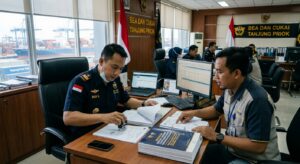
In Indonesia, the export of dangerous goods is regulated by several governmental bodies. The primary authority is the Ministry of Transportation (Kementerian Perhubungan), specifically the Directorate General of Sea Transportation (Hubla). They work in tandem with the Indonesian Customs and Excise Directorate General (Bea Cukai) to ensure all shipments meet both safety and fiscal requirements.
Key Port Infrastructure
Not all ports in Indonesia are equipped or authorized to handle all classes of dangerous goods. The major ports capable of handling specialized DG cargo include:
- Tanjung Priok (Jakarta): The busiest and most advanced port, handling the majority of Indonesia’s chemical and industrial DG exports.
- Tanjung Perak (Surabaya): A vital hub for Eastern Indonesia, well-equipped for various manufacturing and agricultural chemical exports.
- Belawan (Medan): Essential for exports originating from Sumatra, particularly palm oil derivatives and related chemicals.
- Tanjung Emas (Semarang): Serves Central Java’s growing industrial sector.
Exporters must verify the specific port’s capabilities and current restrictions regarding their specific IMDG class before booking freight.
Packaging and Labeling Requirements
Proper packaging and labeling are non-negotiable when exporting dangerous goods. The packaging must withstand the rigors of ocean transit, including changes in temperature, humidity, and physical movement.
UN Certified Packaging: Packages containing dangerous goods must be UN-approved. This means the packaging design has been tested and certified to meet specific performance standards. The packaging must bear the appropriate UN marking, which indicates the type of packaging, the material, and the maximum gross mass it can hold.
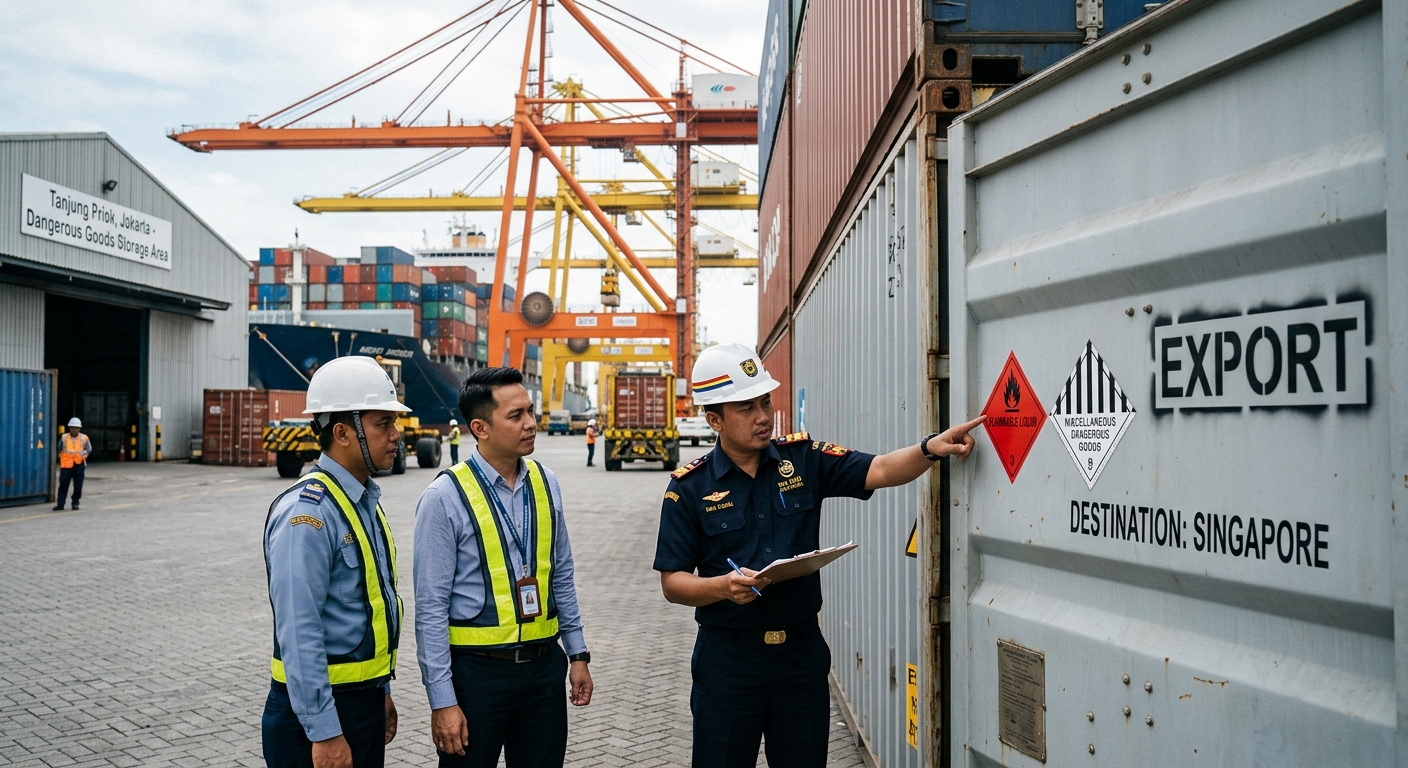
Labeling and Placarding: Each package must be clearly labeled with the appropriate hazard diamond(s) corresponding to its IMDG class, along with the correct UN Number and Proper Shipping Name (PSN). Furthermore, the shipping container itself must be placarded on all four sides to alert port workers and vessel crew of the hazards within.
While exporting non-hazardous goods like furniture is straightforward, requiring standard moisture control, DG cargo demands extreme precision. For insights into non-hazardous export logistics, you can review The Complete Guide: How to Source Furniture from Indonesia, which highlights the stark contrast in packaging stringency compared to chemical exports.
Essential Documentation for DG Exports
Documentation is the lifeblood of international shipping, and for dangerous goods, the paperwork is heavily scrutinized. The following documents are mandatory for exporting dangerous goods from Indonesia:
| Document Name | Purpose and Description |
|---|---|
| Material Safety Data Sheet (MSDS) / SDS | Provides comprehensive information about the substance, its hazards, handling procedures, and emergency response measures. Must be up-to-date (typically within the last 3-5 years). |
| Dangerous Goods Declaration (DGD) | A legal document signed by the exporter or packer certifying that the shipment has been packed, labeled, and declared in accordance with the IMDG Code. |
| Container Packing Certificate (CPC) | Certifies that the container was clean, dry, and fit to receive the goods, and that incompatible goods have not been packed together. |
| Pemberitahuan Ekspor Barang (PEB) | The standard Indonesian Customs Export Declaration required for all commercial exports. |
| Certificate of Analysis (COA) / SHT | Often required for commodities prone to self-heating (like charcoal) to prove they have passed safety tests (e.g., the Self-Heating Test or SHT). |
Vanning, Inspections, and Port Procedures
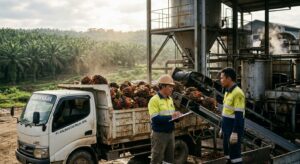
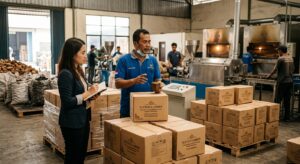
The process of loading dangerous goods into a container, known as vanning, must be conducted under strict supervision. In Indonesia, marine surveyors or designated inspection agencies (such as Sucofindo or Surveyor Indonesia) may be required to oversee the vanning process, especially for high-risk commodities.
During vanning, workers must ensure that goods are properly secured, blocked, and braced to prevent movement during transit. Furthermore, segregation rules must be strictly followed. Certain dangerous goods cannot be packed in the same container, or even placed adjacent to each other on the vessel, to prevent catastrophic reactions in the event of a leak.
Once the container arrives at the port of origin (e.g., Tanjung Priok), it is directed to a specialized dangerous goods yard. Port authorities and customs officials may conduct random physical inspections or utilize X-ray scanners to verify the contents match the declared documentation.
Leveraging B2B Platforms and Sourcing Networks
Finding reputable buyers and navigating the export ecosystem in Indonesia is increasingly facilitated by digital platforms. B2B platforms help connect Indonesian manufacturers of both hazardous and non-hazardous materials with global buyers while providing frameworks for safe transactions.
If you are exploring the wider scope of what Indonesian suppliers have to offer through these digital ecosystems, it is highly recommended to read Navigating Indonesian B2B Export Platform Commodities: A Comprehensive Guide. Understanding platform dynamics can help exporters find certified logistics partners who specialize in dangerous goods.
Interestingly, some agricultural by-products that seem harmless must also be carefully evaluated for export. For instance, organic growing media is heavily exported from Indonesia. For a deep dive into that sector, check out The Ultimate Guide to Sourcing from Cocopeat Growing Media Wholesale Distributors. While cocopeat is not a dangerous good, agricultural exports still require phytosanitary certificates and rigorous customs compliance, mirroring the strict documentation culture required for DG exports.
Common Challenges and Best Practices
Exporting dangerous goods from Indonesia presents several challenges that exporters must proactively manage:
- Vessel Space Constraints: Shipping lines strictly limit the amount of dangerous goods they will carry on a single vessel. Securing space (booking) for DG cargo often requires significantly more lead time than standard cargo.
- Changing Regulations: The IMDG Code is updated every two years. Exporters must stay abreast of these amendments to ensure ongoing compliance.
- Inland Transportation: Moving dangerous goods from the factory to the port requires specialized trucking companies with permits for hazardous materials (B3 transport licenses in Indonesia).
- Weather Conditions: Indonesia’s tropical climate (high heat and humidity) can impact certain volatile substances, requiring temperature-controlled containers (reefers) or specialized ventilation.
Best Practices for Success:
To mitigate these challenges, exporters should partner with experienced freight forwarders who hold specialized dangerous goods certifications. Conducting regular training for warehouse staff on IMDG regulations and investing in high-quality packaging materials will drastically reduce the risk of compliance failures. Always maintain open lines of communication with the shipping line and submit documentation well in advance of the cargo cut-off times.
Conclusion
Exporting dangerous goods from Indonesian ports is a highly regulated process designed to protect human life, marine ecosystems, and port infrastructure. By thoroughly understanding the IMDG Code, adhering to strict packaging and labeling standards, and preparing meticulous documentation, Indonesian exporters can successfully navigate this complex landscape. Partnering with certified logistics providers and utilizing specialized port facilities are critical steps in ensuring that hazardous shipments reach their global destinations safely, legally, and on time. As Indonesia continues to expand its industrial and manufacturing sectors, mastering the logistics of dangerous goods export remains a vital competitive advantage in the global market.
Frequently Asked Questions (FAQ)
What happens if dangerous goods are misdeclared at an Indonesian port?
Misdeclaring dangerous goods, whether intentionally or accidentally, is a severe offense. It can lead to the immediate impounding of the cargo, substantial financial fines imposed by Indonesian Customs and the port authority, and potential legal action against the exporter. Furthermore, the shipping line may blacklist the exporter, and the cargo will likely miss its vessel, resulting in significant delays.
Are all shipping lines willing to carry dangerous goods from Indonesia?
No. While most major international shipping lines carry dangerous goods, they have their own internal policies and restrictions. Some carriers outright refuse certain highly volatile classes (like Class 1 Explosives or Class 7 Radioactive materials), while others have strict quotas per vessel. Approval is always granted on a case-by-case basis after reviewing the MSDS and DGD.
Do I need a special license to transport dangerous goods by truck to Tanjung Priok?
Yes. Inland transportation of dangerous goods in Indonesia is regulated by the Ministry of Environment and Forestry and the Ministry of Transportation. The trucking company must possess a valid B3 (Bahan Berbahaya dan Beracun) transport permit, and the drivers must be specially trained and certified to handle hazardous materials in case of an emergency or spill.
How long is a Material Safety Data Sheet (MSDS) valid for export purposes?
While there is no strict global expiration date for an MSDS, industry standard practice and most shipping lines require the document to be reviewed and updated at least every 3 to 5 years. If the formulation of the product changes, or if new hazard information becomes available, the MSDS must be updated immediately before the next export shipment.