


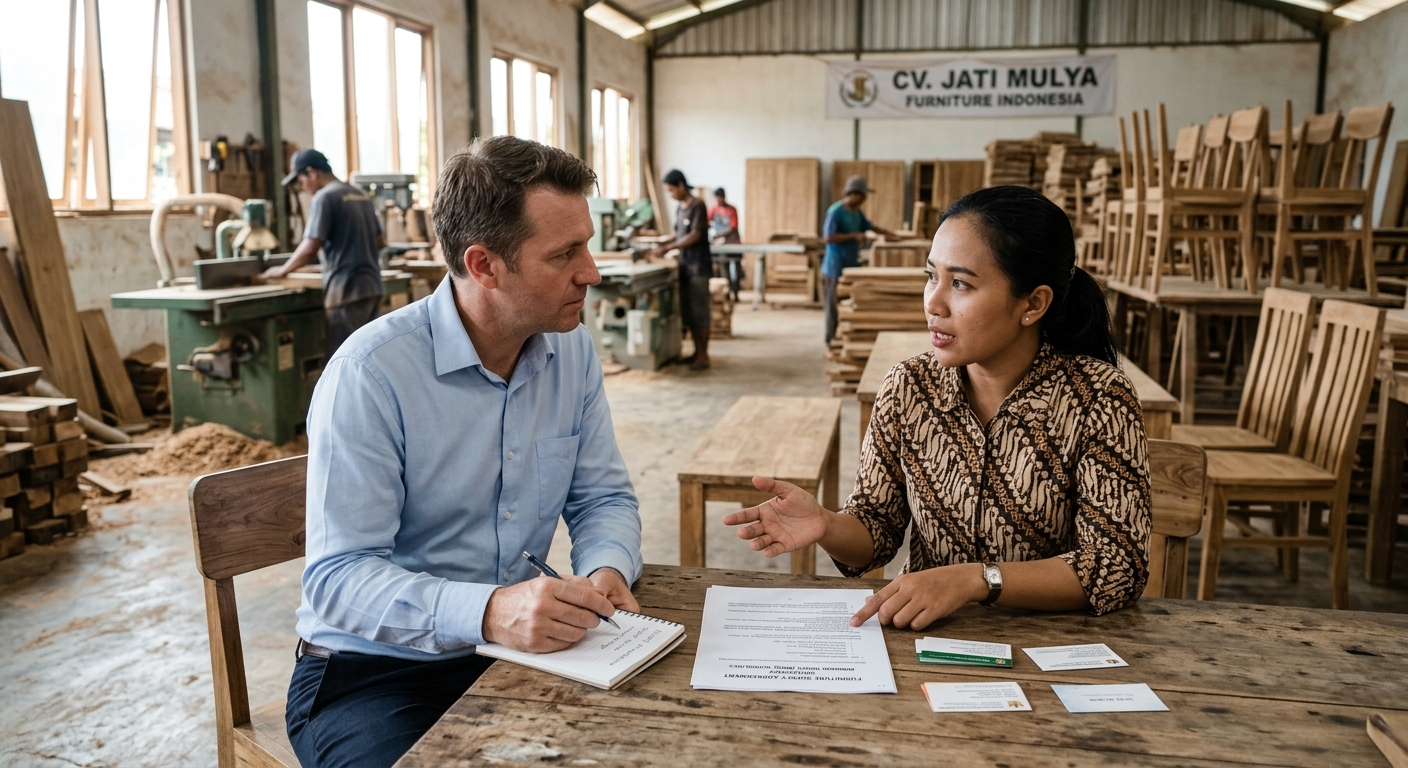
Introduction to Importing Indonesian Furniture
Indonesia is globally renowned for its exquisite craftsmanship, high-quality teak, and diverse range of rattan and wooden furniture. For international buyers, retailers, and wholesalers, importing furniture from Indonesia presents a lucrative opportunity to offer unique, durable, and aesthetically pleasing products to their home markets. However, one of the most critical aspects of establishing a successful importing business is understanding the concept of Minimum Order Quantity (MOQ) for Indonesian furniture.
MOQ refers to the lowest number of items or the smallest shipment volume a manufacturer is willing to produce or sell in a single order. Because international shipping logistics and factory production lines are complex, suppliers enforce these minimums to ensure profitability and efficiency. Navigating these requirements can be daunting for new importers, but working with reliable export partners can significantly streamline the procurement process.
What is Minimum Order Quantity (MOQ)?
In the international trade landscape, MOQ is a standard protective measure for manufacturers. Setting up production lines, sourcing raw materials like legally certified Indonesian teak or mahogany, and allocating labor all require upfront capital and time. If a factory were to produce only a handful of chairs, the cost per unit would be astronomically high, making it unfeasible for both the supplier and the buyer.
When dealing with Indonesian furniture, MOQs are rarely calculated simply by the number of individual pieces. Instead, they are usually determined by container volume. The two most common metrics are the 20-foot Standard Container (20′ GP) and the 40-foot High Cube Container (40′ HC).
Why Do Indonesian Suppliers Use Container-Based MOQs?
Understanding the rationale behind container-based MOQs can help buyers negotiate better terms and plan their inventory effectively. There are several reasons why Indonesian furniture manufacturers prefer this method:
- Economies of Scale: Mass-producing furniture reduces the per-unit cost of raw materials and labor.
- Shipping Efficiency: Shipping Less than Container Load (LCL) for furniture is highly risky. Furniture is bulky and prone to damage if mixed with unrelated cargo from other shippers. Full Container Load (FCL) ensures the goods are packed securely at the factory and remain sealed until they reach the destination.
- Customs and Documentation: The paperwork required for exporting timber products from Indonesia (such as the SVLK certification) is extensive. Processing this documentation for a few items is inefficient. For a deeper understanding of these procedures, reading Navigating the Customs Clearance Process for Indonesian Exports: A Comprehensive Guide provides excellent foundational knowledge.
Standard MOQ Expectations for Indonesian Furniture
While specific MOQs vary from factory to factory, there are industry standards that most Indonesian suppliers follow. Generally, you can expect the following tiers of minimum orders:
1. The 20-Foot Container (1×20′ FCL)
For most mid-sized manufacturers, a 20-foot container is the absolute minimum order. A 20-foot container holds approximately 28 to 30 cubic meters (CBM) of cargo. Depending on the size and packaging of the furniture, this translates to roughly 150 to 300 pieces of mixed furniture (e.g., chairs, small tables, and cabinets). Some factories will allow you to mix 5 to 10 different product designs within this container, provided you order a minimum number of each specific design (often 10 to 20 pieces per item).
2. The 40-Foot High Cube Container (1×40′ HC)
Larger factories, particularly those producing high-volume commercial furniture, may set their MOQ at a 40-foot High Cube container. This container holds about 68 to 70 CBM. Importers prefer 40′ HC containers because the shipping cost per cubic meter is significantly lower than that of a 20-foot container, maximizing profit margins.
3. Item-Specific MOQs
Even if you meet the container volume requirement, suppliers will still impose an item-specific MOQ. You cannot usually order 150 different chairs to fill a container. Setting up the jigs and sourcing the specific wood cuts for a chair takes time. Therefore, an item MOQ of 10, 20, or 50 pieces per design is standard. This is very similar to other custom manufacturing sectors; for example, reading The Ultimate Guide to Private Label Shisha Charcoal Manufacturing reveals how packaging and raw material constraints dictate minimum volumes across different Indonesian industries.
Container Capacity Breakdown
To help you visualize how much furniture you need to order to meet container MOQs, here is a general estimation table:
| Container Size | Volume Capacity (CBM) | Estimated Dining Chairs | Estimated Large Sofas | Estimated Beds |
|---|---|---|---|---|
| 20-foot Standard | 28 – 30 CBM | 150 – 200 units | 10 – 15 units | 20 – 30 units |
| 40-foot Standard | 58 – 60 CBM | 300 – 400 units | 25 – 30 units | 45 – 55 units |
| 40-foot High Cube | 68 – 70 CBM | 350 – 450 units | 30 – 35 units | 55 – 65 units |
Tips for Negotiating MOQs with Indonesian Suppliers
If you are a startup or a boutique retailer, filling a 40-foot container might be beyond your current capital or warehouse capacity. Fortunately, MOQs are sometimes negotiable if approached correctly.
- Build a Relationship: Indonesian business culture places a high value on long-term relationships. Express your vision for future growth and repeat orders.
- Standardize Materials: If you order different items made from the same exact material and finish (e.g., all natural teak wood with the same stain), factories are more likely to lower the item-specific MOQ.
- Offer to Pay a Surcharge: Some suppliers will agree to produce smaller quantities if you are willing to pay a 10% to 20% premium on the per-unit price to cover their setup costs.
- Consolidate Shipments: Use a buying agent or consolidator in Jepara or Bali. They can pool your smaller orders with orders from other buyers to fill a container.
Diversifying your import portfolio can also strengthen your logistics network. For those interested in broadening their trade scope in the region, a Comprehensive Guide to Sourcing Agricultural Commodities from Sumatra Suppliers can offer insights into the broader Indonesian export ecosystem.
Conclusion
Understanding the Minimum Order Quantity for Indonesian furniture is vital for any importer looking to source from this vibrant market. By recognizing that MOQs are largely based on container sizes (20ft and 40ft FCL) rather than just unit counts, buyers can better plan their inventory, shipping logistics, and capital allocation. While MOQs protect the supplier’s production efficiency, there is often room for negotiation for buyers who communicate effectively, build strong relationships, and understand the manufacturing constraints. With careful planning, importing furniture from Indonesia can become a highly profitable cornerstone of your retail or wholesale business.
Frequently Asked Questions (FAQ)
Can I buy less than a container load (LCL) of Indonesian furniture?
Yes, some smaller workshops and consolidation agents allow LCL shipments. However, it is generally discouraged due to the high risk of damage during transit when furniture is mixed with other heavy cargo, as well as the disproportionately high shipping costs per cubic meter.
Do different types of furniture have different MOQs?
Yes. Smaller, easily produced items like dining chairs or side tables usually have higher item-specific MOQs (e.g., 50 pieces). Conversely, large, complex items like intricately carved wardrobes or large sectional sofas may have lower item MOQs (e.g., 5 to 10 pieces), as long as the overall container volume is met.
How long does it take to produce a full container of furniture in Indonesia?
Production lead times for a full 20-foot or 40-foot container typically range from 45 to 90 days. This depends on the availability of raw materials, the complexity of the designs, the drying process for the wood (kiln drying is essential), and the factory’s current order volume.
Does the MOQ change for custom-designed furniture?
Generally, yes. Custom designs require new blueprints, molds, or jigs, which increases the factory’s upfront investment. Therefore, suppliers will usually demand a higher MOQ for bespoke items compared to their standard catalog pieces to justify the setup time and costs.