

Introduction to Indonesia’s Palm Oil Industry
As the world’s largest producer and exporter of palm oil, Indonesia plays a pivotal role in the global edible oil market. The sheer volume of Crude Palm Oil (CPO) and its derivatives flowing out of the archipelago necessitates a complex, dynamic, and strictly enforced regulatory framework. A cornerstone of this framework is the Indonesia palm oil export tax structure, a mechanism designed to balance domestic supply, stabilize local cooking oil prices, and encourage downstream processing within the country. Understanding this tax structure is absolutely critical for traders, investors, and manufacturers who rely on Indonesian palm oil to fuel their global supply chains.
The Core Objectives of the Export Tax Structure
The Indonesian government employs export taxes and levies on palm oil primarily as macroeconomic policy tools. Historically, when global CPO prices surge, local producers are naturally incentivized to export their entire inventory to maximize profits. Left unchecked, this can lead to severe domestic shortages of cooking oil, a staple in Indonesian households. Therefore, the export tax structure is inherently progressive: as the global reference price of CPO rises, the export tax and levy rates increase concurrently.
Furthermore, these taxes aim to stimulate the domestic downstream industry. By imposing higher tariffs on raw Crude Palm Oil compared to refined products (such as RBD Palm Olein), the government encourages companies to invest in local refineries. This strategy not only creates jobs but also enhances the overall value of Indonesia’s exports. Navigating these requirements demands a thorough understanding of local trade laws, which is why reviewing a Comprehensive Guide to Indonesia Export Regulations for Agricultural Products is highly recommended for anyone entering this sector.
The Dual-Component System: Export Tax and Export Levy
The financial burden on palm oil exports in Indonesia is divided into two distinct components. While they serve similar economic purposes, their administration and fund utilization differ significantly.
1. Bea Keluar (Export Tax)
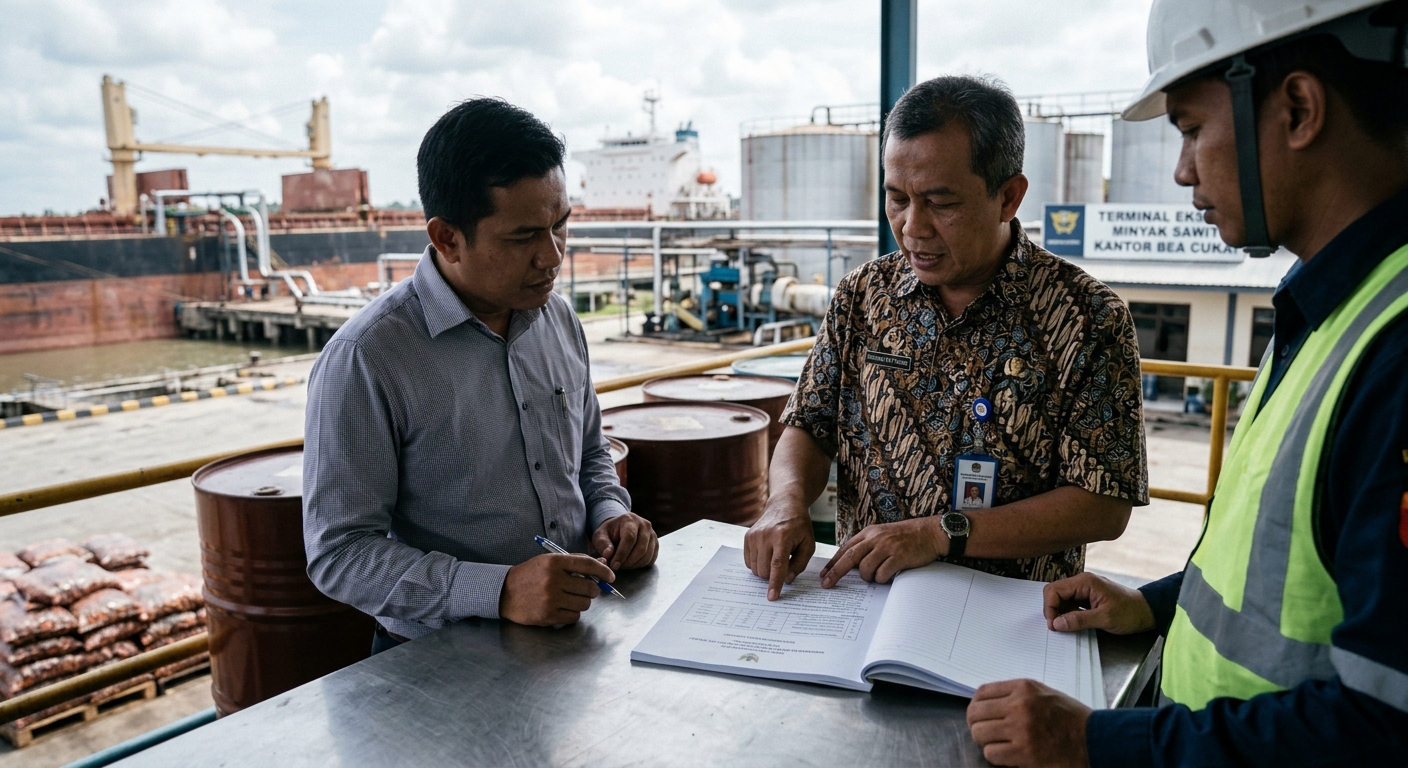
The Export Tax, or Bea Keluar, is collected directly by the Ministry of Finance through the Directorate General of Customs and Excise. The revenue generated from this tax goes directly into the state treasury as non-tax state revenue. The primary trigger for the Export Tax is the official CPO reference price, which is published monthly by the Ministry of Trade. If the reference price falls below a certain threshold, the Export Tax rate drops to zero, providing relief to exporters during market downturns.
2. Pungutan Ekspor (Export Levy)
The Export Levy is a separate fee collected by the Indonesian Oil Palm Estate Fund Management Agency (BPDPKS). Unlike the Export Tax, the funds collected from the Export Levy are earmarked specifically for the development of the palm oil industry itself. These funds are used to finance the national biodiesel mandate (such as the B35 program), support replanting programs for smallholder farmers, and fund research and development initiatives. The progressive nature of the levy mirrors that of the Export Tax, escalating as global prices climb.
Understanding the Reference Price (Harga Patokan Ekspor)
The entire tax structure pivots on the CPO Reference Price (HPE). The Ministry of Trade calculates this figure by averaging CPO prices from the Indonesia Commodity and Derivatives Exchange (ICDX), the Bursa Malaysia Derivatives (BMD), and the Rotterdam market over a specific period (usually a month). Once the reference price is established, it dictates the exact tax bracket for the upcoming period.
| CPO Reference Price (USD/MT) | Export Tax Bracket Impact | Export Levy Bracket Impact |
|---|---|---|
| Below $680 | $0 | $0 (Subject to specific regulatory updates) |
| $680 – $730 | Progressive Step 1 | Progressive Step 1 |
| $730 – $780 | Progressive Step 2 | Progressive Step 2 |
| Above $780 | Increases proportionally per $50 increment | Increases proportionally per $50 increment |
Note: The exact dollar amounts for the tax and levy are subject to frequent revisions by the Indonesian Ministry of Finance. It is imperative that traders constantly monitor official ministerial decrees (Peraturan Menteri Keuangan or PMK) to calculate their actual FOB or CIF costs accurately.
Downstream Incentives and Differential Taxation
To fully grasp the Indonesia palm oil export tax structure, one must look at how derivatives are taxed. Crude Palm Oil faces the highest combined tax and levy rates. As the product undergoes refining, bleaching, and deodorizing (RBD), the tax burden decreases. For example, RBD Palm Olein (cooking oil) will incur significantly lower taxes than raw CPO. This differential taxation is a deliberate industrial policy to force value addition on Indonesian soil.
For international buyers looking to source these refined agricultural commodities, navigating the local supplier landscape can be as complex as the tax laws. Engaging local expertise is often the best strategy, making a Comprehensive Guide to Working with an Indonesia Agricultural Commodity Sourcing Agent an essential read for optimizing procurement processes and ensuring compliance with all tax requirements.
Logistics and the True Cost of Export
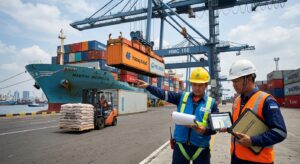
Calculating the total cost of exporting palm oil requires factoring in not just the fluctuating Export Tax and Levy, but also the logistical expenses. Palm oil is generally shipped in bulk via chemical tankers or in flexitanks loaded into standard ocean freight containers. The efficiency of your logistics partner directly impacts your bottom line, especially when dealing with time-sensitive reference price changes at the end of the month.
To avoid demurrage and ensure customs clearance is handled seamlessly before a tax bracket shifts, exporters must partner with top-tier logistics providers. Finding the right partner is crucial, which is why consulting the Best Freight Forwarders in Jakarta Indonesia: A Comprehensive Guide can save companies thousands of dollars in hidden fees and delays.
Comparing Palm Oil Taxation with Other Commodities
While palm oil is heavily regulated due to its scale and domestic importance, other Indonesian agricultural exports operate under entirely different frameworks. For instance, the export of coconut derivatives, coffee, or spices often does not face the same stringent progressive tax structures, though they still require standard export documentation and phytosanitary certificates.
If you are a trader dealing in a diversified portfolio of Indonesian goods, it is helpful to understand pricing mechanisms across different sectors. For example, understanding the FOB Price Coconut Charcoal Indonesia: A Comprehensive Guide provides a stark contrast to CPO pricing, highlighting how freely traded commodities differ from heavily taxed and regulated macro-commodities like palm oil.
Recent Regulatory Shifts and Future Outlook
The Indonesia palm oil export tax structure is famously volatile. In recent years, the government has enacted temporary export bans, sudden levy waivers, and drastic alterations to the reference price brackets in response to geopolitical events and domestic inflation. For instance, during the unprecedented global vegetable oil shortage, Indonesia temporarily halted all CPO exports to stabilize domestic cooking oil prices. Following the lift of the ban, a revised, highly progressive tax structure was implemented to recoup lost revenues and aggressively fund the B35 biodiesel mandate.
Looking forward, the tax structure is expected to remain a dynamic instrument. As Indonesia pushes for even higher biodiesel blends (potentially B40 or B50) and seeks to solidify its position as a downstream manufacturing hub, the differential between CPO taxes and refined product taxes will likely widen. International buyers must build flexible pricing models that can absorb or pass on these sudden tax fluctuations.
Conclusion
The Indonesia palm oil export tax structure is a sophisticated, dual-layered system designed to protect domestic consumers, promote local industry, and fund sustainability initiatives. By combining a progressive Export Tax with a dedicated Export Levy, the Indonesian government wields immense influence over global vegetable oil markets. For international traders, mastering this structure—monitoring reference prices, understanding derivative differentials, and securing reliable sourcing and logistics partners—is not just a matter of compliance, but a fundamental requirement for commercial success in the global agricultural sector.
Frequently Asked Questions (FAQ)
What is the difference between the Export Tax and the Export Levy in Indonesia?
The Export Tax (Bea Keluar) is collected by the Ministry of Finance and goes into the general state budget. The Export Levy (Pungutan Ekspor) is collected by the BPDPKS and is strictly used to fund palm oil industry programs, such as biodiesel subsidies and smallholder replanting initiatives.
How often does Indonesia change its palm oil export tax rates?
The actual tax and levy brackets are legally defined by Ministry of Finance regulations, which change periodically. However, the exact tax amount paid by exporters changes monthly, as it is based on the fluctuating CPO Reference Price published by the Ministry of Trade every month.
Does the export tax apply to all palm oil products equally?
No. The tax structure is designed to encourage domestic processing. Raw Crude Palm Oil (CPO) faces the highest tax and levy rates. Refined, bleached, and deodorized (RBD) products, such as RBD palm olein or biodiesel, face significantly lower tax rates.
What happens to the export tax if global CPO prices crash?
The tax system is progressive with a built-in threshold. If the global reference price for CPO drops below the government-mandated minimum threshold (historically around $680 USD per metric ton, though subject to change), the Export Tax rate drops to zero, offering financial relief to exporters.