

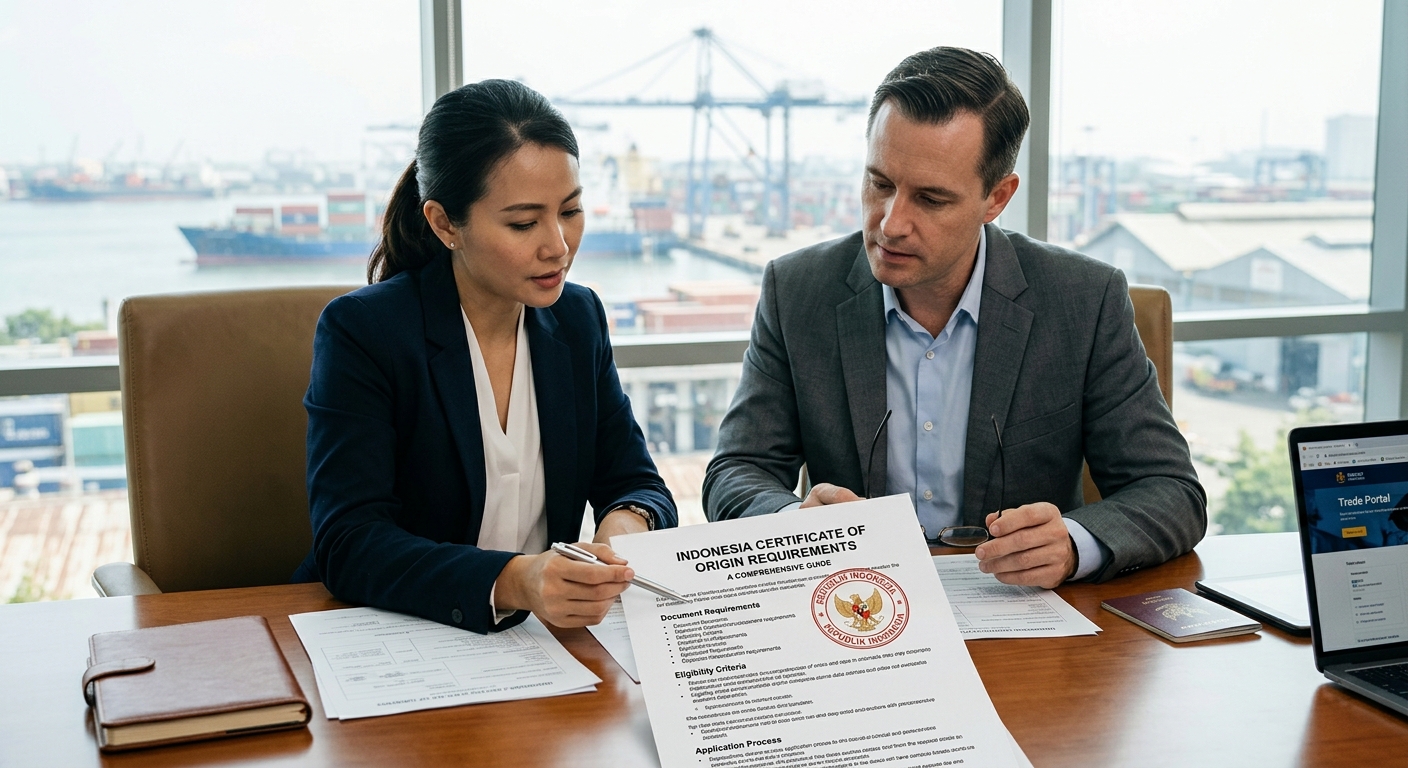
Introduction to Indonesian Certificate of Origin (COO)
In the complex landscape of international trade, understanding the regulatory requirements of different countries is paramount. For businesses importing from or exporting to Indonesia, the Certificate of Origin (COO), known locally as Surat Keterangan Asal (SKA), plays a critical role. A Certificate of Origin is an official international trade document that certifies that goods in a particular export shipment are wholly obtained, produced, manufactured, or processed in a particular country. In Indonesia, this document is vital for proving the nationality of the product, determining applicable tariff rates, and ensuring smooth customs clearance.
Indonesia, as the largest economy in Southeast Asia, maintains a robust regulatory framework to manage its exports and imports. Securing the correct COO not only ensures compliance with international trade laws but can also unlock significant financial benefits through preferential trade agreements. Understanding the precise Indonesia certificate of origin requirements is essential for businesses aiming to optimize their supply chain and minimize cross-border friction.
Types of Certificates of Origin in Indonesia
Indonesia issues two primary categories of Certificates of Origin, each serving a distinct purpose in the global trading ecosystem.
Preferential Certificate of Origin
A Preferential COO allows buyers to claim tariff exemptions or reductions when importing goods from Indonesia into countries that have a Free Trade Agreement (FTA) with Indonesia or ASEAN. These certificates require the exported goods to meet specific Rules of Origin (ROO) stipulated in the respective trade agreements. Common examples include Form D for ASEAN countries, Form E for the ASEAN-China FTA, and Form AK for the ASEAN-Korea FTA. Utilizing these forms can significantly lower landed costs for importers.
Non-Preferential Certificate of Origin
A Non-Preferential COO, typically known as Form B, does not grant any tariff reductions. Instead, it serves purely as proof of origin for customs clearance, trade statistics, quotas, and anti-dumping regulations. Even without tariff benefits, obtaining this document is often a mandatory requirement for customs authorities in the destination country or for fulfilling Letter of Credit stipulations.
General Requirements for Obtaining a COO
To successfully apply for a Certificate of Origin in Indonesia, exporters must meet specific eligibility and documentation criteria. The Indonesian Ministry of Trade regulates the issuance of these certificates. Exporters must be registered business entities in Indonesia, possessing a valid Business Identification Number (NIB) which acts as the foundational export license.
Furthermore, the goods must comply with the established Rules of Origin. This generally means the products must be wholly obtained in Indonesia (such as agricultural products or minerals extracted from the land) or have undergone substantial transformation within the country. The substantial transformation is usually determined by a change in tariff classification, a specific manufacturing process, or reaching a minimum regional value content percentage.
The E-SKA Application Process
The Indonesian government has modernized its trade facilitation by implementing the E-SKA system, an electronic platform for issuing Certificates of Origin. This digital transformation has significantly streamlined the application process, reducing processing times and enhancing transparency.
To utilize the E-SKA system, exporters must first register their company details and obtain access credentials. Once registered, the application process involves inputting shipment details, uploading supporting documents, and selecting the appropriate COO form. After submission, the Instansi Penerbit Surat Keterangan Asal (IPSKA)—the issuing authority—will verify the data. If everything is in order, the application is approved, and the exporter can either print the certificate electronically (if applicable to the destination country) or collect the physical stamped document.
Key Documents Needed for Submission
Accurate documentation is the cornerstone of a successful COO application. Inconsistencies or missing paperwork can lead to immediate rejection by the IPSKA. Exporters must prepare a comprehensive documentation package. For a deep dive into the broader context of these procedures, you can review the Indonesia Export Import Procedures Manual: A Complete Guide.
The standard documents required for a COO application typically include:
- Export Declaration (PEB – Pemberitahuan Ekspor Barang): A customs document declaring the goods leaving the country.
- Commercial Invoice: Detailing the value, quantity, and description of the goods.
- Packing List: Specifying the packaging details, weights, and dimensions.
- Bill of Lading or Airway Bill: The transport document proving the goods have been loaded for export.
- Manufacturer’s Declaration: A statement detailing the production process and origin of raw materials, crucial for proving substantial transformation.
| Document Type | Purpose | Requirement Level |
|---|---|---|
| PEB (Export Declaration) | Customs clearance proof | Mandatory |
| Commercial Invoice | Value and trade verification | Mandatory |
| Packing List | Logistics and volume verification | Mandatory |
| Bill of Lading / AWB | Proof of shipment | Mandatory |
| Cost Structure Analysis | For Regional Value Content calculation | Conditional (Preferential COO only) |
Importance of COO for Specific Industries
Different industries face unique scrutiny regarding origin requirements due to the nature of their supply chains and the origin of their raw materials. For instance, the agricultural and agro-processing sectors require rigorous documentation to prove that the crops were grown and harvested on Indonesian soil.
A prime example is the coconut industry, which is a major export sector for Indonesia. Buyers worldwide rely on authentic Indonesian coconut derivatives. Those interested in this sector should consult the Comprehensive Guide to Sourcing Coconut Products from Indonesian Suppliers to understand how origin impacts product quality and trade terms. Similarly, value-added agricultural products demand precise origin tracking. If you are exploring customized horticultural products, reading A Complete Guide to Private Label Cocopeat Growing Media provides excellent insight into how origin certification impacts private label manufacturing.
Partnering with the Right Expertise
Navigating the intricacies of Indonesian customs, origin rules, and the E-SKA system can be daunting for foreign buyers and new exporters alike. A minor error in the commercial invoice or a miscalculation in the regional value content can result in delayed shipments, increased storage fees, or the loss of preferential tariff rates.
To mitigate these risks, many international buyers choose to collaborate with a trusted Indonesian exporter who possesses deep knowledge of local regulations and a proven track record of compliance. Experienced partners manage the bureaucracy, ensuring that all Certificates of Origin are issued accurately and on time, thereby securing your supply chain and protecting your profit margins.
Common Mistakes to Avoid
When applying for an Indonesian Certificate of Origin, several common pitfalls can hinder the process. Understanding these can save time and resources:
- Mismatched Information: Ensuring that the data on the Commercial Invoice, Packing List, Bill of Lading, and the COO application match exactly is crucial. Even a slight variation in product description or weight can cause rejection.
- Applying Too Late: The COO should ideally be processed at the time of exportation. Retrospective issuance is possible in some agreements, but it requires specific endorsement and can complicate matters.
- Incorrect HS Codes: Using the wrong Harmonized System (HS) code can invalidate the certificate, especially for Preferential COOs where the rules of origin are tied directly to the HS code.
- Insufficient Proof of Origin: Failing to provide a clear cost structure or manufacturer’s declaration when the goods contain imported materials.
Conclusion
The Indonesia Certificate of Origin is a fundamental document for international trade, acting as the passport for your goods. Whether you are aiming to benefit from reduced tariffs through a Preferential COO or simply meeting customs requirements with a Non-Preferential COO, understanding the exact requirements is non-negotiable. By familiarizing yourself with the E-SKA system, preparing accurate documentation, understanding the specific rules of origin for your products, and partnering with experienced local entities, you can ensure a seamless, compliant, and cost-effective trading experience with Indonesia.
Frequently Asked Questions (FAQ)
What is the difference between Form D and Form E in Indonesia?
Form D is the Preferential Certificate of Origin used specifically for trade within the ASEAN member states under the ASEAN Trade in Goods Agreement (ATIGA). Form E, on the other hand, is used for the ASEAN-China Free Trade Area (ACFTA), allowing tariff concessions for goods traded between Indonesia and China.
Can I apply for an Indonesian Certificate of Origin after the goods have shipped?
Yes, but it is subject to specific rules. This is known as a retroactive or retrospective issuance. Depending on the specific trade agreement, you usually have to apply within a certain timeframe after shipment (often within a few days to a year), and the certificate must be clearly stamped ‘ISSUED RETROACTIVELY’.
Who is responsible for issuing the COO in Indonesia?
The Certificate of Origin is issued by the Instansi Penerbit Surat Keterangan Asal (IPSKA), which are authorized issuing bodies under the Indonesian Ministry of Trade. These bodies are located in various regions and major ports across Indonesia to facilitate exporters nationwide.
Do I need a Certificate of Origin if I am not claiming preferential tariffs?
Often, yes. Even if you are not claiming reduced import duties, the destination country’s customs authority may require a Non-Preferential Certificate of Origin (Form B) to verify the origin for statistical purposes, to enforce quotas, or to ensure the goods are not subject to anti-dumping measures.