

Understanding Indonesia’s Trade Landscape
Indonesia is one of the fastest-growing economies in Southeast Asia, presenting immense opportunities for global trade. However, navigating the country’s export and import regulations can be a complex endeavor for international businesses. The Indonesian government frequently updates its trade policies to protect domestic industries, ensure safety standards, and promote economic growth. Understanding these regulations is crucial for any enterprise aiming to establish a successful supply chain in the region. To streamline operations, businesses often rely on platforms like Export Nusa to source high-quality Indonesian products efficiently.
General Import Regulations in Indonesia
Importing goods into Indonesia requires strict adherence to various legal frameworks managed by the Ministry of Trade and the Directorate General of Customs and Excise. Before initiating any import activity, a company must be legally registered in Indonesia and obtain a Business Identification Number (NIB), which also serves as an Importer Identification Number (API).
Required Import Documents
To successfully clear customs, importers must prepare a comprehensive set of documents. These typically include:
- Commercial Invoice: Detailing the transaction between the buyer and seller.
- Bill of Lading / Airway Bill: The official transport document.
- Packing List: A detailed breakdown of the shipment contents.
- Certificate of Origin (COO): Necessary for claiming preferential tariff rates under free trade agreements.
- Insurance Certificate: Providing coverage details for the goods in transit.
Import Duties and Taxes
Indonesia applies varying tariffs based on the Harmonized System (HS) code of the imported goods. The standard import duty ranges from 0% to 150%, depending on the product category. Additionally, Value Added Tax (VAT) is generally applied at a rate of 11%, alongside an Income Tax (Article 22) which ranges from 2.5% to 10%. Luxury goods may also be subject to a Luxury Goods Sales Tax (PPnBM).
Navigating Export Regulations in Indonesia
Exporting from Indonesia is generally less restrictive than importing, as the government actively encourages the export of manufactured goods and agricultural products. However, specific commodities are subject to export taxes, quotas, or outright bans to ensure domestic supply and environmental sustainability.
The Export Process
Similar to importing, exporters must possess an NIB. The standard procedure involves submitting an Export Declaration (PEB) to the customs authority. Once approved, the exporter receives an Export Approval Document (NPE), allowing the goods to be loaded onto the vessel.
Restricted and Prohibited Exports
Certain items require special permits or are completely banned from export. For instance, exporting raw minerals is heavily regulated to encourage domestic processing. Furthermore, when dealing with hazardous materials, strict safety protocols must be followed. For detailed insights on this, refer to A Comprehensive Guide to Exporting Dangerous Goods from Indonesian Ports.
Key Agricultural Exports
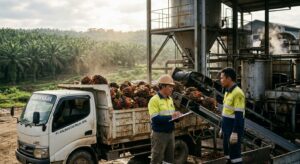
Indonesia is a major player in the global agricultural market, exporting vast quantities of palm oil, coffee, rubber, and coconut derivatives. The export of coconut products, in particular, has seen significant growth. Businesses looking to source sustainable growing mediums can benefit from reading Coco Coir Pith Wholesale Indonesia: The Ultimate Sourcing Guide to understand quality standards and export logistics.
Infrastructure and Logistics
The efficiency of export and import operations in Indonesia is heavily dependent on the country’s logistics infrastructure. The archipelago relies on an extensive network of seaports and airports to facilitate international trade. Tanjung Priok in Jakarta is the busiest port, handling the majority of the nation’s cargo. To fully grasp the capabilities and recent developments in this sector, you can review Indonesia Logistics Infrastructure and Shipping Ports: A Comprehensive Overview.
Customs Clearance Procedures
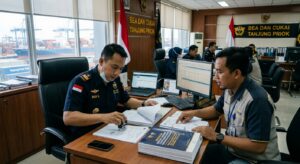
The customs clearance process in Indonesia is increasingly digitalized, utilizing the Indonesia National Single Window (INSW) system. This integrated platform allows traders to submit documents electronically, significantly reducing processing times.
| Clearance Channel | Description | Inspection Level |
|---|---|---|
| Green Channel | Low-risk shipments with complete documentation. | No physical inspection; quick release. |
| Yellow Channel | Medium-risk shipments requiring document verification. | Document check; no physical inspection unless discrepancies are found. |
| Red Channel | High-risk shipments, new importers, or specific commodities. | Thorough document verification and mandatory physical inspection. |
Conclusion
Successfully navigating Indonesia’s export and import regulations demands a thorough understanding of local laws, correct documentation, and a strategic approach to logistics. While the regulatory environment can be stringent, the potential rewards of engaging with Southeast Asia’s largest economy are substantial. By staying informed about customs procedures, leveraging digital platforms like the INSW, and ensuring full compliance, businesses can establish robust and profitable trade operations in Indonesia.
Frequently Asked Questions
What is a Business Identification Number (NIB) in Indonesia?
The NIB is a unique registration number issued by the Online Single Submission (OSS) system. It serves as the primary business license, Importer Identification Number (API), and customs access right for companies operating in Indonesia.
Are there any goods that are completely prohibited from being imported into Indonesia?
Yes, Indonesia prohibits the import of certain goods, including hazardous toxic waste, specific types of used clothing, certain ozone-depleting substances, and materials deemed culturally or socially offensive.
How can I claim preferential tariffs for imports into Indonesia?
To claim preferential tariffs under various Free Trade Agreements (FTAs) that Indonesia is a party to, you must provide a valid Certificate of Origin (COO) issued by the competent authority in the exporting country.