

Introduction to the Indonesian Export Landscape
Indonesia is rapidly establishing itself as a global powerhouse for exports, driven by its rich natural resources, expanding manufacturing sector, and strategic position in Southeast Asia. From agricultural products to raw materials and manufactured goods, the archipelago offers vast opportunities for international trade. However, taking advantage of these opportunities requires a deep understanding of the customs clearance process for Indonesian exports. Successfully navigating this complex regulatory environment ensures that shipments are not only compliant with national laws but are also processed efficiently, preventing costly delays and penalties.
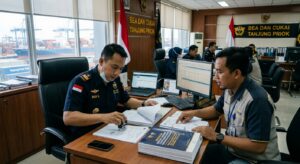
The Directorate General of Customs and Excise (DGCE) oversees the flow of goods entering and leaving the country. For exporters, this means engaging with a highly structured system of registration, documentation, inspection, and tax assessment. This comprehensive guide will walk you through the essential steps, documents, and considerations necessary for a smooth export customs clearance process in Indonesia.
Step 1: Company Registration and Export Licensing
Before any goods can leave the country, the exporting entity must be legally recognized and authorized by the Indonesian government. The first step in the customs clearance process is obtaining a Business Identification Number (Nomor Induk Berusaha, or NIB). The NIB acts as the fundamental company registration number and effectively replaces the older Company Registration Certificate (TDP) and the Importer Identification Number (API) or Customs Access Right (Hak Akses Kepabeanan) for exporters.
Exporters must register through the Online Single Submission (OSS) system, which streamlines the licensing process. Once the NIB is secured, the company is legally permitted to engage in export activities. However, it is crucial to note that certain restricted or heavily regulated goods may require additional permits from specific ministries, such as the Ministry of Trade, Ministry of Agriculture, or Ministry of Forestry.
Step 2: Preparing Essential Export Documentation
Documentation is the backbone of the customs clearance process. Inaccuracies or missing paperwork can lead to immediate red flags, customs holds, and severe financial repercussions. Every export shipment from Indonesia requires a standard set of documents, alongside any specialized paperwork dictated by the nature of the cargo.
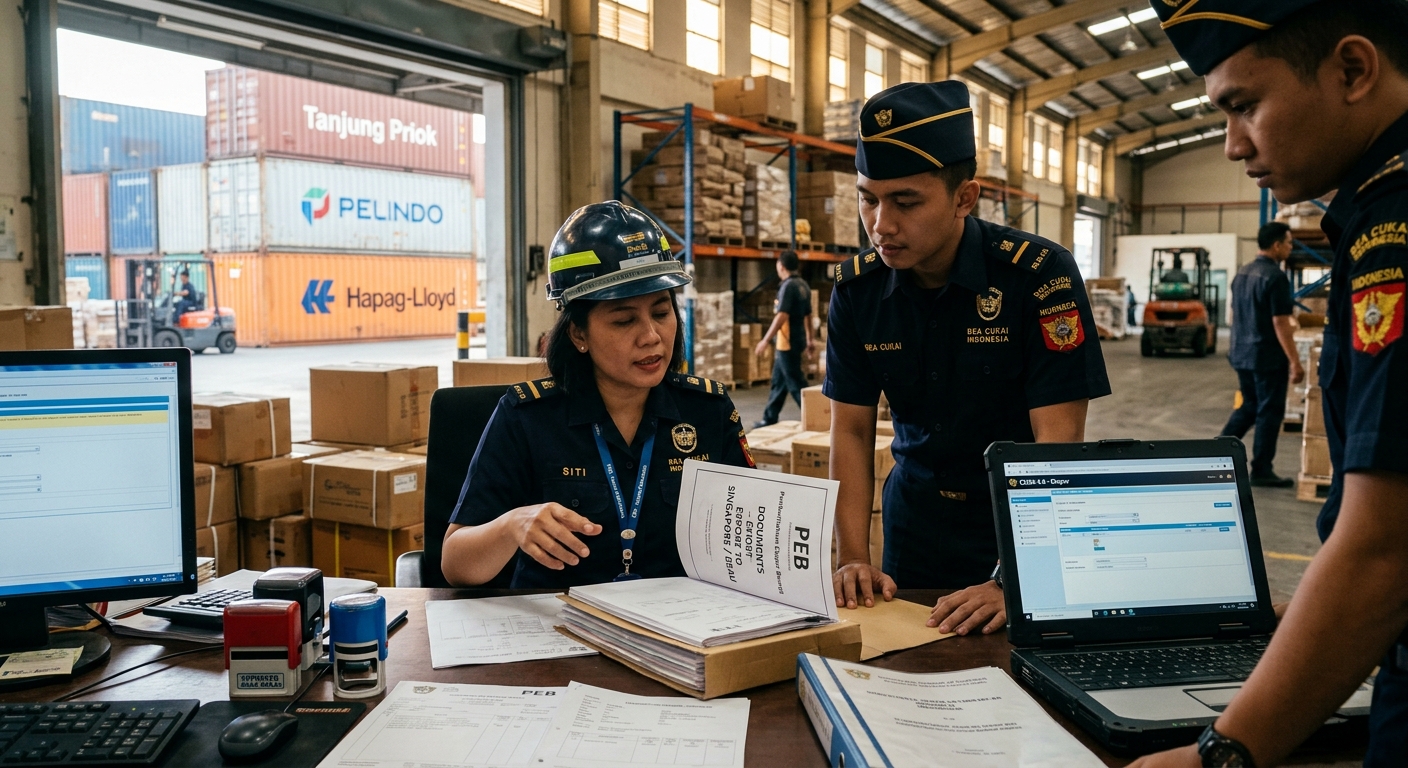
The primary document required is the Export Declaration (Pemberitahuan Ekspor Barang, or PEB). The PEB is submitted electronically to the customs office and contains vital information about the exporter, the consignee, the goods, their value, and the transport details. Along with the PEB, exporters must prepare a Commercial Invoice, a Packing List, and a Bill of Lading (B/L) or Air Waybill (AWB).
Furthermore, international buyers often require a Certificate of Origin (SKA) to prove that the goods were manufactured or processed in Indonesia. This document can be critical for the buyer to claim preferential tariff rates under various free trade agreements. For an in-depth understanding of this document, you should review the Indonesia Certificate of Origin Requirements: A Comprehensive Guide. Securing this certificate correctly ensures seamless clearance at the destination port.
Step 3: Industry-Specific Requirements and Regulations
Indonesia applies specific regulations to different sectors to protect its economy, environment, and domestic supply. Exporters must be hyper-aware of the classification of their goods. Goods are generally categorized into four types: freely exportable, restricted, prohibited, and those subject to export duties.
Agricultural Exports
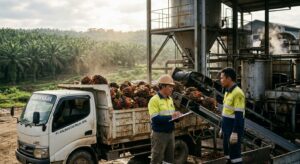
Agriculture is one of Indonesia’s largest export sectors, encompassing products like palm oil, coffee, spices, and rubber. Exporting agricultural goods requires strict adherence to phytosanitary standards to prevent the spread of pests and diseases. Exporters must work closely with the Indonesian Agricultural Quarantine Agency (IAQA) to obtain the necessary Phytosanitary Certificates. For those specifically operating in this sector, reading up on the Indonesian Agriculture Export Documentation Requirements: A Complete Guide is essential to ensure full compliance with both local and international agricultural laws.
Commodities and Raw Materials
Indonesia is also famous for exporting natural commodities, including coal, minerals, and various timber products. One rapidly growing export commodity is coconut charcoal briquettes, highly sought after in the Middle East and Europe. When exporting such commodities, pricing transparency and documentation are rigorously checked by customs to ensure proper tax calculation and adherence to export quotas. Exporters looking to capitalize on this market should consult A Comprehensive Guide to Bulk Charcoal Briquettes Export Prices in the Global Market to understand valuation standards and market trends that influence customs declarations.
Step 4: The Role of Customs Brokers and Associated Fees
While large corporations may have dedicated in-house customs departments, the majority of exporters rely on licensed Customs Brokers (PPJK – Perusahaan Pengurusan Jasa Kepabeanan). A PPJK acts as an intermediary between the exporter and the customs authority, handling the submission of the PEB, paying export duties on behalf of the client, and navigating any physical inspections.
Engaging a PPJK can significantly expedite the clearance process. However, it is vital to understand the cost structures and legal boundaries of utilizing these services. Exporters are ultimately responsible for the accuracy of the information provided to the broker. For a detailed breakdown of costs and legal frameworks, refer to the Indonesia Customs Broker Fees and Regulations: A Comprehensive Guide. Understanding these fees helps exporters accurately calculate their total landed costs and maintain profitability.
Step 5: The Customs Clearance Process Flow
Once all documents are prepared and any necessary duties are paid, the formal clearance process begins. The workflow generally follows these stages:
- PEB Submission: The exporter or their PPJK submits the Export Declaration electronically via the Electronic Data Interchange (EDI) system to the customs office.
- Document Verification: The customs system automatically verifies the data. If everything is correct and no export taxes are due (or have been paid), the system will issue an NPE (Nota Pelayanan Ekspor or Export Service Note).
- Channel Allocation: Depending on the exporter’s profile, the type of goods, and the destination, the shipment is assigned to a specific channel. Green channel means immediate release with no physical inspection. Red channel requires a physical inspection of the cargo and intensive document review.
- Physical Inspection (If applicable): If assigned to the red channel, customs officers will inspect the cargo at the port or a designated warehouse. This can cause delays of several days.
- Issuance of NPE: Once cleared (either automatically via the green channel or after a successful red channel inspection), the NPE is granted. This document gives the green light for the goods to be loaded onto the vessel or aircraft.
Export Duties and Taxes
Unlike imports, the majority of Indonesian exports are exempt from export duties and Value Added Tax (VAT), which is set at 0% for exported goods to encourage international trade. However, to control the domestic supply of raw materials and encourage downstream processing, the government levies export duties on specific commodities.
These commodities often include crude palm oil (CPO), raw minerals, leather, and certain types of unprocessed wood. The tariff rates can fluctuate based on global market prices, which the Indonesian Ministry of Trade reviews monthly. Exporters must check the current benchmark prices (Harga Patokan Ekspor or HPE) to accurately calculate their export tax liabilities before submitting the PEB.
Summary of Essential Export Documents
| Document Name | Issuer/Provider | Purpose |
|---|---|---|
| Export Declaration (PEB) | Exporter / PPJK | Official declaration to Customs outlining the details of the export shipment. |
| Commercial Invoice | Exporter | States the value of the goods for customs valuation and buyer payment. |
| Packing List | Exporter | Details the contents, weight, and dimensions of each package in the shipment. |
| Bill of Lading (B/L) | Shipping Line / Freight Forwarder | Serves as a receipt of freight services and a contract of carriage. |
| Certificate of Origin (SKA) | Ministry of Trade | Proves the origin of the goods for tariff benefits at the destination. |
| Phytosanitary Certificate | Agricultural Quarantine Agency | Ensures agricultural products are free from pests and diseases. |
Conclusion
The customs clearance process for exporting from Indonesia, while highly structured and heavily regulated, is entirely manageable with thorough preparation and the right strategic partners. From securing your NIB through the OSS system to carefully preparing your PEB and supporting documents, every step requires meticulous attention to detail. Understanding sector-specific requirements, such as those for agricultural goods or bulk commodities like charcoal briquettes, is critical to avoiding delays. By leveraging licensed customs brokers, staying updated on export duty tariffs, and ensuring absolute accuracy in documentation, businesses can successfully navigate Indonesian customs and thrive in the competitive global export market.
Frequently Asked Questions (FAQ)
What is an NPE in the Indonesian export process?
NPE stands for Nota Pelayanan Ekspor, which translates to Export Service Note. It is the final clearance document issued by Indonesian Customs once the Export Declaration (PEB) is approved and any necessary duties are paid. The NPE serves as the official permission to load the goods onto the departing vessel or aircraft.
Are all exports from Indonesia subject to export duties?
No, the majority of goods exported from Indonesia are not subject to export duties, and the VAT rate on exports is generally 0%. Export duties are only applied to specific raw materials and commodities—such as crude palm oil, unprocessed minerals, and certain agricultural products—to protect domestic supply and encourage local processing.
How long does the export customs clearance process take in Indonesia?
If all documentation is accurate and the shipment is routed through the green channel, customs clearance can be completed within a few hours to a single day. However, if the shipment is selected for the red channel and requires physical inspection, the process can take anywhere from 2 to 5 days, depending on port congestion and the availability of customs inspectors.
Can a foreign entity export directly from Indonesia?
A foreign entity cannot export directly without having a legally registered corporate presence in Indonesia (such as a PT PMA) that holds a valid Business Identification Number (NIB) with export privileges. Alternatively, foreign buyers typically purchase goods under Ex Works (EXW) or Free on Board (FOB) terms, leaving the local Indonesian supplier responsible for the export customs clearance process.