

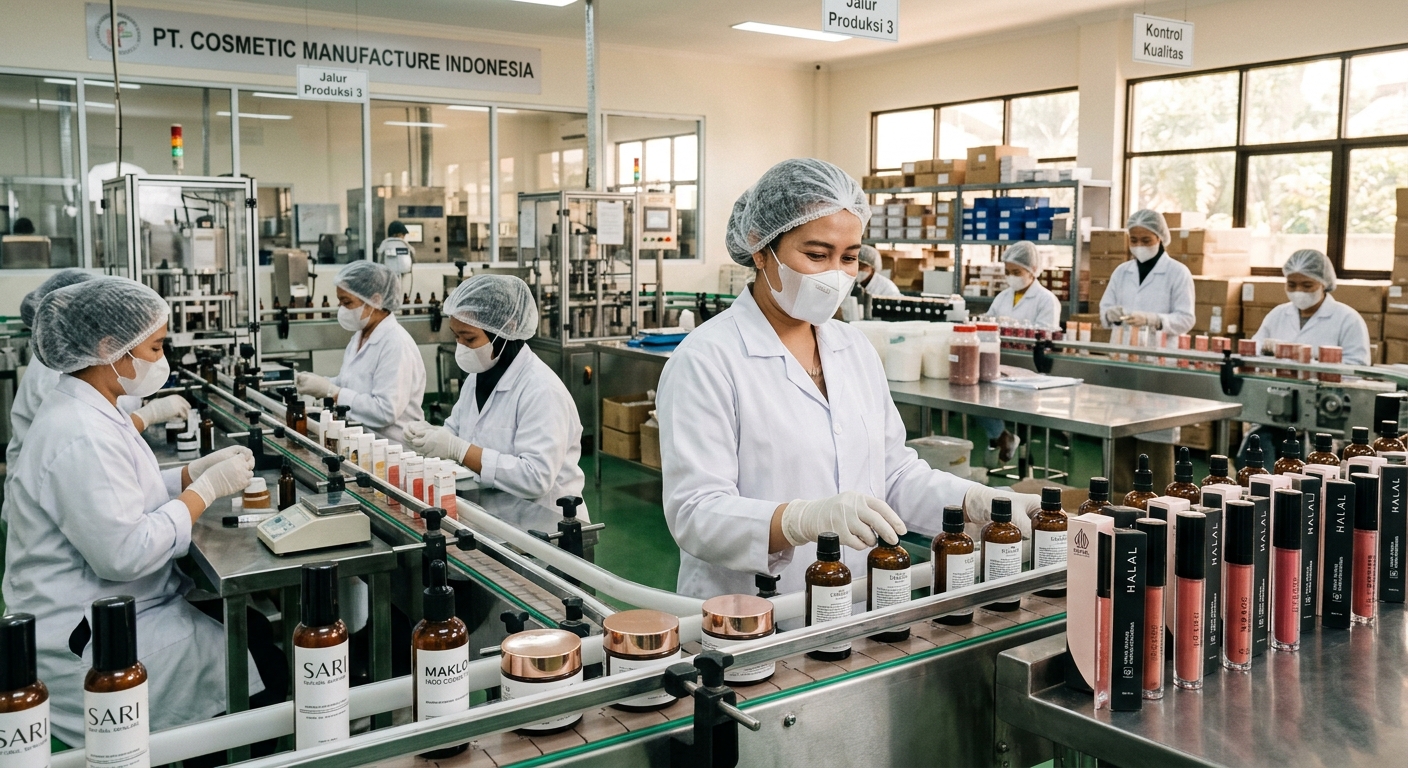
Introduction to OEM Cosmetic Manufacturing in Indonesia (Maklon)
The global beauty and personal care industry is experiencing unprecedented growth, and entrepreneurs worldwide are looking for efficient ways to launch their own cosmetic brands. One of the most strategic avenues for entering this competitive market is through OEM (Original Equipment Manufacturer) services, widely known in Indonesia as maklon. An OEM cosmetic manufacturer in Indonesia provides end-to-end solutions, allowing brand owners to produce high-quality skincare, makeup, and personal care products without the need to invest heavily in their own manufacturing facilities, research and development laboratories, or complex regulatory compliance teams.
Indonesia has rapidly emerged as a powerhouse in the cosmetics manufacturing sector. With a rich biodiversity offering unique natural ingredients, a highly skilled workforce, and competitive production costs, the country is an attractive destination for both domestic and international beauty brands. The term maklon refers specifically to toll manufacturing or contract manufacturing, where a specialized factory produces goods based on the specifications and branding requirements of a client. This business model significantly lowers the barrier to entry for beauty startups and allows established brands to scale their product lines rapidly and efficiently.
What is Maklon? Understanding the Indonesian OEM Market
In the context of the Indonesian business landscape, a maklon cosmetic manufacturer acts as a comprehensive partner for brand creation. When you engage a maklon company, you are not merely outsourcing production; you are leveraging their expertise in formulation, packaging design, quality control, and legal certification (such as BPOM and Halal certifications). The maklon process typically begins with a consultation to determine the target market, desired active ingredients, product texture, scent, and overall brand positioning. From there, the manufacturer’s R&D team develops prototypes until the perfect formulation is achieved.
The advantages of using a maklon service in Indonesia are multifaceted. First, the cost-effectiveness is undeniable. Building a cosmetic factory requires immense capital expenditure, not to mention the ongoing costs of maintenance, staffing, and compliance. Second, time-to-market is drastically reduced. Maklon companies already have standard, tested base formulations that can be customized quickly. Third, regulatory compliance is streamlined. Indonesia’s Food and Drug Authority (BPOM) has strict guidelines for cosmetic safety, and local manufacturers are experts at navigating this bureaucratic landscape, ensuring your products are fully legal and safe for consumer use.
Why Choose Indonesia for Cosmetic Manufacturing?
Indonesia offers several distinct advantages that make it a premier destination for OEM cosmetic manufacturing. The nation’s strategic location in Southeast Asia provides excellent connectivity to major global markets. Furthermore, Indonesia is home to a vast array of unique botanical ingredients that are highly sought after in the global beauty industry. Ingredients such as Pegagan (Centella Asiatica), Candlenut (Kemiri), and various essential oils are indigenous to the region and can be sourced sustainably and cost-effectively.
Additionally, the Indonesian government actively supports the growth of the cosmetics and pharmaceutical industries, recognizing them as key drivers of economic development. This support translates into favorable business environments, investment incentives, and continuous improvements in infrastructure. When partnering with an Indonesian maklon, brands also benefit from the country’s capability to produce Halal-certified cosmetics, a crucial selling point for the massive Muslim demographic both domestically and in regions like the Middle East and North Africa.
The Role of Natural and Sustainable Ingredients
Modern consumers are increasingly conscious of the ingredients in their beauty products. The demand for natural, organic, and sustainably sourced cosmetics is at an all-time high. Indonesian OEM manufacturers excel in this area due to the country’s rich agricultural heritage. Integrating natural byproducts and sustainable farming practices into the supply chain is a key focus. For instance, agricultural innovations often overlap with cosmetic ingredient sourcing, ensuring that the entire ecosystem remains sustainable. If you are interested in the broader agricultural supply chains that often parallel natural ingredient sourcing, you might explore The Ultimate Guide to Cocopeat Low EC Bulk Orders for Commercial Agriculture, which highlights Indonesia’s capacity for large-scale, sustainable agricultural exports.
Moreover, sustainable packaging and the utilization of natural fibers are becoming integral to cosmetic branding. Sourcing materials ethically and understanding the logistics of bulk raw materials is paramount. For businesses looking into the diverse range of sustainable materials exported from Indonesia, reading A Complete Guide to Bulk Buying Coco Peat Blocks from Indonesia provides valuable insights into how the nation manages large-scale sustainable production, principles which are directly applicable to the sourcing of natural botanical extracts for the cosmetics industry.
Navigating Logistics and Exporting Your Cosmetic Brand
Once your cosmetic products are manufactured, the next critical step is logistics and distribution. For international brands utilizing Indonesian maklon services, understanding the intricacies of shipping and freight is essential to ensure that your products arrive on time and within budget. Shipping terms can significantly impact your bottom line, and clarity on these terms is vital during contract negotiations with your manufacturer or freight forwarder. To fully understand these terms, it is highly recommended to review FOB vs CIF Jakarta: A Comprehensive Guide to Shipping Terms in Indonesia. This knowledge will empower you to make informed decisions regarding responsibility, risk, and insurance during the transit of your cosmetic goods.
Ocean freight remains the most cost-effective method for transporting bulk cosmetic orders from Indonesia to global markets. Jakarta, housing the primary port of Tanjung Priok, is the central hub for these exports. Coordinating with your maklon provider to align production schedules with shipping vessel departures requires meticulous planning. For an in-depth understanding of how to manage this process smoothly, consult the Comprehensive Guide to Ocean Freight Shipping from Jakarta: Navigating Indonesia’s Global Trade. Mastering these logistics ensures that your beautifully crafted cosmetics reach global consumers without unnecessary delays or exorbitant costs.
Comparing Maklon Services vs. In-House Manufacturing
To better understand the value proposition of using an OEM cosmetic manufacturer in Indonesia, let us compare the maklon model with traditional in-house manufacturing.
| Feature | OEM Maklon Manufacturer | In-House Manufacturing |
|---|---|---|
| Initial Capital Investment | Low to Moderate (MOQ dependent) | Extremely High (Facilities, R&D, Staff) |
| Time to Market | Fast (3 to 6 months typically) | Slow (1 to 2 years) |
| Regulatory Compliance | Handled by the manufacturer (BPOM/Halal) | Requires dedicated in-house legal team |
| Flexibility | High (Easy to pivot and test new products) | Low (Tied to existing equipment and raw materials) |
| Expertise | Access to experienced chemists and formulators | Requires hiring and retaining specialized talent |
Steps to Partnering with an OEM Maklon Provider
Starting your journey with an Indonesian maklon involves several structured steps. First, conduct thorough research to identify manufacturers that align with your brand values and product requirements. Look for companies with strong track records, transparent communication, and the necessary certifications (CPKB/GMP). Next, initiate a consultation to discuss your vision, target audience, and budget. This is the stage where you define the product specifications.
Following the consultation, the manufacturer will begin the sampling phase. You will receive prototypes to test for texture, efficacy, and fragrance. It may take a few iterations to perfect the formula. Once approved, the focus shifts to packaging selection and design. The maklon company will then assist with the product registration process, securing BPOM and Halal certifications. Finally, mass production begins, followed by quality control testing and dispatch to your desired location, utilizing the logistics strategies discussed earlier.
Conclusion
Partnering with an OEM cosmetic manufacturer in Indonesia through a maklon arrangement is a highly strategic move for anyone looking to enter or expand within the beauty industry. It provides a unique combination of cost efficiency, access to rich natural ingredients, and professional expertise in formulation and regulatory compliance. By understanding the manufacturing process, embracing sustainable ingredient sourcing, and mastering the logistics of international shipping, you can successfully build and scale a competitive global cosmetic brand from Indonesia. The maklon industry in Indonesia is not just about outsourced production; it is about forging a partnership that brings your unique beauty vision to life.
Frequently Asked Questions
What does “maklon” mean in the context of cosmetics?
Maklon refers to contract manufacturing or OEM (Original Equipment Manufacturer) services. In the cosmetics industry, it means hiring a specialized factory to formulate, produce, package, and legally certify beauty products under your own brand name.
How long does the maklon process usually take in Indonesia?
The entire process, from initial consultation and formulation to BPOM registration and mass production, typically takes between 3 to 6 months. The timeline can vary depending on the complexity of the formulation and the speed of regulatory approvals.
Do I need to handle BPOM and Halal certification myself?
No, one of the primary benefits of using an established Indonesian maklon company is that they typically handle all regulatory compliance, including BPOM (Food and Drug Authority) registration and Halal certification, as part of their comprehensive service package.