

Exporting goods from Indonesia offers tremendous opportunities for global businesses, but navigating the regulatory landscape requires a solid understanding of Indonesia export compliance documents. Whether you are shipping agricultural products, manufactured goods, or raw materials, adhering to the country’s stringent customs and export regulations is paramount for a smooth transaction. This guide explores the foundational requirements, key documents, and best practices to ensure your shipments are fully compliant.
Understanding the Indonesian Export Regulatory Framework
Indonesia’s export procedures are governed by several key authorities, including the Ministry of Trade and the Directorate General of Customs and Excise. To legally export goods, businesses must be registered and possess a Business Identification Number (NIB), which serves as the foundational license for all commercial activities. Understanding the regulatory environment is the first step toward successful international trade.
Businesses looking to import these goods into their respective countries must also be aware of the receiving end’s requirements. For detailed insights into the import side, reading a Comprehensive Guide to Customs and Tariffs Importing from Indonesia is highly recommended. It bridges the gap between Indonesian export laws and international import tariffs.
Essential Indonesia Export Compliance Documents
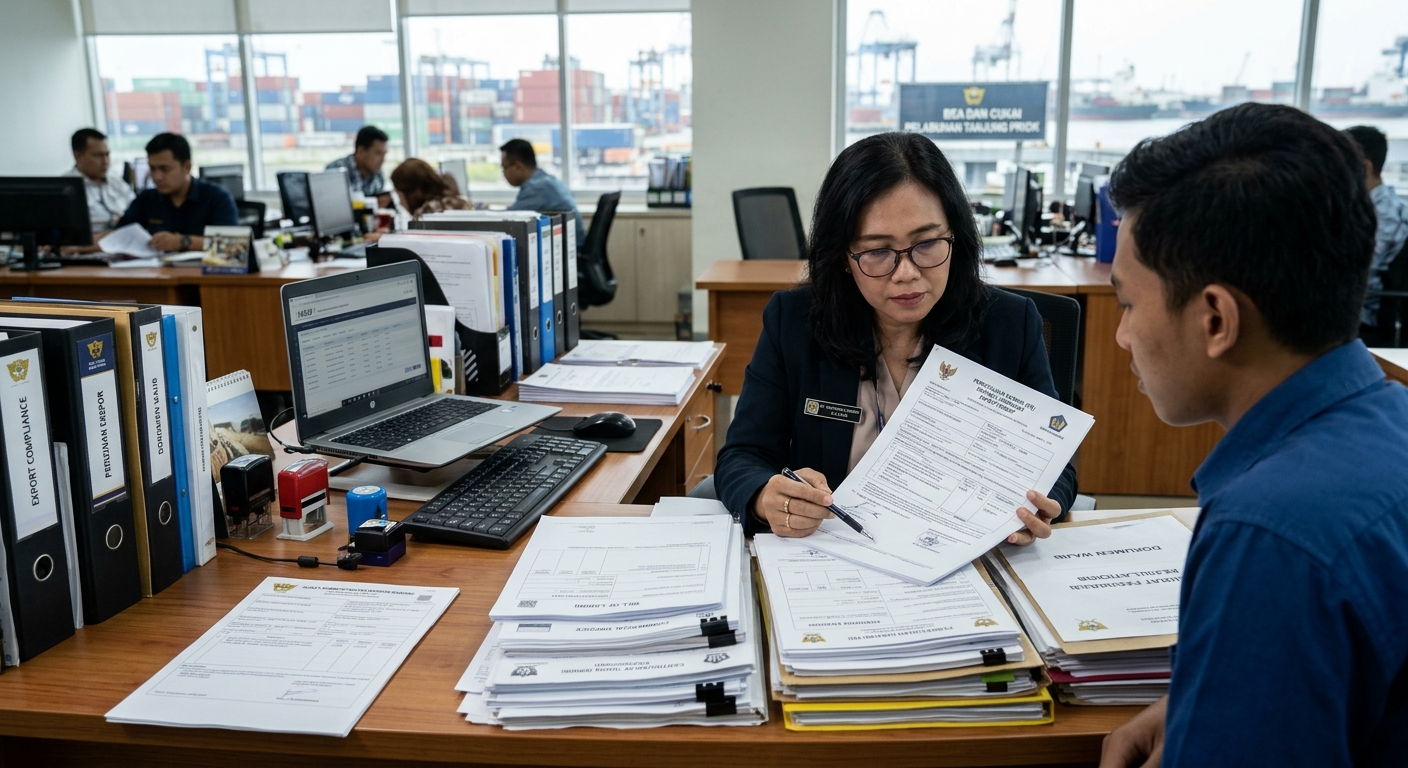
To successfully clear Indonesian customs and ensure goods reach their international destinations, exporters must prepare a specific set of documents. These documents verify the nature of the goods, their value, and their compliance with international trade laws.
1. Commercial Invoice
The commercial invoice is a vital document that outlines the transaction between the exporter and the buyer. It must include detailed descriptions of the goods, the total value, payment terms, and the agreed Incoterms. Customs authorities use this document to assess taxes and duties.
2. Packing List
Accompanying the commercial invoice, the packing list provides specific details about how the goods are packaged. It includes the weight, dimensions, and quantity of each package, allowing customs officials and freight forwarders to accurately handle and inspect the cargo.
3. Bill of Lading (B/L) or Air Waybill (AWB)
These are transport documents issued by the carrier. A Bill of Lading is used for sea freight, while an Air Waybill is used for air freight. They serve as a receipt for the goods and a contract of carriage between the shipper and the carrier.
4. Certificate of Origin (COO)
The Certificate of Origin is crucial for proving that the goods were manufactured or produced in Indonesia. This document is often required by the importing country to determine tariff rates and eligibility for preferential trade agreements.
5. Export Declaration (PEB – Pemberitahuan Ekspor Barang)
The PEB is an official declaration submitted to the Indonesian customs authority. It contains comprehensive information about the export shipment and is mandatory for the issuance of the Export Approval (NPE), which allows the goods to be loaded onto the departing vessel.
Specific Commodity Documentation
Depending on the type of goods being exported, additional documentation may be required. For example, agricultural products, timber, and minerals often require specific licenses, phytosanitary certificates, or fumigation certificates to comply with both Indonesian export laws and international standards.
If you are interested in bulk purchasing, you can learn more about Sourcing Wholesale Commodities from Indonesia: A Comprehensive Guide. Understanding commodity-specific requirements prevents costly delays at the port of departure.
For instance, when exporting specialized products like charcoal, working with a reputable Natural Coconut Charcoal Manufacturer Surabaya: A Comprehensive Guide can streamline the process, as established manufacturers often assist with necessary commodity-specific documentation.
The Role of Export Partners and Consultants
Navigating export compliance can be complex, especially for businesses new to the Indonesian market. Partnering with experienced freight forwarders, customs brokers, and sourcing agents can significantly reduce the risk of non-compliance. These professionals stay updated on regulatory changes and ensure that all documentation is accurate and submitted on time.
Working with reliable partners like trusted export professionals can provide the necessary local expertise to manage the intricacies of Indonesia’s export procedures.
Below is a comparison of standard export documents versus commodity-specific documents to highlight their differing functions and issuing authorities.
| Document Type | Primary Function | Issuing Authority | Applicability |
|---|---|---|---|
| Commercial Invoice | States transaction value and details | Exporter | All Shipments |
| Export Declaration (PEB) | Notifies customs of export intent | Exporter / Broker | All Shipments |
| Phytosanitary Certificate | Proves plant health and pest-free status | Agricultural Quarantine Agency | Plant & Agricultural Products |
| V-Legal Certificate | Verifies legal origin of timber | Licensed Certification Bodies | Timber & Wood Products |
Conclusion
Ensuring compliance with Indonesia export compliance documents is non-negotiable for businesses aiming to succeed in international trade. By meticulously preparing standard documents like the Commercial Invoice, Packing List, and Export Declaration, and securing any commodity-specific certificates, exporters can avoid delays, fines, and shipment seizures. Staying informed about regulatory changes and collaborating with experienced local partners will ultimately lead to a more efficient and profitable export operation.
Frequently Asked Questions (FAQ)
What is a PEB in Indonesian exports?
PEB stands for Pemberitahuan Ekspor Barang, which translates to Export Declaration. It is a mandatory document submitted to Indonesian customs containing all details of the export shipment. Upon approval, customs issues an NPE (Nota Pelayanan Ekspor), allowing the cargo to be loaded.
Do I need a special license to export goods from Indonesia?
All exporters must have a Business Identification Number (NIB) with export privileges. While general goods may not require additional licenses, specific commodities like timber, minerals, and certain agricultural products require specialized export permits from the relevant ministries.
Who is responsible for providing the Certificate of Origin?
The exporter is responsible for applying for and providing the Certificate of Origin. In Indonesia, this is typically processed through the Ministry of Trade or authorized local chambers of commerce to certify that the goods originated in Indonesia.
Can a freight forwarder handle all export documentation?
Yes, many freight forwarders and customs brokers offer comprehensive services that include preparing and filing export documentation, including the PEB and customs clearance, making the process much easier for the exporting business.