

Introduction to Ocean Freight from Indonesia to Europe
Navigating the complex world of international shipping can be a daunting task, especially when dealing with long-distance routes such as ocean freight from Indonesia to Europe. As two major economic hubs, the trade volume between Indonesia and the European continent is substantial, encompassing a wide variety of goods ranging from agricultural products to manufactured items. Understanding the nuances of this shipping route is essential for businesses looking to optimize their supply chains, reduce costs, and ensure timely delivery of their cargo.
This comprehensive guide delves into the vital aspects of ocean freight from Indonesia to Europe. We will explore the primary shipping routes, different freight options, average transit times, and the crucial documentation required for a smooth export process. Whether you are a seasoned importer or a business looking to expand your sourcing to Southeast Asia, this article will provide you with the professional insights needed to manage your ocean freight effectively.
Major Ports and Shipping Routes
The journey of cargo from Indonesia to Europe begins at one of Indonesia’s bustling international ports and ends at a major European gateway. The efficiency of your ocean freight largely depends on the ports of origin and destination chosen.
Key Ports in Indonesia
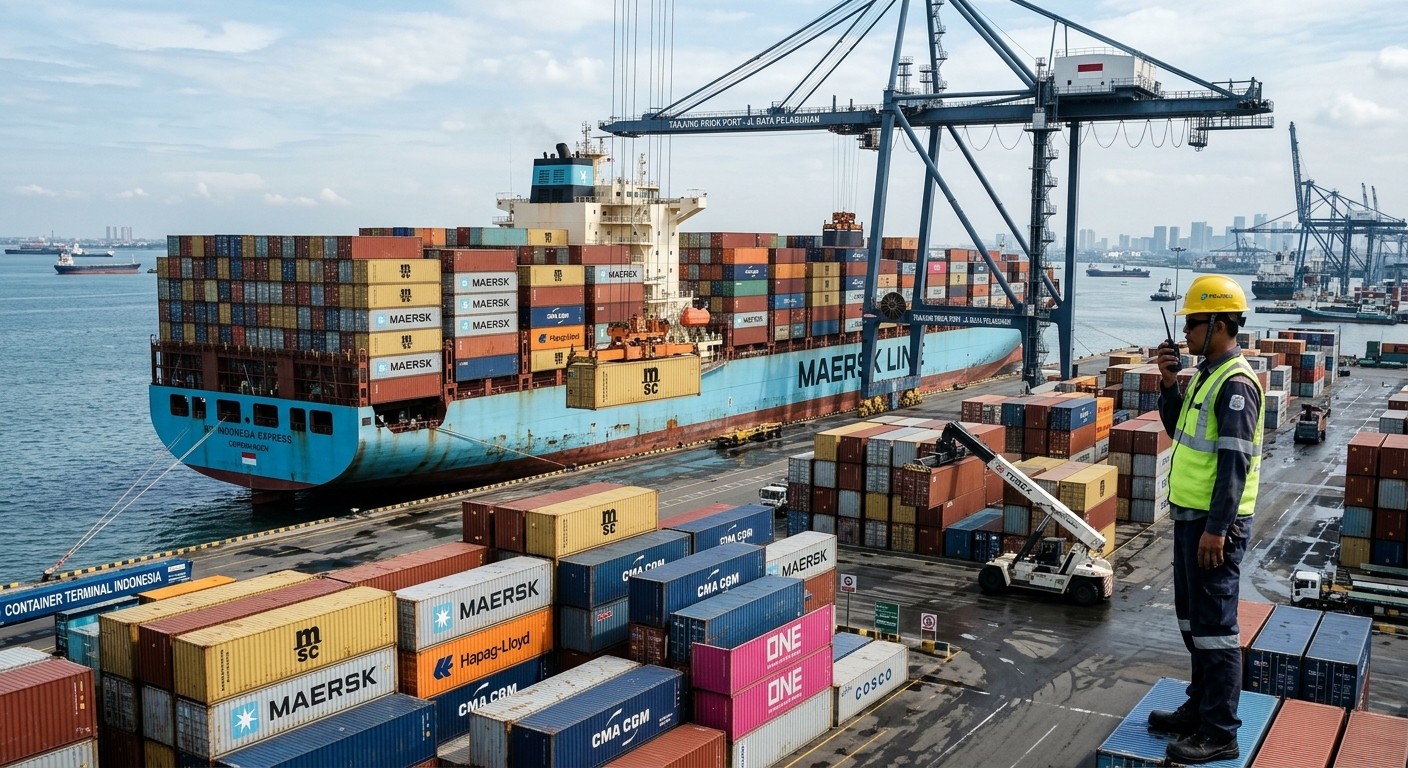
- Port of Tanjung Priok (Jakarta): The busiest and most advanced seaport in Indonesia, handling the majority of the country’s international trade.
- Port of Tanjung Perak (Surabaya): The second-largest port, crucial for exporting goods from East Java and eastern Indonesia.
- Port of Belawan (Medan): Located in North Sumatra, it is a key export hub for palm oil, rubber, and coffee.
- Port of Semarang (Tanjung Emas): Serves the Central Java region, an area known for furniture and textile manufacturing.
Key Ports in Europe
- Port of Rotterdam (Netherlands): The largest port in Europe, offering extensive connections to the European hinterland.
- Port of Antwerp (Belgium): A major hub known for its efficiency and specialized facilities for various types of cargo.
- Port of Hamburg (Germany): A crucial gateway for Central and Eastern Europe.
- Port of Felixstowe (United Kingdom): The UK’s busiest container port, handling a significant portion of the country’s imports.
The primary shipping route usually involves traversing the Indian Ocean, passing through the Red Sea and the Suez Canal, and entering the Mediterranean Sea before reaching Northern European ports. This route is favored for its balance of speed and cost-effectiveness.
Shipping Methods: FCL vs. LCL
When booking ocean freight from Indonesia to Europe, businesses must choose between Full Container Load (FCL) and Less than Container Load (LCL). The choice depends on the volume of goods, budget, and transit time requirements.
Below is a comparison of FCL and LCL shipping methods to help you determine which is most suitable for your cargo.
| Shipping Method | Best For | Transit Time | Cost Structure | Risk of Damage |
|---|---|---|---|---|
| Full Container Load (FCL) | Large shipments (over 15 cbm) | Generally faster | Flat rate per container | Lower |
| Less than Container Load (LCL) | Small shipments (under 15 cbm) | Slower (requires consolidation) | Priced per cubic meter (cbm) | Slightly higher |
Full Container Load (FCL)
FCL is the preferred method when you have enough cargo to fill an entire 20-foot or 40-foot container. Because the container is exclusively yours, the risk of damage or contamination from other goods is minimized. FCL also tends to be faster than LCL, as it avoids the time-consuming process of consolidation and deconsolidation at the ports.
Less than Container Load (LCL)
If your cargo volume does not justify the cost of a full container, LCL is a cost-effective alternative. With LCL, your goods are consolidated with cargo from other shippers into a single container. While this lowers the shipping cost, it usually increases the transit time by a few days due to the extra handling required at both the origin and destination ports.
Transit Times and Factors Affecting Delays
The transit time for ocean freight from Indonesia to Europe generally ranges from 25 to 40 days, depending on several factors:
- Distance between ports: A direct route from Jakarta to Rotterdam will be faster than a route requiring transshipment.
- Weather conditions: Typhoons in the Indian Ocean or severe storms in the Atlantic can cause significant delays.
- Port congestion: Peak shipping seasons (such as the weeks leading up to Christmas or the Lunar New Year) often result in port congestion, slowing down loading and unloading operations.
- Customs clearance: Incomplete or inaccurate documentation can lead to customs holds, causing unexpected delays.
Customs and Documentation Requirements
Proper documentation is the backbone of international shipping. Failing to provide the correct paperwork can result in severe delays, fines, or even the seizure of your cargo. When exporting from Indonesia, businesses must adhere strictly to local regulations. For detailed information, you should refer to the Comprehensive Guide to Indonesia Export Compliance Documents.
Essential Documents
- Commercial Invoice: Details the transaction between the buyer and seller, including item descriptions, values, and terms of sale (Incoterms).
- Packing List: Provides a detailed breakdown of the cargo, including weights, dimensions, and packaging types.
- Bill of Lading (B/L): The most important document in ocean freight, acting as a receipt for the cargo and a contract of carriage between the shipper and the carrier.
- Certificate of Origin: Verifies the country where the goods were manufactured, which is crucial for determining import duties in Europe.
- Phytosanitary Certificate or Fumigation Certificate: Required for agricultural products and wood packaging materials to ensure they are free from pests.
Specific products require specialized knowledge and documentation. For example, if you are sourcing agricultural or specialized goods, understanding the nuances is vital. You can explore insights like A Complete Guide to Importing Shisha Charcoal from Indonesia for specialized commodities, or read A Complete Guide to Cocopeat Growing Medium Wholesale Prices if you are dealing in agricultural mediums. For a wider range of export solutions, engaging with a trusted Indonesian export company can streamline your sourcing process.
Cost Components of Ocean Freight
Calculating the total cost of ocean freight from Indonesia to Europe involves several components beyond the basic freight rate. Understanding these costs will help you budget more accurately and avoid surprise charges.
- Base Freight Rate: The cost charged by the shipping line for transporting the container from the port of loading to the port of discharge.
- Bunker Adjustment Factor (BAF): A surcharge applied by carriers to compensate for fluctuations in fuel prices.
- Terminal Handling Charges (THC): Fees levied by the port authorities at both the origin and destination for lifting the container on and off the vessel.
- Customs Clearance Fees: Charges paid to a customs broker for facilitating the clearance of goods through customs.
- Inland Transportation: The cost of moving the goods from the supplier’s warehouse to the port in Indonesia, and from the destination port to the final delivery address in Europe.
- Cargo Insurance: Highly recommended to protect your investment against loss or damage during transit.
Conclusion
Ocean freight from Indonesia to Europe is a critical artery of international trade, offering a cost-effective solution for moving large volumes of goods across the globe. By understanding the major ports, choosing the right shipping method (FCL or LCL), anticipating transit times, and ensuring meticulous documentation, businesses can navigate this complex process with confidence. Partnering with experienced freight forwarders and customs brokers is highly recommended to mitigate risks and ensure that your cargo arrives safely and on time.
Frequently Asked Questions (FAQ)
How long does ocean freight from Indonesia to Europe take?
Typically, ocean freight from Indonesia to Northern European ports takes between 25 and 40 days, depending on the specific ports of origin and destination, weather conditions, and whether the route is direct or involves transshipment.
Which is better, FCL or LCL, when shipping from Indonesia?
FCL (Full Container Load) is generally better and more cost-effective if your cargo volume exceeds 15 cubic meters (cbm). LCL (Less than Container Load) is more suitable for smaller shipments, though it may take slightly longer due to consolidation processes.
Do I need cargo insurance for my ocean freight?
While not legally mandated, cargo insurance is highly recommended. Ocean freight carries inherent risks, including rough seas, accidents, and mishandling. Insurance provides peace of mind and financial protection against potential loss or damage.
What Incoterms should I use when importing from Indonesia to Europe?
Commonly used Incoterms include FOB (Free On Board) and CIF (Cost, Insurance, and Freight). FOB means you control the freight and insurance from the Indonesian port onwards, while CIF means the supplier covers these costs up to the European destination port. The best choice depends on your experience and relationships with logistics providers.