

Introduction to Indonesian Food Manufacturing
Indonesia is rapidly emerging as a global powerhouse in the food and beverage manufacturing sector. With its rich agricultural resources, strategic location, and competitive labor costs, Indonesian food manufacturers present an incredible opportunity for international brands looking to expand their product lines. Private labeling, in particular, has seen massive growth as retailers and entrepreneurs seek high-quality, customized products without the overhead of running their own production facilities.
Whether you are looking to source exotic spices, organic snacks, or specialized agricultural derivatives, Indonesia offers a vast network of capable suppliers. Navigating this landscape requires an understanding of the local market, regulatory environment, and the specific capabilities of various manufacturers. In this comprehensive guide, we will explore the ins and outs of partnering with Indonesian food manufacturers for your private label needs.
Why Choose Indonesia for Private Label Food Products?
The decision to manufacture private label food products in Indonesia is driven by several compelling factors. First and foremost is the availability of raw materials. Indonesia is a leading producer of coffee, cocoa, palm oil, spices, and coconuts. This abundance ensures a steady supply chain and allows manufacturers to produce high-quality goods at competitive prices.
Furthermore, the Indonesian government has made significant strides in improving infrastructure and easing the export process. While agricultural commodities are often linked to complex regulations—for example, if you are interested in Understanding Indonesia Export Taxes on Crude Palm Oil: A Comprehensive Guide—the processed food sector generally enjoys supportive export policies aimed at boosting the country’s global market share.
Cost-Effectiveness and Quality Assurance
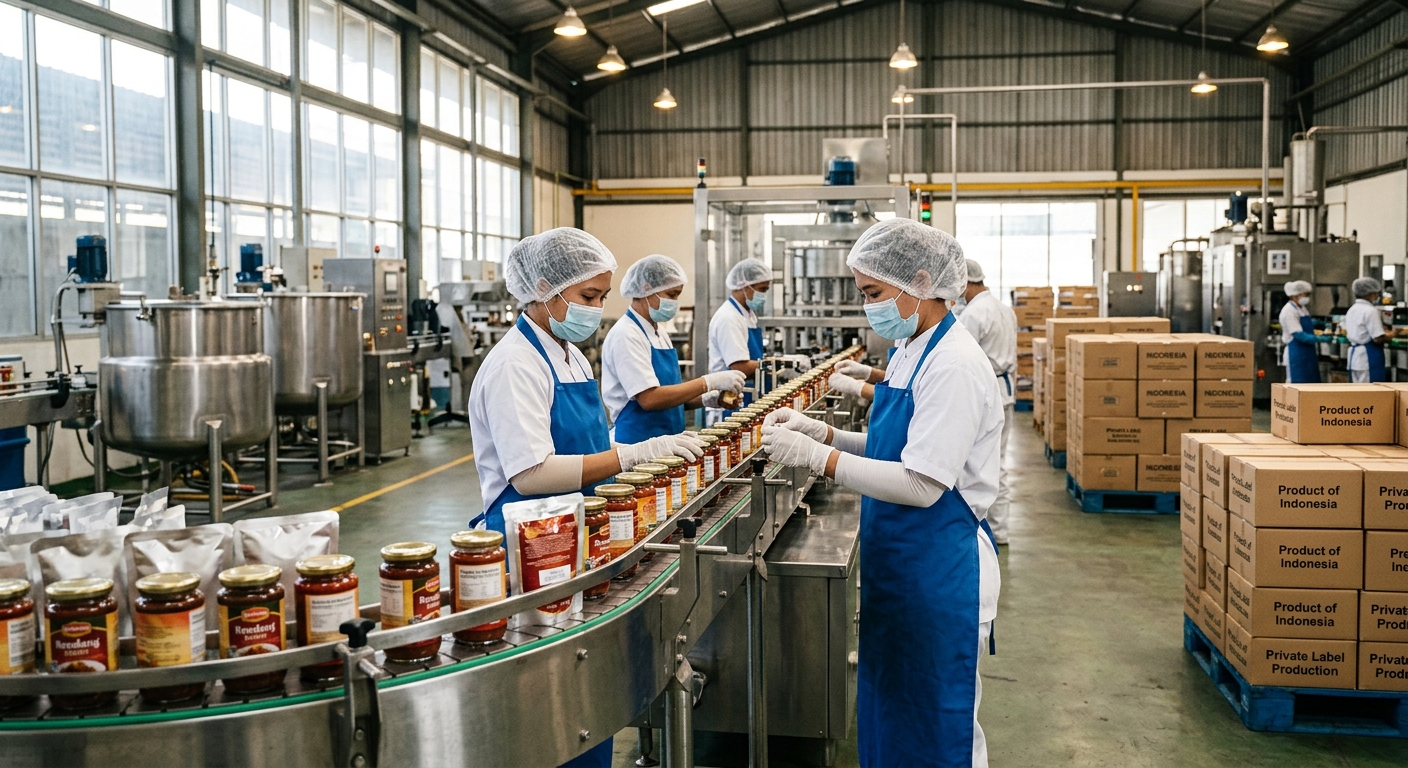
Cost efficiency is a major draw. The lower cost of labor and operations in Indonesia allows private label brands to achieve higher profit margins. However, low costs do not mean a compromise on quality. Many Indonesian food manufacturers have obtained international certifications such as ISO, HACCP, GMP, and Halal certifications. This commitment to quality assurance ensures that products meet the stringent requirements of Western markets.
Popular Categories for Private Labeling in Indonesia
Indonesian manufacturers excel in a variety of food and agricultural product categories. Here are some of the most popular segments for private labeling:
- Coffee and Tea: Sourcing single-origin beans and premium tea blends.
- Snacks and Confectionery: Cassava chips, tempeh chips, and tropical fruit snacks.
- Spices and Condiments: Authentic sambals, spice pastes, and organic dried spices.
- Coconut Products: Coconut oil, coconut sugar, coconut milk, and coconut water.
Interestingly, the manufacturing expertise in Indonesia extends beyond just food. Many agricultural byproducts are highly sought after in the international market. For instance, the coconut industry generates significant agricultural value. If your business extends into gardening or agriculture, you might be interested in How to Import Cocopeat from Indonesia: A Step-by-Step Guide or perhaps you are looking for A Complete Guide to Bulk Buying Coco Peat Blocks from Indonesia to diversify your import portfolio.
Steps to Sourcing Private Label Food Manufacturers in Indonesia
Finding the right partner is crucial for the success of your private label brand. The process requires due diligence, clear communication, and a strategic approach.
1. Conduct Thorough Market Research
Start by identifying the specific products you want to offer. Research the market demand, target audience, and your competitors. Once you have a clear product vision, look for Indonesian manufacturers that specialize in that niche.
2. Verify Certifications and Capabilities
Ensure that the manufacturer holds the necessary certifications (e.g., HACCP, ISO 22000, Halal) required by your target market. Assess their production capacity to ensure they can handle your minimum order quantities (MOQs) and scale up as your business grows.
3. Request Samples and Audit Facilities
Never commit to a large order without first testing product samples. Evaluate the taste, packaging quality, and shelf life. If possible, arrange a visit to the manufacturing facility or hire a local third-party auditor to verify their operational standards and working conditions.
4. Negotiate Terms and Contracts
Discuss pricing, payment terms, lead times, and shipping arrangements. Ensure that your private label agreement clearly outlines intellectual property rights, recipe ownership, and quality control metrics.
Diversifying Your Private Label Portfolio
While food is a lucrative sector, the private label opportunities in Indonesia are diverse. Leveraging the country’s natural resources can lead to unique product offerings. For example, the booming hookah market relies heavily on high-quality coconut shell charcoal, primarily produced in Indonesia. Brands looking to enter this niche can find valuable insights in The Ultimate Guide to Private Label Shisha Charcoal Manufacturing.
Challenges and Considerations
Despite the numerous advantages, importing private label products from Indonesia comes with its own set of challenges. Language barriers and cultural differences in business practices can sometimes lead to miscommunications. It is highly recommended to work with a local sourcing agent or translator to facilitate smooth interactions.
Logistics and shipping can also be complex. Indonesia is an archipelago, and domestic transportation can add to lead times. Furthermore, staying updated on import regulations, FDA requirements (if importing to the US), and customs duties is essential to avoid costly delays at the port.
Comparison of Sourcing Destinations
To better understand Indonesia’s position, let’s compare it with other popular sourcing hubs in Southeast Asia:
| Country | Primary Strengths | Labor Cost | Infrastructure |
|---|---|---|---|
| Indonesia | Abundant raw materials, diverse food products | Competitive | Improving rapidly |
| Vietnam | Coffee, rice, seafood | Very Competitive | Good export facilities |
| Thailand | Processed foods, sauces, beverages | Moderate | Excellent |
Conclusion
Partnering with Indonesian food manufacturers for private label products is a highly strategic move for modern brands. The country’s vast agricultural wealth, combined with improving manufacturing capabilities and cost-effective labor, creates an ideal environment for developing high-quality, competitive food products. By conducting thorough due diligence, verifying certifications, and building strong relationships with suppliers, businesses can successfully navigate the complexities of international sourcing and build a robust private label portfolio.
Frequently Asked Questions (FAQ)
What certifications should I look for in an Indonesian food manufacturer?
When sourcing food products, you should look for international certifications such as HACCP, ISO 22000, GMP (Good Manufacturing Practices), and Halal certification, depending on your target market requirements.
Are there high minimum order quantities (MOQs) for private labeling in Indonesia?
MOQs vary significantly depending on the manufacturer and the product type. While large factories may require high MOQs to customize recipes and packaging, there are many mid-sized manufacturers willing to negotiate lower MOQs for new partnerships.
How do I handle shipping and logistics from Indonesia?
It is best to work with experienced freight forwarders who understand Indonesian export procedures. You must consider lead times carefully, factoring in domestic transport within Indonesia, sea freight transit times, and customs clearance in your destination country.
Can I own the recipe if I manufacture my food product in Indonesia?
Yes, but this must be explicitly stated and legally bound in your manufacturing contract. You can either provide your own proprietary recipe under a Non-Disclosure Agreement (NDA) or co-develop a recipe with the manufacturer where ownership terms are clearly defined.