

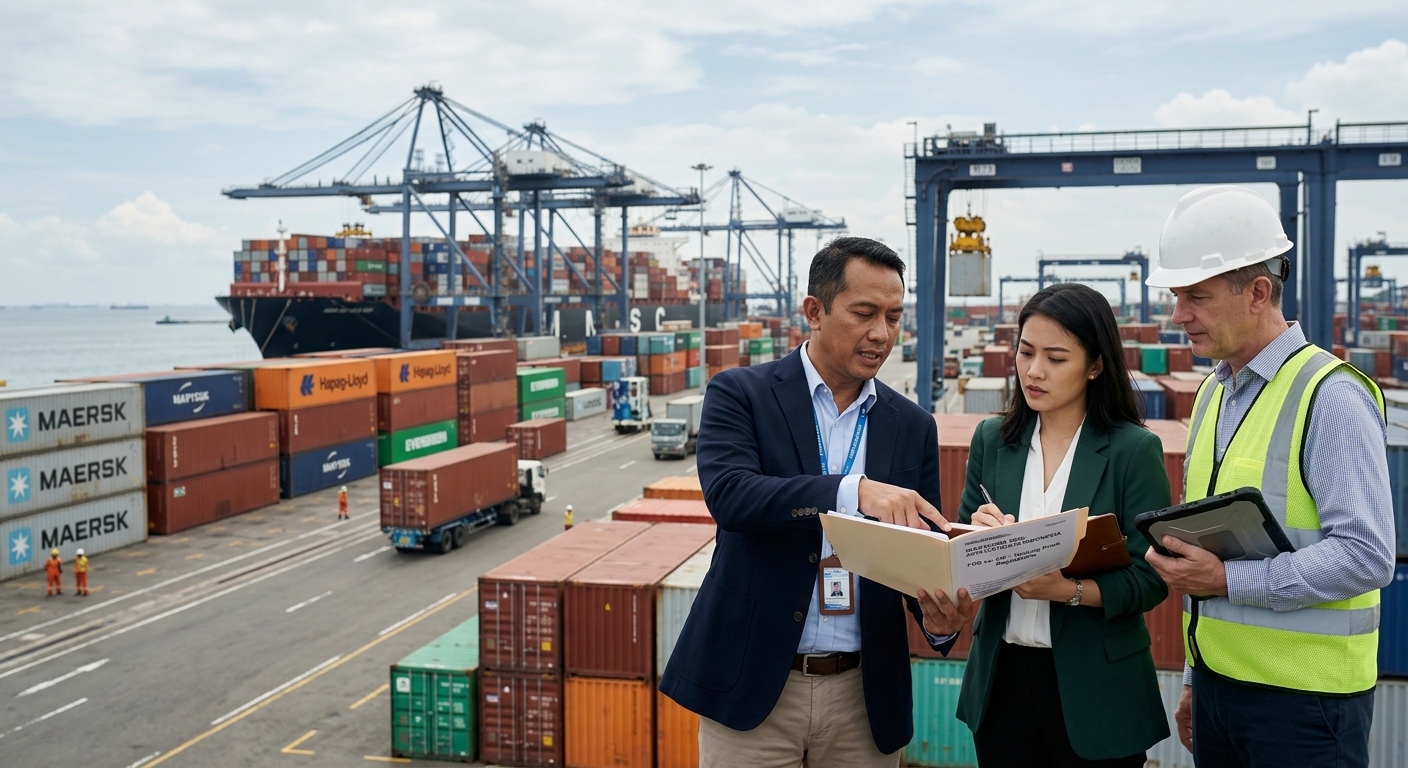
Introduction to Incoterms in Indonesia International Trade
International commercial terms, commonly known as Incoterms, are standard trade definitions developed by the International Chamber of Commerce (ICC). They define the responsibilities of buyers and sellers in global trade, outlining the allocation of risks, costs, and logistics management. In the rapidly expanding economy of Indonesia, understanding and applying the right Incoterms is crucial for smooth import and export operations. Properly structured contracts can save companies significant time and money, reducing the risk of disputes or delays in transit.
For businesses looking to engage in trade with this Southeast Asian powerhouse, mastering these terms is non-negotiable. Whether you are dealing with raw materials, manufactured goods, or agricultural exports, applying the correct Incoterm dictates who pays for freight, insurance, and duties. If you are particularly interested in the agribusiness sector, our Comprehensive Guide to Exporting Agricultural Products from Indonesia provides essential insights into sector-specific regulations and logistics.
The Importance of Incoterms for Indonesian Trade
Indonesia’s strategic location along major global shipping routes makes it a highly attractive hub for international trade. However, its complex regulatory environment requires precise documentation and clear agreements. Incoterms help bridge the communication gap between Indonesian entities and foreign partners by establishing a universal language for commercial transactions.
When parties agree to a specific Incoterm, they establish a clear understanding regarding:
- Delivery Point: The exact location where the seller fulfills their delivery obligation.
- Risk Transfer: The moment when the risk of loss or damage transfers from the seller to the buyer.
- Cost Allocation: Who covers costs such as transport, insurance, packaging, and loading/unloading.
- Customs Clearance: Who is responsible for export and import formalities, duties, and taxes.
Because customs clearance is a critical component of any international transaction, utilizing experienced local partners is highly recommended. To better understand how to navigate these complexities, refer to the Comprehensive Guide to Indonesia Export Customs Clearance Agents.
Most Common Incoterms Used in Indonesia
The ICC periodically updates Incoterms to reflect modern commercial practices, with Incoterms 2020 being the current version. Here are some of the most frequently used terms in Indonesian international trade.
FOB (Free On Board)
FOB is heavily used in Indonesia, particularly for bulk cargo and maritime transport. Under FOB, the seller is responsible for clearing the goods for export and loading them onto the vessel chosen by the buyer at the named port of shipment. Once the goods are on board, the risk transfers to the buyer. The buyer assumes all costs and risks from that point forward, including sea freight, import clearance, and onward transportation.
CIF (Cost, Insurance, and Freight)
CIF requires the seller to bear the costs, including insurance and freight, to bring the goods to the named port of destination. However, the risk transfers to the buyer as soon as the goods are loaded onto the vessel at the port of origin. It is important to note that CIF is strictly for sea or inland waterway transport. Importers in Indonesia frequently use CIF to ensure the seller handles the logistics and insurance up to the Indonesian port.
EXW (Ex Works)
Under EXW, the seller fulfills their obligation by making the goods available at their premises (factory, warehouse, etc.). The buyer bears all risks and costs associated with transporting the goods from the seller’s premises to the final destination, including export clearance. While it minimizes the seller’s responsibility, it can be challenging for foreign buyers dealing with Indonesian export regulations without local representation.
DAP (Delivered at Place)
DAP places maximum responsibility on the seller, who must deliver the goods to the specified destination, ready for unloading. The seller bears all risks and costs to get the goods there, except for import clearance. The buyer is responsible for import duties, taxes, and local customs formalities in Indonesia.
Below is a comparison of key Incoterms commonly used in maritime and general transport for Indonesian trade, highlighting responsibilities for freight, insurance, and export customs.
| Incoterm | Main Transport Freight Paid By | Insurance Arranged By | Export Customs Responsibility |
|---|---|---|---|
| EXW (Ex Works) | Buyer | Buyer | Buyer |
| FOB (Free On Board) | Buyer | Buyer | Seller |
| CIF (Cost, Insurance, Freight) | Seller | Seller | Seller |
| DAP (Delivered At Place) | Seller | Buyer/Seller (Optional) | Seller |
Navigating Export Customs in Indonesia
Properly designating the party responsible for customs clearance is a crucial aspect of choosing an Incoterm. Indonesian customs regulations can be strict, requiring meticulous documentation such as the Pemberitahuan Ekspor Barang (PEB) for exports. If an Incoterm like EXW is chosen by a foreign buyer, they must ensure they have the legal right and local capability to clear goods for export from Indonesia.
Understanding these procedural nuances is critical. For an in-depth look at this process, read the Comprehensive Guide to the Customs Clearance Process for Export in Indonesia. Working with reliable logistics service providers can make a massive difference in preventing port delays and minimizing storage fees.
Best Practices for Selecting Incoterms
Choosing the right Incoterm depends on various factors, including the type of goods, the mode of transport, and the relationship between buyer and seller. Here are some best practices for businesses engaged in trade with Indonesia:
- Assess Capabilities: Ensure that the party assigned to handle customs clearance has the necessary licenses and local knowledge.
- Clearly Define Locations: Always specify the exact port, terminal, or address in the contract (e.g., “FOB Tanjung Priok, Jakarta, Incoterms 2020”).
- Understand Insurance Needs: For terms where insurance is mandatory (like CIF and CIP), clarify the level of coverage required.
- Align with Payment Methods: Ensure the chosen Incoterm aligns with the requirements of Letters of Credit or other payment mechanisms.
Conclusion
Navigating international trade in Indonesia requires a solid understanding of Incoterms and how they apply to the country’s specific logistics and regulatory framework. By clearly defining the responsibilities for costs, risks, and customs formalities, businesses can foster stronger partnerships, reduce the likelihood of disputes, and ensure a more predictable supply chain. Staying informed and selecting the appropriate Incoterm for every transaction is an essential step toward achieving long-term success in the dynamic Indonesian market.
Frequently Asked Questions
What are the most commonly used Incoterms for exporting from Indonesia?
FOB (Free On Board) and CIF (Cost, Insurance, and Freight) are traditionally the most popular Incoterms for Indonesian exports, particularly because a significant volume of trade is conducted via ocean freight.
Can a foreign company act as the exporter of record under EXW in Indonesia?
It can be very difficult. Indonesian customs regulations typically require the exporter to have a local presence and specific export licenses (NIB). Therefore, foreign buyers using EXW usually need to hire local agents or rethink the Incoterm in favor of FCA or FOB.
Does CIF cover all insurance risks?
No, under Incoterms 2020, CIF only requires the seller to obtain minimal insurance coverage (Institute Cargo Clauses C). Buyers should negotiate for more comprehensive coverage if their goods are fragile or high-value.
Are Incoterms legally binding on their own?
Incoterms are not laws; they are international rules that become legally binding only when they are expressly incorporated into a commercial contract between the buyer and the seller.