

Introduction to Indonesia White Label Coconut Charcoal
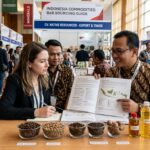
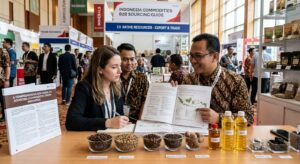
The global market for sustainable fuel and hookah accessories is rapidly expanding, and Indonesia has positioned itself at the epicenter of this boom. As the world’s leading producer of coconuts, Indonesia offers abundant raw materials that are transformed into high-quality coconut charcoal briquettes. For brands looking to enter or expand in this market, opting for Indonesia white label coconut charcoal presents a lucrative opportunity to offer premium products under their own brand name without the heavy investment of setting up manufacturing facilities.
White labeling allows businesses to source high-grade charcoal directly from Indonesian manufacturers, customize the specifications, and package it with their own branding. This comprehensive guide explores the benefits, manufacturing processes, and logistical considerations involved in sourcing white label coconut charcoal from Indonesia.
Why Choose Indonesia for Coconut Charcoal?
Indonesia’s dominance in the coconut charcoal industry is not by chance. The country boasts vast coconut plantations, particularly in regions like Sulawesi, Sumatra, and Java. These areas produce coconuts with thick shells, which are the ideal raw material for premium charcoal briquettes.
When compared to other types of charcoal, such as wood or bamboo, coconut shell charcoal offers superior performance. It burns hotter, lasts longer, and leaves significantly less ash. Furthermore, it is an eco-friendly option as it utilizes agricultural waste (the coconut shells) rather than requiring the cutting down of trees.
The Benefits of White Labeling
- Cost Efficiency: By partnering with an existing manufacturer, you save on capital expenditures related to machinery, labor, and facilities.
- Brand Control: You maintain complete control over your brand identity, packaging design, and marketing strategies.
- Scalability: Manufacturers in Indonesia can accommodate varying order sizes, allowing you to scale up as your business grows.
- Quality Assurance: Reputable manufacturers adhere to strict quality control standards, ensuring consistent product quality for your customers.
For those looking to tailor their products precisely to their target market, understanding the manufacturing process is crucial. You can learn more by reading A Complete Guide to Custom Order Charcoal Briquettes Manufacturers.
The Manufacturing Process of Coconut Charcoal Briquettes
Producing high-quality coconut charcoal briquettes requires a meticulous process to ensure optimal performance. Here is a breakdown of the standard manufacturing stages:
1. Sourcing and Carbonization
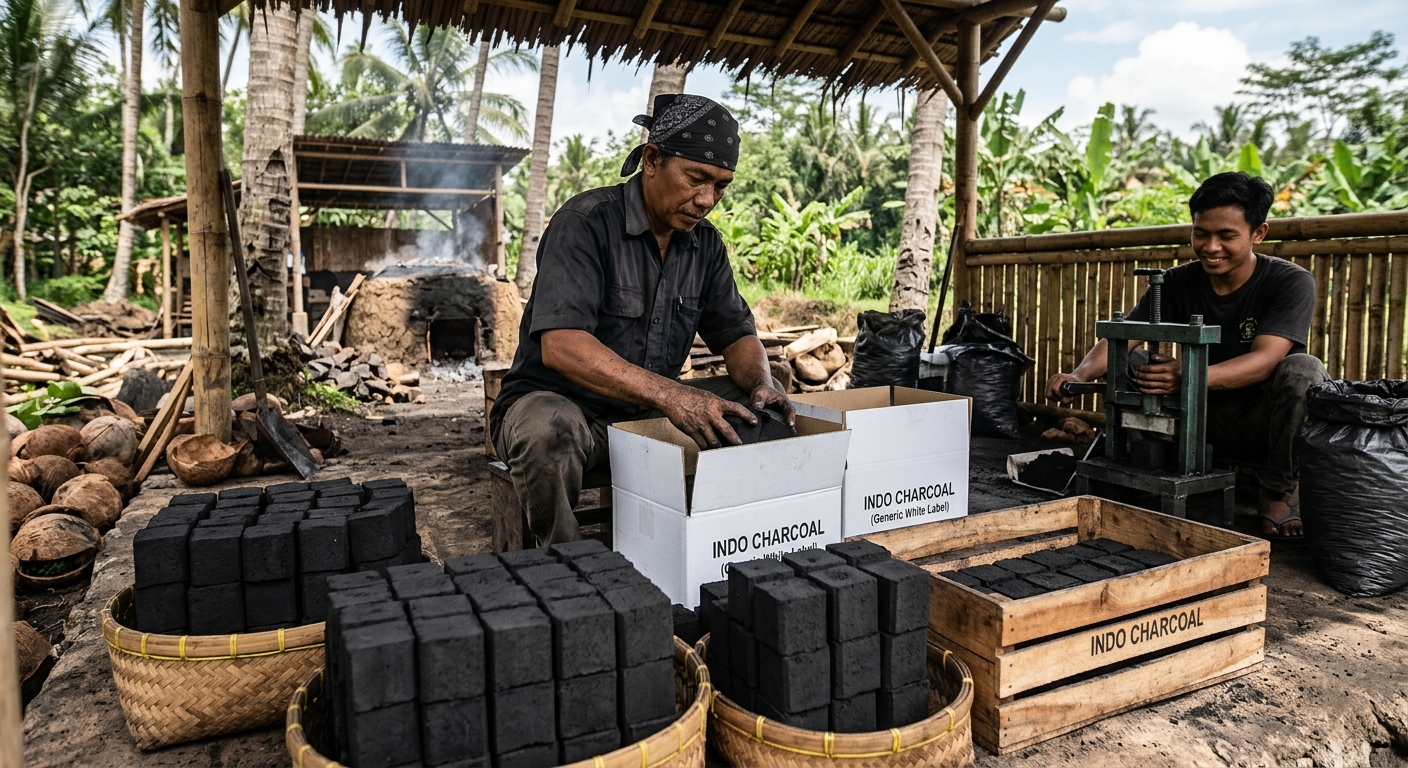
The process begins with collecting mature coconut shells. These shells are cleaned and dried before being subjected to carbonization. Carbonization involves burning the shells in a low-oxygen environment, usually in traditional pits or specialized kilns, converting them into charcoal while burning off impurities.
2. Crushing and Sieving
Once carbonized, the charcoal is crushed into a fine powder. It is then sieved to ensure a uniform particle size, which is critical for the density and burning consistency of the final briquette.
3. Mixing with Binder
The pure coconut charcoal powder is mixed with a natural binder, typically tapioca starch, and water. This mixture must be perfectly balanced; too much binder can affect the burn quality and introduce unwanted smells, while too little will result in fragile briquettes.
4. Pressing and Shaping
The mixture is fed into a briquette machine, where it is pressed into the desired shapes under high pressure. Common shapes include cubes, hexagons, and flats, depending on whether the intended use is for hookah (shisha) or barbecue.
5. Drying and Packaging
The newly formed briquettes contain moisture and must be dried in large industrial ovens. Once the moisture content is reduced to the optimal level (usually under 5%), they are cooled and packaged according to the white label client’s specifications.
Understanding Charcoal Specifications
When sourcing white label coconut charcoal, understanding technical specifications is essential for ensuring product quality. Below is a comparison of two common grades of coconut charcoal briquettes sourced from Indonesia.
This table compares the typical specifications of Premium Shisha Grade and Standard BBQ Grade coconut charcoal briquettes.
| Specification | Premium Shisha Grade | Standard BBQ Grade |
|---|---|---|
| Ash Content | Under 2.5% | Under 5.0% |
| Fixed Carbon | Above 80% | Above 75% |
| Burning Time | Up to 120 minutes | Up to 180 minutes |
| Moisture Content | Under 5% | Under 6% |
| Volatile Matter | Under 15% | Under 18% |
Logistics and Shipping from Indonesia
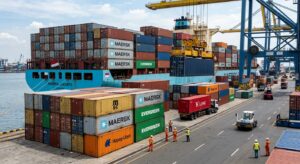
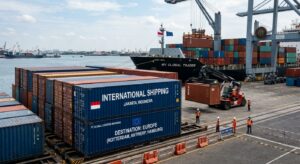
Once your white label coconut charcoal is manufactured and packaged, the next critical step is logistics. Shipping charcoal internationally requires careful planning, as it is often classified as a dangerous good (combustible material) depending on its exact properties and testing results.
Container Shipping Costs
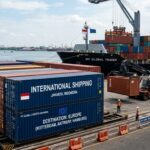
Most bulk orders of charcoal are shipped via sea freight in 20ft or 40ft containers. A 20ft container can typically hold around 18 metric tons of briquettes. Freight costs fluctuate based on global shipping demands, seasonal variations, and the destination port.
For businesses importing to Europe, it is highly recommended to consult the Comprehensive Guide to Indonesia Shipping Container Costs to Europe to budget effectively for logistics. Additionally, understanding the intricacies of container logistics globally is supported by resources like the Comprehensive Guide to Shipping a 20ft Container from Indonesia.
Customs, Tariffs, and Compliance
Importing charcoal requires strict adherence to international trade regulations. You will need a Self-Heating Test certificate to prove the charcoal is safe for transport. Furthermore, understanding the specific customs duties applied by your home country is necessary to avoid unexpected costs.
To navigate this complex landscape, importers should review the Comprehensive Guide to Customs and Tariffs Importing from Indonesia. This will ensure all documentation, such as the Bill of Lading, Commercial Invoice, Packing List, and Certificate of Origin, are properly prepared to facilitate smooth customs clearance.
Conclusion
Sourcing white label coconut charcoal from Indonesia is a strategic move for businesses aiming to offer premium, sustainable products to their customers. With its abundant natural resources, skilled manufacturers, and superior product quality, Indonesia remains the premier destination for charcoal sourcing. By understanding the manufacturing process, defining your product specifications, and carefully managing logistics and customs, you can successfully build a profitable and reputable charcoal brand.
Frequently Asked Questions
What makes Indonesian coconut charcoal better than wood charcoal?
Indonesian coconut charcoal burns significantly hotter, lasts longer, and produces less ash and smoke compared to traditional wood charcoal. Additionally, it is a sustainable byproduct of the coconut industry, meaning no trees are cut down to produce it.
Can I customize the packaging for my white label charcoal order?
Yes, white labeling allows you complete customization of the packaging. You can provide your own designs for inner boxes, master cartons, and plastic liners, which the manufacturer in Indonesia will print and use for your order.
Is coconut charcoal considered a dangerous good for shipping?
Coconut charcoal can be classified as a dangerous good (spontaneously combustible) depending on its properties. However, most high-quality briquettes undergo a Self-Heating Test. If they pass, they can be shipped as non-dangerous goods, though proper documentation is always required.
What is the minimum order quantity (MOQ) for white label charcoal?
The MOQ varies by manufacturer, but it is typically one 20ft shipping container, which holds approximately 18 metric tons of packaged charcoal briquettes.