

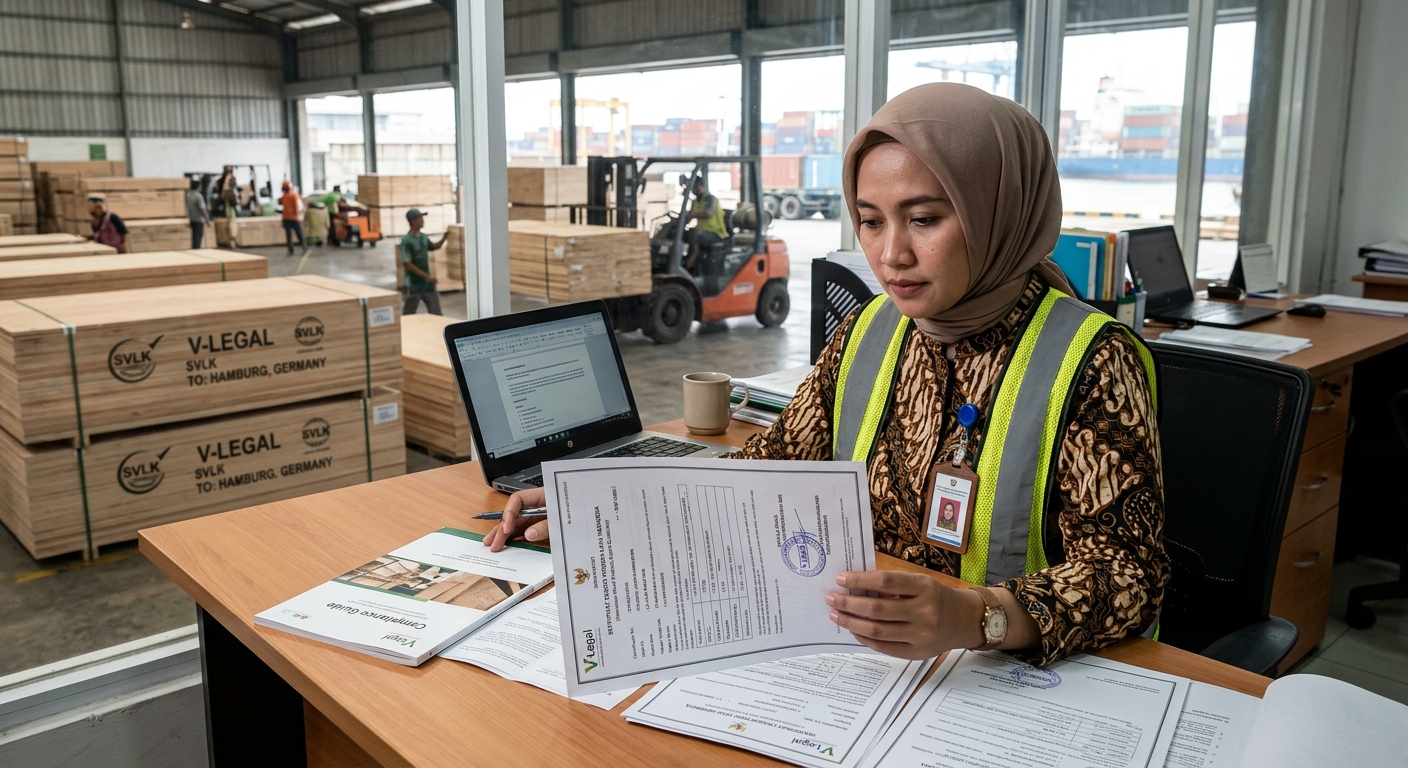
Introduction to Indonesian Wood Export Regulations
Indonesia is one of the world’s leading producers and exporters of timber and wood products. From luxurious teak furniture to high-quality plywood and paper products, the archipelago offers a vast array of forestry resources. However, to combat illegal logging and ensure the sustainability of its precious rainforests, the Indonesian government has implemented strict regulatory frameworks. If you are looking to import timber from this tropical nation, understanding the Indonesian wood products export certificate is not just recommended—it is a strict legal requirement.
In the past, the global timber trade faced significant challenges regarding illegal logging, which led to deforestation, loss of biodiversity, and economic instability. To counter this, Indonesia developed a robust timber legality assurance system. This system ensures that all wood products exported from the country are legally harvested, processed, and traded. Navigating this bureaucratic landscape can seem daunting, but with the right knowledge and a reliable Indonesian export company by your side, the process becomes seamless and highly beneficial for long-term business sustainability.
Understanding SVLK: The Timber Legality Assurance System
At the core of Indonesia’s wood export regulations is the SVLK (Sistem Verifikasi Legalitas Kayu). Introduced in 2009 and revised several times to meet international standards, the SVLK is a mandatory certification system designed to ensure that all Indonesian timber products come from legal and sustainably managed sources.
The SVLK system applies to all stakeholders in the supply chain, from forest concessionaires and community forest owners to sawmills, furniture manufacturers, and exporters. The system is audited by independent verification bodies (Lembaga Verifikasi Legalitas Kayu – LVLK) that are accredited by the National Accreditation Committee (KAN) and monitored by independent civil society organizations.
Key Objectives of SVLK
- To eradicate illegal logging and illegal timber trading in Indonesia.
- To improve the governance of Indonesian forestry.
- To promote sustainable forest management practices.
- To provide assurance to international buyers regarding the legality of Indonesian wood products.
- To increase the competitiveness of Indonesian timber in the global market.
The V-Legal Document: Your Passport to Export
Once a company is SVLK certified, it is authorized to obtain a V-Legal Document (Dokumen V-Legal) for its shipments. The V-Legal Document is essentially the Indonesian wood products export certificate. It acts as an export license proving that the specific batch of timber or wood products being exported complies with the SVLK legality standards.
Every time a shipment of wood products leaves Indonesian ports, a V-Legal Document must be generated and submitted to customs. Without this document, the shipment will be blocked, and severe penalties may be applied. The V-Legal document contains detailed information about the exporter, the importer, the volume and species of the wood, the HS codes, and the port of destination.
FLEGT Licensing and the European Market
One of the most significant achievements of the SVLK system is its recognition by the European Union. In 2016, Indonesia became the first country in the world to issue Forest Law Enforcement, Governance and Trade (FLEGT) licenses. For wood products destined for the EU, the V-Legal Document automatically functions as a FLEGT license.
This is a massive advantage for international buyers. Under the EU Timber Regulation (EUTR), European importers must exercise strict due diligence to ensure the wood they import is legal. However, FLEGT-licensed timber is automatically considered legal under the EUTR, completely bypassing the complex and costly due diligence process. If you want to understand more about the broader economic ties and trade policies affecting these regulations, you can read this Indonesia Trade Agreement with Europe: Comprehensive Guide.
Step-by-Step Guide to Obtaining the Export Certificate
For an Indonesian manufacturer or exporter to obtain the V-Legal export certificate, they must undergo a rigorous auditing process. Here is an overview of the steps involved:
Step 1: Preparation and Documentation
The company must gather all necessary legal documents, including business licenses, tax registration (NPWP), environmental permits (AMDAL/UKL-UPL), and proof of raw material sourcing. Every log must be traceable back to a legal forest concession.
Step 2: Engaging a Verification Body (LVLK)
The company contracts an independent, accredited LVLK to conduct the SVLK audit. The auditor will review the documentation and schedule an on-site inspection.
Step 3: On-Site Audit
During the audit, inspectors will verify the physical inventory, check the machinery and production processes, interview workers regarding occupational health and safety, and ensure environmental regulations are being followed. They will trace the flow of wood from the input stage to the final product.
Step 4: Issuance of SVLK Certificate
If the company passes the audit, they are awarded the SVLK certificate, which is typically valid for three to six years, subject to annual surveillance audits. Once certified, the company is registered in the national online database (SILK).
Step 5: Applying for the V-Legal Document
For each specific export shipment, the SVLK-certified exporter logs into the SILK system, inputs the invoice, packing list, and shipping details, and requests a V-Legal Document. The LVLK reviews the request and issues the certificate, which is then integrated with the Indonesian customs system.
Sourcing Costs and Regional Comparisons
When considering importing wood products, global buyers often weigh the costs between different Southeast Asian manufacturing hubs. While Indonesia’s strict SVLK certification requires investment from local factories, it ultimately protects buyers from legal liabilities and brand damage associated with illegal logging.
If you are evaluating your supply chain strategy in Southeast Asia, it is crucial to analyze overall production, labor, and compliance costs. For a detailed breakdown of these regional dynamics, you can review this analysis: Vietnam vs Indonesia Sourcing Costs: A Comprehensive Comparison. While compliance adds a layer of procedure, Indonesia’s rich raw material availability often offsets these costs, making it a highly competitive market for sustainable timber.
It is also worth noting that Indonesia’s export certification systems extend beyond wood products into other agricultural and natural resources, ensuring high standards across various sectors. For example, buyers interested in agricultural substrates will find highly regulated and standardized products, as detailed in this Comprehensive Guide to Buffered Cocopeat Blocks Wholesale in Indonesia.
Comparative Overview of Certifications
To summarize the different terms often encountered when dealing with Indonesian wood exports, here is a quick reference table:
| Certificate / Term | Definition | Scope / Application |
|---|---|---|
| SVLK | Timber Legality Assurance System | The overarching national certification framework for all wood-based businesses in Indonesia. |
| V-Legal Document | Export License for Wood Products | The specific certificate issued per shipment proving SVLK compliance. Required for global exports. |
| FLEGT License | EU-recognized Legality License | Equivalent to the V-Legal document, specifically designed for customs clearance in European Union countries. |
| FSC / PEFC | Voluntary Sustainability Certifications | Private, international certifications focusing on environmental sustainability (optional but complementary to SVLK). |
Conclusion
The Indonesian wood products export certificate, represented by the V-Legal document under the SVLK framework, is a cornerstone of responsible global timber trade. It assures international buyers that the wood they are importing is legally harvested, ethically processed, and environmentally sustainable. While the certification process requires strict adherence to national regulations, it provides a massive competitive advantage, particularly when exporting to highly regulated markets like the European Union. By partnering with properly certified Indonesian manufacturers, global businesses can confidently source high-quality timber products without the risk of legal complications or reputational harm, contributing to the preservation of Indonesia’s vital forest ecosystems.
Frequently Asked Questions (FAQ)
Is the V-Legal Document mandatory for all wood products exported from Indonesia?
Yes, the V-Legal Document is mandatory for the vast majority of wood and timber products, including logs, sawn timber, plywood, veneer, furniture, and paper. Specific HS codes are regulated under the Ministry of Trade regulations, and attempting to export these without a V-Legal Document is illegal.
How long does it take to obtain a V-Legal Document for a shipment?
If the exporting company is already SVLK certified, issuing a V-Legal Document for a specific shipment is quite fast. It usually takes between 1 to 3 working days, provided all the shipping documents (invoice, packing list, bill of lading details) are accurate and submitted correctly into the online SILK system.
Does SVLK certification guarantee that the wood is environmentally sustainable?
SVLK is primarily a timber legality assurance system, meaning it guarantees the wood was legally harvested according to Indonesian law. However, because Indonesian forestry laws encompass strict environmental management, reforestation, and community rights, SVLK inherently promotes sustainability. For buyers seeking the highest level of environmental guarantee, SVLK is often paired with voluntary certifications like FSC.
What happens if a buyer in the EU imports Indonesian wood without a FLEGT license?
Under the EU Timber Regulation (EUTR), wood from Indonesia cannot enter the EU without a valid FLEGT license (which is the V-Legal Document). EU customs authorities will seize the shipment, and the importer may face severe legal consequences, heavy fines, and the potential destruction of the goods at their own expense.