

Introduction to Indonesian Palm Oil Trade
Indonesia stands as the world’s largest producer and exporter of palm oil, a critical commodity used in everything from food products to cosmetics and biofuels. Navigating the export and import regulations surrounding this valuable resource is essential for international traders, manufacturers, and investors. The Indonesian government frequently updates its policies to balance domestic supply, stabilize prices, and manage environmental concerns. Understanding these regulations is key to maintaining a successful supply chain.
The Regulatory Framework for Palm Oil Exports
The export of palm oil from Indonesia is governed by a complex set of rules designed to ensure domestic market obligations (DMO) are met before international sales are authorized. The Ministry of Trade and the Ministry of Finance are the primary regulatory bodies overseeing this sector. Exporters must secure specific permits and adhere to quotas that dictate how much crude palm oil (CPO) and its derivatives can be shipped overseas.
One of the most critical aspects of exporting from this region is the tariff structure. To get a deep dive into the financial implications, read Understanding Indonesia Export Tariff on Crude Palm Oil: A Comprehensive Guide. Tariffs and export levies fluctuate based on a reference price set by the government, which is tied to international market rates.
Domestic Market Obligation (DMO)
The DMO policy requires palm oil producers to sell a designated percentage of their production to the domestic market at a capped price. This ensures a stable supply of cooking oil for Indonesian citizens. Only after fulfilling the DMO can companies obtain export approvals. The ratio of domestic sales to export allowances is subject to change based on national stock levels.
Logistics and Supply Chain Management
Moving palm oil from plantations to ports and eventually to international markets requires a robust logistical strategy. The infrastructure in Indonesia, while improving, presents unique challenges such as port congestion and inter-island transport hurdles. For a detailed look at navigating these challenges, check out the Comprehensive Guide to Logistics for Importing from Indonesia.
Port Operations and Customs Clearance
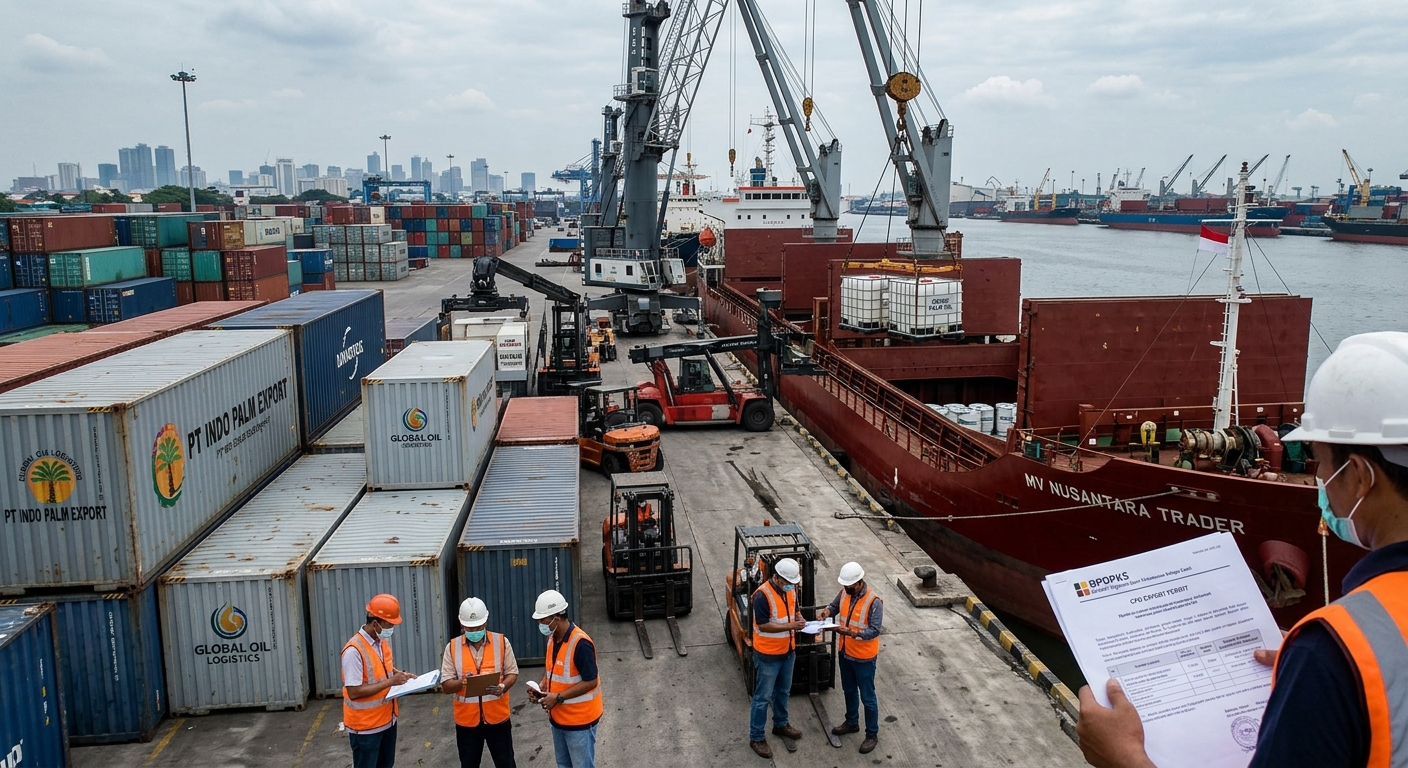
Major ports like Tanjung Priok in Jakarta and Belawan in North Sumatra are the primary gateways for palm oil exports. Efficient customs clearance depends on having all necessary documentation in perfect order. Any discrepancies can lead to costly delays and demurrage charges.
Documentation and Compliance
Proper documentation is the lifeblood of international trade. When exporting palm oil from Indonesia, particularly to stringent markets, the paperwork must be flawless. Essential documents include the Commercial Invoice, Packing List, Bill of Lading, Certificate of Origin, and various phytosanitary and sustainability certificates.
For traders targeting the United States, specific customs requirements must be met. You can find valuable information on this topic in Indonesia Export Documentation for US Customs: A Comprehensive Guide. Ensuring compliance with both Indonesian export laws and the destination country’s import regulations is non-negotiable.
If you are looking for a reliable partner to assist with sourcing and compliance, Export Nusa offers extensive services to streamline your operations.
Sustainability and Environmental Regulations
The global push for sustainable palm oil has significantly impacted Indonesian regulations. The Indonesian Sustainable Palm Oil (ISPO) certification is mandatory for all producers in the country. This certification aims to improve the sustainability of palm oil production, protect forests, and reduce greenhouse gas emissions. International buyers increasingly demand ISPO or the internationally recognized Roundtable on Sustainable Palm Oil (RSPO) certification before purchasing.
Comparison of Palm Oil Export Certifications
The following table compares the two primary sustainability certifications relevant to Indonesian palm oil exports.
| Certification Standard | Mandatory Status in Indonesia | Global Recognition | Primary Focus |
|---|---|---|---|
| ISPO (Indonesian Sustainable Palm Oil) | Mandatory for all producers | Emerging internationally | National legal compliance and environment |
| RSPO (Roundtable on Sustainable Palm Oil) | Voluntary | High global recognition | Comprehensive environmental and social standards |
Conclusion
Successfully navigating the export and import regulations for palm oil in Indonesia requires diligence, up-to-date knowledge, and meticulous attention to detail. From understanding fluctuating export tariffs and fulfilling Domestic Market Obligations to securing the right sustainability certifications, every step is critical. By staying informed on the legal requirements and leveraging expert logistical and documentation guidance, traders can effectively manage their supply chains and capitalize on the opportunities presented by the world’s leading palm oil market.
Frequently Asked Questions (FAQ)
What is the DMO policy in Indonesia’s palm oil sector?
The Domestic Market Obligation (DMO) policy requires palm oil producers to allocate a specific percentage of their production for the domestic market at government-regulated prices before they are allowed to export.
Why do Indonesia’s palm oil export tariffs change?
Export tariffs and levies are adjusted periodically based on a government-determined reference price, which reflects international crude palm oil market rates. This system helps manage domestic supply and fund replanting programs.
Is sustainability certification required to export palm oil from Indonesia?
Yes, the Indonesian Sustainable Palm Oil (ISPO) certification is mandatory for producers in Indonesia. While RSPO is voluntary, it is highly recommended and often required by international buyers in Western markets.
What are the primary ports for palm oil export in Indonesia?
The major ports handling bulk palm oil exports include Tanjung Priok in Jakarta, Belawan in North Sumatra, and Dumai in Riau province.