

Introduction to Coconut Charcoal Briquettes in Indonesia
Indonesia is universally recognized as one of the world’s leading suppliers of coconut products, particularly high-quality coconut shell charcoal briquettes. The archipelago’s tropical climate provides the perfect environment for coconut palms to thrive, yielding an abundant supply of premium raw materials. For global buyers looking to source top-tier charcoal for shisha, hookah, and barbecue applications, understanding the landscape of coconut charcoal briquettes manufacturers in indonesia is crucial.
These manufacturers have perfected the art of transforming discarded coconut shells into high-value, sustainable, and clean-burning fuel. By utilizing advanced carbonization techniques and strict quality control measures, Indonesian suppliers offer products that meet stringent international standards. For an in-depth look at premium options, you can explore this resource: Coconut Charcoal Briquettes Wholesale Indonesia: The Premium Choice for Shisha and BBQ.
Why Choose Indonesian Coconut Charcoal Briquettes?
The global demand for coconut shell charcoal briquettes is driven by their superior performance characteristics compared to traditional wood charcoal or quick-light alternatives.
Longer Burning Time
Indonesian coconut charcoal is renowned for its exceptional density, which translates to a significantly longer burning time. A standard briquette can last between 1.5 to 2.5 hours, depending on its size and application, making it highly economical for end-users.
High Heat Output and Low Ash
Another major advantage is the high calorific value, ensuring a consistent and high heat output. Furthermore, premium briquettes from Indonesia leave behind minimal ash (often less than 2.5%), which prevents the choking of the fire and makes cleanup effortless.
Odorless and Smokeless
For shisha and hookah enthusiasts, the purity of the charcoal is paramount. Indonesian coconut charcoal is prized for being 100% natural, emitting no smoke, and having no odor or taste that could interfere with the flavor of the shisha tobacco.
The Manufacturing Process
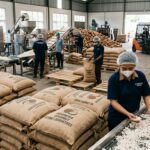
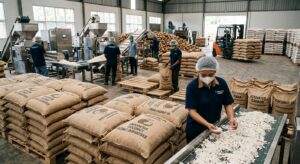
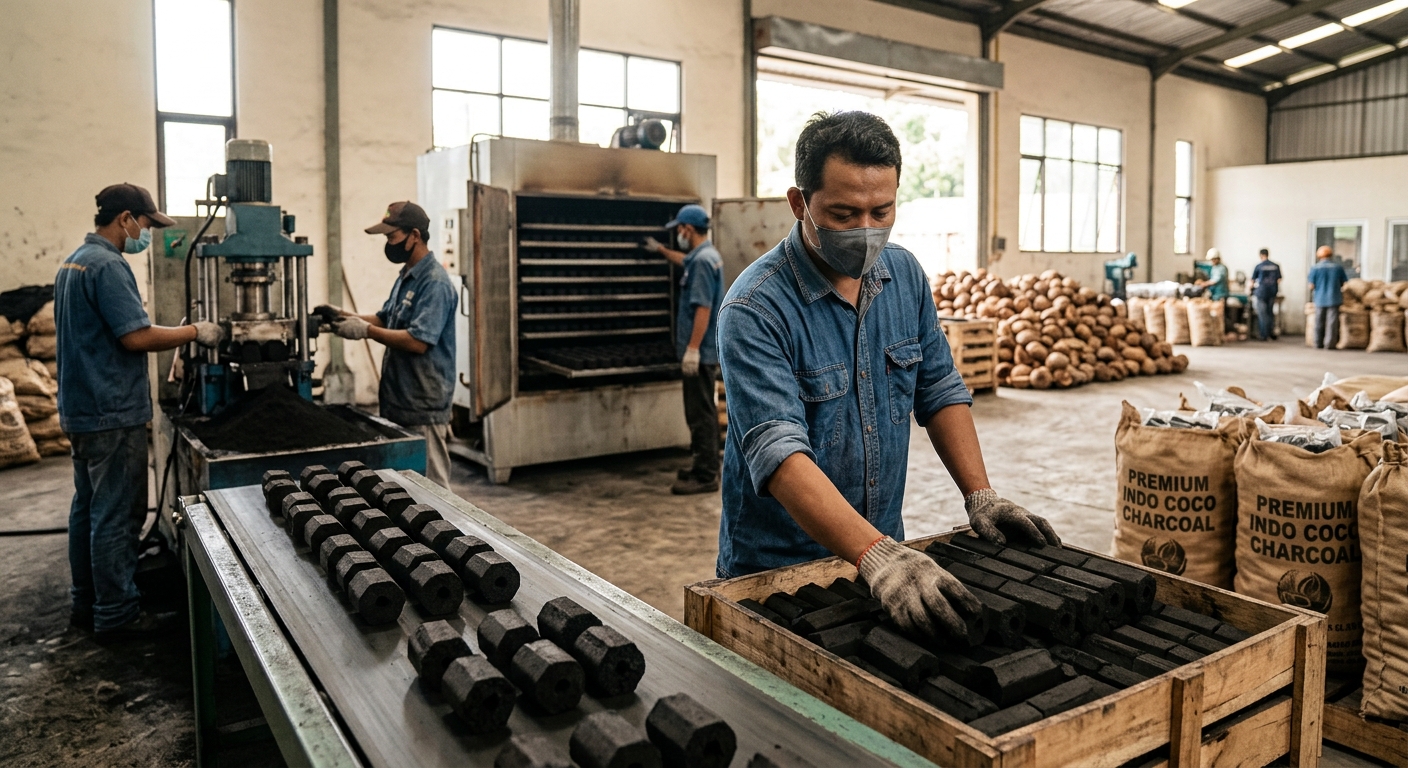
Understanding how these briquettes are made highlights why they are of such high quality. The process involves several meticulous steps:
- Sourcing: Manufacturers collect mature, fully dried coconut shells from local farmers.
- Carbonization: The shells are burned in controlled pits or kilns to remove moisture and volatile compounds, leaving behind high-carbon char.
- Crushing and Sieving: The char is crushed into a fine powder and sieved to ensure uniform particle size.
- Mixing: The powder is mixed with a natural binder, usually tapioca starch, and water.
- Pressing: The mixture is pressed into various shapes (cubes, hexagons, flats) using high-pressure extrusion or molding machines.
- Drying: The briquettes are baked in industrial ovens to reduce moisture content to below 5%.
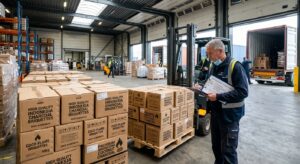
- Packaging: Finally, they are packed according to buyer specifications.
Key Manufacturing Hubs in Indonesia
While coconut plantations are spread across Indonesia, certain regions have emerged as prominent manufacturing hubs due to better infrastructure and proximity to ports.
Jakarta and Surrounding Areas
The capital city region serves as a major export hub. Many traders and manufacturers operate in this area, offering easy access to international shipping routes. If you are specifically looking into this region, consider reading A Complete Guide to Shisha Charcoal Briquettes Wholesale in Jakarta.
Central and East Java
These provinces are the heartland of charcoal briquette production. Cities like Semarang, Surabaya, and Yogyakarta are surrounded by extensive coconut plantations, ensuring a steady supply of raw materials.
Sulawesi and Sumatra
These islands are massive producers of coconuts. While historically focusing on copra and coconut oil, many factories are now expanding into charcoal production to utilize the abundant shell waste.
Sourcing and Export Logistics
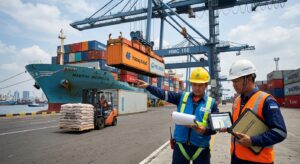
Importing charcoal briquettes from Indonesia involves navigating various logistical and regulatory steps. It is essential to partner with manufacturers who have experience in international trade.
When planning your import, you must be aware of the necessary paperwork. Charcoal is often classified as a dangerous good (self-heating substance) under maritime regulations, requiring specific certifications like an MSDS (Material Safety Data Sheet) and a SHT (Self-Heating Test) certificate. For comprehensive information on this topic, refer to A Complete Guide to Export Documentation for Shipping from Indonesia.
Additionally, while sourcing coconut products, many buyers also look into related agricultural exports. For instance, the by-products of the coconut industry offer other valuable commodities. You can learn more through this Comprehensive Guide to Coir Pith Growing Media Wholesale in Indonesia.
Quality Control and Specifications
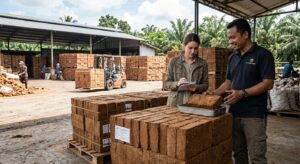
When negotiating with manufacturers, it is vital to specify your quality requirements clearly. Below is a table detailing standard specifications for premium shisha charcoal briquettes:
| Parameter | Specification |
|---|---|
| Moisture Content | Max 5% |
| Ash Content | Max 2.5% |
| Volatile Matter | Max 15% |
| Fixed Carbon | Min 80% |
| Calorific Value | Min 7200 Kcal/kg |
| Shape | Cube, Hexagon, Cylinder |
Conclusion
In conclusion, coconut charcoal briquettes manufacturers in Indonesia offer some of the highest quality products available on the global market. Their commitment to sustainability, coupled with abundant raw materials and refined manufacturing processes, makes Indonesia the premier destination for sourcing coconut charcoal. Whether for premium shisha lounges or high-end barbecues, Indonesian briquettes deliver unmatched performance. By understanding the market, the manufacturing process, and export requirements, buyers can successfully establish lucrative partnerships with Indonesian suppliers.
Frequently Asked Questions (FAQ)
What makes Indonesian coconut charcoal better than wood charcoal?
Indonesian coconut charcoal burns hotter, lasts longer, and leaves significantly less ash compared to traditional wood charcoal. It is also 100% natural, smokeless, and odorless, making it ideal for shisha and BBQ without affecting the flavor.
Are coconut charcoal briquettes environmentally friendly?
Yes, they are highly sustainable. They are made from coconut shells, which are a byproduct of the copra and coconut oil industries. This means no trees are cut down to produce the charcoal, making it an eco-friendly alternative to wood charcoal.
What shapes and sizes are available for wholesale purchase?
Manufacturers typically offer a variety of shapes including cubes (e.g., 22mm, 25mm, 26mm), hexagons, flats, and fingers. The choice of shape depends on the intended use, with cubes being the most popular for shisha.
Is it safe to ship coconut charcoal internationally?
Yes, but it requires strict adherence to international shipping regulations. Because charcoal can be prone to self-heating, it must pass a Self-Heating Test (SHT) and be accompanied by proper documentation, such as an MSDS, to be cleared for ocean freight.