

Introduction to Cocopeat as a Premier Growing Media
In the rapidly evolving world of commercial agriculture and hydroponics, the search for sustainable, efficient, and cost-effective growing media has led many professionals to a remarkable solution: cocopeat. Derived from the fibrous husks of coconuts, cocopeat (also known as coir pith or coir dust) has emerged as a superior alternative to traditional peat moss. It boasts excellent water retention, optimal aeration, and an ideal pH range for a wide variety of crops. For large-scale farming operations, commercial nurseries, and greenhouse growers, sourcing this material efficiently is critical. This is where the expertise of a professional cocopeat growing media bulk distributor becomes indispensable. By partnering with a reliable distributor, agricultural enterprises can ensure a steady supply of high-quality, standardized growing media that meets the rigorous demands of modern farming.
The Essential Role of a Cocopeat Growing Media Bulk Distributor
A cocopeat growing media bulk distributor serves as the vital link between coconut processing mills—predominantly located in tropical regions like Indonesia, India, and Sri Lanka—and the end-users across the globe. Their role extends far beyond mere transportation; they are responsible for quality assurance, volume consistency, and logistical optimization. A premier distributor understands that commercial growers cannot afford variations in their growing media, as inconsistent moisture retention or salinity levels can drastically impact crop yields.
Supply Chain and Logistics Management
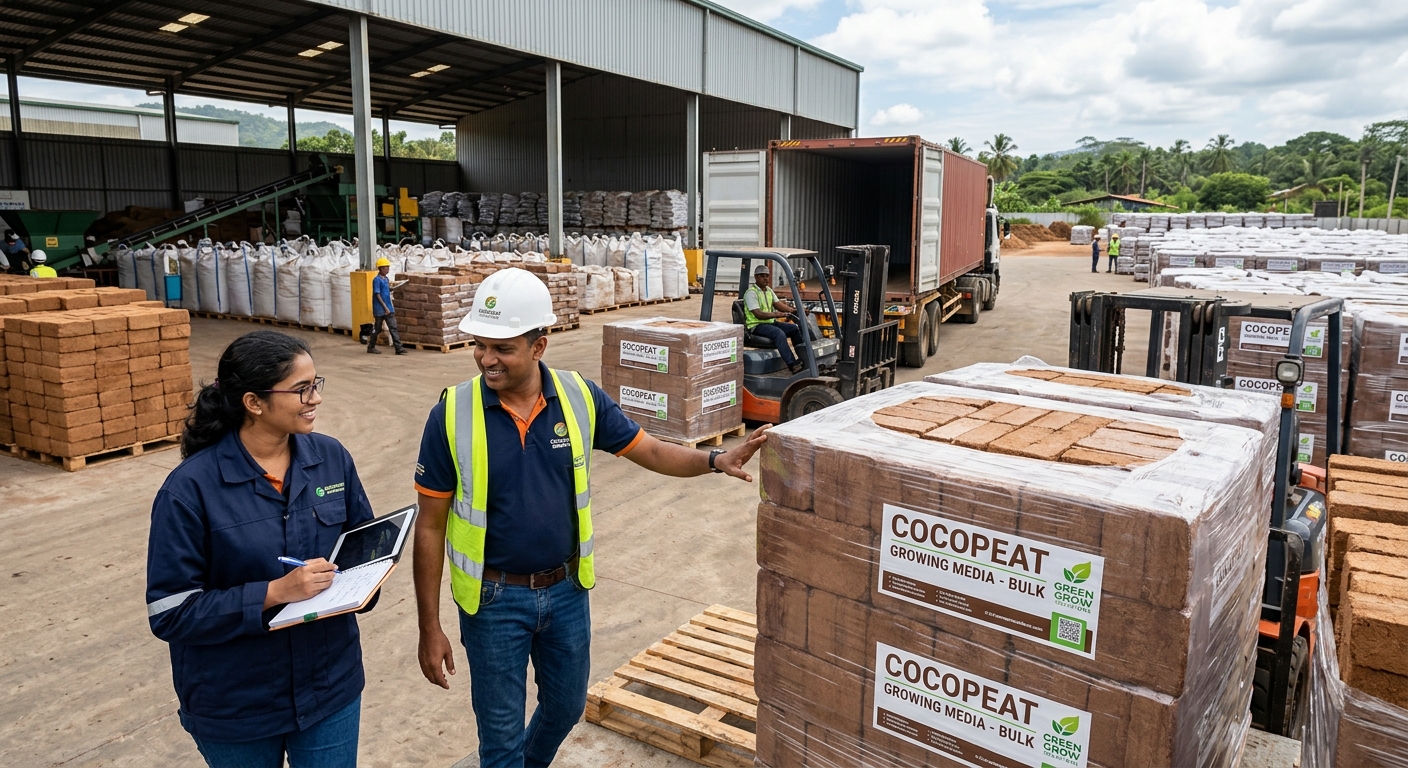
Managing the supply chain for bulk cocopeat involves coordinating complex international freight operations. Distributors must handle the consolidation of shipping containers, negotiate freight rates, and manage the customs clearance process. The physical nature of cocopeat, which is typically compressed into 5kg blocks or briquettes to maximize shipping efficiency, requires specialized handling and storage to prevent contamination from moisture or pests during transit. A competent bulk distributor ensures that the product arrives at the grower’s facility in pristine condition, ready for rehydration and use.
Quality Assurance and EC Levels
One of the most critical quality parameters for cocopeat is its Electrical Conductivity (EC) level, which indicates the presence of soluble salts. High EC cocopeat can be detrimental to sensitive plants, causing root burn and nutrient lockout. Therefore, top-tier distributors mandate rigorous washing and buffering processes before the product is compressed and shipped. For those looking to dive deeper into this specific quality metric and its impact on large-scale farming, we highly recommend reading The Ultimate Guide to Cocopeat Low EC Bulk Orders for Commercial Agriculture. This resource provides invaluable insights into why low EC is non-negotiable for professional growers and how distributors achieve these stringent standards.
Sourcing from Indonesia: The Global Hub for Coconut Products
Indonesia stands as one of the world’s largest producers of coconuts, making it a primary sourcing destination for any cocopeat growing media bulk distributor. The country’s vast archipelago offers an abundant supply of raw coconut husks, which are processed into various valuable commodities. However, sourcing directly from Indonesian manufacturers requires a deep understanding of local business practices, manufacturing standards, and export regulations.
Regulatory Compliance and Documentation
When importing bulk agricultural products from Indonesia, extensive documentation is required to clear international customs smoothly. Phytosanitary certificates, fumigation certificates, and commercial invoices are standard. Furthermore, proving the origin of the goods is essential for tariff classification and trade agreements. To understand these bureaucratic necessities in detail, importers should review Indonesia Certificate of Origin Requirements: A Comprehensive Guide. Proper documentation ensures that your bulk shipment of cocopeat avoids costly delays at the port of entry.
Diversification of Coconut Products
The coconut industry in Indonesia is incredibly diverse. While cocopeat utilizes the pith of the husk, other parts of the coconut are simultaneously processed into high-demand export products. For instance, coconut shells are carbonized to create premium charcoal. Distributors and international buyers who source growing media often explore these parallel markets to maximize their import operations. If you are interested in the broader scope of Indonesian coconut exports, you can explore Indonesia Coconut Charcoal Shisha Factory: The Ultimate Guide. Understanding the complete ecosystem of coconut processing highlights the sustainability and zero-waste approach of the industry.
Navigating Complex Exports and Shipping Operations
International logistics is a multifaceted challenge. While cocopeat itself is a safe, non-hazardous agricultural byproduct, a high-volume cocopeat growing media bulk distributor often shares shipping routes, freight forwarders, and port facilities with a wide variety of cargo. Comprehensive knowledge of port operations and maritime regulations is a hallmark of an experienced distributor. Even if they are primarily shipping organic media, an understanding of the broader export environment is crucial for avoiding logistical bottlenecks. For a broader perspective on the complexities of Indonesian maritime exports and the strict regulations governing different types of cargo, one might consult A Comprehensive Guide to Exporting Dangerous Goods from Indonesian Ports. This level of logistical awareness separates standard suppliers from world-class distribution partners.
Evaluating Cocopeat vs. Traditional Growing Media
To fully appreciate the value provided by a cocopeat bulk distributor, it is helpful to compare cocopeat against traditional alternatives like peat moss. The agricultural industry has been shifting toward cocopeat due to both performance and environmental concerns.
| Feature | Cocopeat | Peat Moss |
|---|---|---|
| Sustainability | Highly sustainable; renewable byproduct of coconut harvesting. | Non-renewable on a human timescale; harvesting depletes natural bogs. |
| Water Retention | Can hold up to 10 times its weight in water, rehydrates easily. | High water retention, but can become hydrophobic when completely dry. |
| Aeration | Excellent porosity, promoting healthy root development. | Good, but can compact over time, reducing oxygen availability. |
| pH Level | Neutral to slightly acidic (5.5 – 6.8), ideal for most crops. | Highly acidic (3.5 – 4.5), requires liming for most agricultural uses. |
Benefits of Partnering with a Reliable Bulk Distributor
Engaging a reputable cocopeat growing media bulk distributor yields numerous strategic advantages for commercial agricultural operations. Firstly, it guarantees consistency in volume and quality. Commercial growers operate on strict timelines; delayed shipments or substandard batches can derail an entire growing season. A reliable distributor maintains safety stock and manages robust supply networks to mitigate these risks.
Secondly, large-scale distributors offer customization. Depending on the specific crop—whether it be blueberries, tomatoes, cannabis, or ornamental flowers—growers may require different blends of cocopeat, coco chips, and coco fiber to achieve the perfect air-to-water ratio. A professional distributor works closely with manufacturing facilities to produce custom mixes tailored to the client’s exact agronomic specifications.
Finally, there is a significant cost advantage. By purchasing in bulk (usually in 40ft High Cube containers), growers benefit from economies of scale. The distributor’s ability to negotiate favorable ocean freight rates and streamline the customs clearance process further reduces the landed cost per metric ton of growing media.
Conclusion
The transition toward sustainable, high-performance agricultural practices has cemented cocopeat’s status as a premier growing medium. However, the true potential of this material can only be unlocked when it is sourced efficiently and consistently. A professional cocopeat growing media bulk distributor is an invaluable partner for commercial growers, offering expertise in quality control, international logistics, and regulatory compliance. By leveraging their global networks and deep understanding of the coconut processing industry, these distributors ensure that agricultural enterprises receive the exact specifications they need to maximize crop yields and maintain operational efficiency. Investing time in selecting the right distribution partner is a foundational step toward long-term agricultural success.
Frequently Asked Questions (FAQ)
What is the standard compression ratio for bulk cocopeat?
Cocopeat is typically compressed at a ratio of 5:1 to maximize shipping efficiency. This means that a standard 5kg block of compressed cocopeat will expand to yield approximately 60 to 75 liters of usable growing media once properly hydrated with water.
Why is washing and buffering important in bulk cocopeat?
Raw cocopeat naturally contains high levels of sodium and potassium salts from the coastal environments where coconuts grow. Washing reduces these soluble salts (lowering the EC), while buffering with calcium nitrate displaces the sodium and potassium ions attached to the coir complex, preventing nutrient lockout when fertilizers are applied.
Can a bulk distributor provide custom cocopeat blends?
Yes, reputable bulk distributors can work with manufacturing facilities to create custom blends. By adjusting the ratios of fine cocopeat dust, medium fibers, and larger coco chips, they can tailor the media’s aeration and water-holding capacity to suit specific crops and irrigation strategies.
How is bulk cocopeat typically packaged for international shipping?
For commercial bulk orders, cocopeat is most commonly compressed into 5kg blocks, which are then stacked onto pallets and stretch-wrapped. These pallets are loaded into 40-foot High Cube (HC) shipping containers. A standard 40ft HC container can typically hold between 20 to 24 metric tons of compressed cocopeat blocks, depending on pallet configuration and weight limits.