

Introduction to Indonesian Cocopeat
As sustainable agricultural practices continue to gain traction worldwide, the demand for eco-friendly growing media has skyrocketed. Among the most sought-after organic substrates is cocopeat, also known as coir pith or coir dust. Specifically, bulk cocopeat growing media from Indonesia has emerged as a premier choice for commercial growers, horticulturists, and hydroponic farmers globally.
Indonesia, being one of the world’s leading coconut producers, boasts an abundant supply of high-quality coconut husks. This natural abundance translates into a consistent, premium supply of cocopeat. In this comprehensive guide, we will explore the benefits, applications, production processes, and sourcing strategies for bulk cocopeat from Indonesia, ensuring you have all the necessary information to make informed purchasing decisions.
The Manufacturing Process of Indonesian Cocopeat
The journey of high-quality cocopeat begins at the coconut plantations spread across the Indonesian archipelago. Understanding the production process is crucial for buyers to ensure they are sourcing a product that meets international agricultural standards.
Harvesting and Extraction
The process starts with the careful harvesting of mature coconuts. The husks are removed and soaked in water to soften the fibers—a process known as retting. Afterward, the husks undergo a decortication process, which separates the long coir fibers (used for ropes and mats) from the spongy, dust-like material, which is the raw cocopeat.
Washing and Buffering
Raw cocopeat naturally contains high levels of sodium and potassium salts, which can be detrimental to sensitive plants. Therefore, premium Indonesian manufacturers subject the raw material to extensive washing with fresh water to lower the Electrical Conductivity (EC). For professional growers, the cocopeat is often buffered using calcium nitrate to displace sodium and potassium ions, ensuring a stable environment for root development.
Drying and Compressing
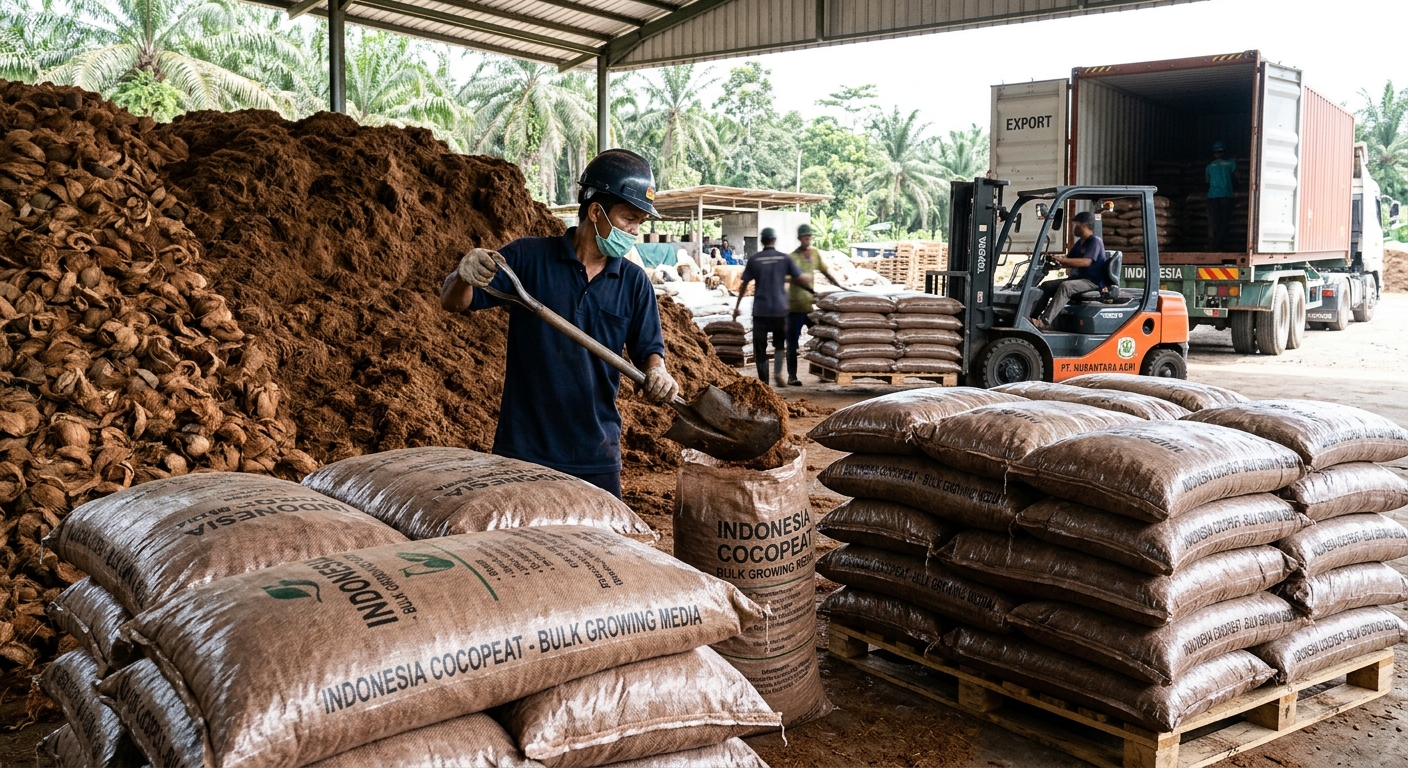
Once washed and buffered, the cocopeat is sun-dried on vast concrete yards until the moisture content drops below 20%. The dried material is then screened to remove fine dust and larger impurities. Finally, it is compressed into 5kg blocks, briquettes, or grow bags using hydraulic presses. Compressing the cocopeat reduces its volume drastically, making bulk shipping highly cost-effective.
Why Choose Indonesian Bulk Cocopeat?
Indonesia’s geographical and agricultural advantages make it an ideal source for bulk cocopeat. Here are the primary reasons why global buyers prefer Indonesian suppliers:
- High Water Retention: Cocopeat can hold up to eight times its weight in water, ensuring plants remain hydrated while reducing watering frequency.
- Excellent Aeration: The porous structure of cocopeat provides optimal oxygen to plant roots, preventing root rot and promoting vigorous growth.
- Eco-Friendly and Renewable: Unlike peat moss, which takes centuries to regenerate in fragile peat bogs, cocopeat is a byproduct of the coconut industry, making it 100% renewable and sustainable.
- Neutral pH: With a pH ranging from 5.5 to 6.8, cocopeat is ideal for a wide variety of plants and readily absorbs nutrients.
While exploring agricultural exports from Indonesia, you might also find value in understanding other major commodities. For instance, you can read about Understanding Indonesia Export Tariff on Crude Palm Oil: A Comprehensive Guide, which provides deep insights into the country’s export dynamics.
Comparing Washed vs. Unwashed Cocopeat
When purchasing bulk cocopeat growing media from Indonesia, buyers must choose between washed (Low EC) and unwashed (High EC) varieties. The table below outlines the specific characteristics of each type to help you determine the best fit for your agricultural needs.
| Cocopeat Type | Electrical Conductivity (EC) | Primary Application | Price Point |
|---|---|---|---|
| Washed (Low EC) | < 0.5 mS/cm | Seed starting, hydroponics, sensitive plants | Higher |
| Unwashed (High EC) | > 1.0 mS/cm | Animal bedding, oil absorption, hardy crops | Lower |
Applications of Bulk Cocopeat in Modern Agriculture
The versatility of cocopeat allows it to be utilized across various agricultural sectors. From small-scale nurseries to massive commercial greenhouses, its applications are vast.
Hydroponics and Soilless Farming
In hydroponic systems, cocopeat serves as an excellent anchor for plant roots while maintaining the perfect balance of moisture and aeration. It is frequently mixed with perlite or clay pebbles to enhance drainage. Grow bags filled with compressed cocopeat are heavily utilized in the commercial production of tomatoes, cucumbers, strawberries, and bell peppers.
Potting Mixes and Soil Conditioning
Commercial soil blenders purchase bulk cocopeat from Indonesia to create premium potting mixes. It acts as a superior alternative to sphagnum peat moss, improving soil structure, increasing water retention in sandy soils, and loosening heavy clay soils.
Nursery and Seed Germination
Due to its fine texture and sterile nature (free from weed seeds and soil-borne pathogens), low EC cocopeat is the preferred medium for seed germination and seedling development. It encourages rapid root development, leading to healthier, more resilient plants.
As you scale your agricultural business, sourcing the right products efficiently is vital. Utilizing an Indonesian Agriculture Products B2B Platform: Transforming Global Trade can significantly streamline your procurement process, connecting you directly with verified suppliers of cocopeat and other agricultural goods.
Sourcing and Logistics: Importing from Indonesia
Importing bulk cocopeat from Indonesia requires a strategic approach to logistics, quality control, and supplier verification.
Packaging and Shipping Options
Bulk cocopeat is predominantly exported in compressed 5kg blocks. A standard 40-foot High Cube (HC) container can hold approximately 20 to 24 metric tons of compressed cocopeat blocks, typically palletized for easy unloading. Buyers can also request custom packaging, such as individually wrapped grow bags or smaller briquettes for retail distribution.
Quality Assurance
When negotiating with suppliers, always request detailed specifications including EC levels, pH range, moisture content, expansion volume, and sand/impurity content. Reputable suppliers will provide phytosanitary certificates, fumigation certificates, and certificate of origin to facilitate smooth customs clearance at the destination port.
Exploring Other Coconut Byproducts
While sourcing cocopeat, buyers often discover other lucrative coconut-based products. For example, the booming shisha market heavily relies on coconut charcoal. If you are interested in expanding your product line, reviewing the Shisha Charcoal Private Label Factory: A Complete Guide can provide valuable insights into this high-margin sector.
Additionally, for bulk fuel or barbecue applications, sourcing quality charcoal is equally important. Check out the Wholesale Coconut Shell Charcoal Indonesia: The Ultimate Sourcing Guide to understand the full spectrum of coconut derivatives available from Indonesian manufacturers.
Conclusion
Bulk cocopeat growing media from Indonesia represents the pinnacle of sustainable, high-performance agricultural substrates. Its unparalleled water retention, excellent aeration, and eco-friendly profile make it an indispensable tool for modern horticulture and hydroponics. By understanding the production process, recognizing the difference between washed and unwashed grades, and leveraging reliable B2B platforms, global buyers can secure a steady, high-quality supply of Indonesian cocopeat to drive their agricultural success.
Frequently Asked Questions (FAQ)
What is the expansion ratio of a 5kg cocopeat block?
A standard high-quality 5kg compressed cocopeat block from Indonesia will typically expand to yield between 70 to 80 liters of loose, hydrated growing media when water is added.
How do I know if the cocopeat I am buying is Low EC?
Always request a Certificate of Analysis (COA) from your supplier before purchasing. A Low EC cocopeat suitable for sensitive plants and hydroponics should have an Electrical Conductivity reading of less than 0.5 mS/cm when tested in a 1:1.5 volume extraction method.
Can cocopeat be reused in subsequent growing seasons?
Yes, one of the major benefits of cocopeat is its durability. The lignin content in coconut coir prevents it from breaking down quickly. It can often be reused for 2 to 3 growing cycles, provided it is properly sterilized (flushed and treated for pathogens) between crops.